Croatians have gone on the attack against FIFA and referees after their World Cup exit to Portugal, claiming a specific rule should have kept their hopes alive.
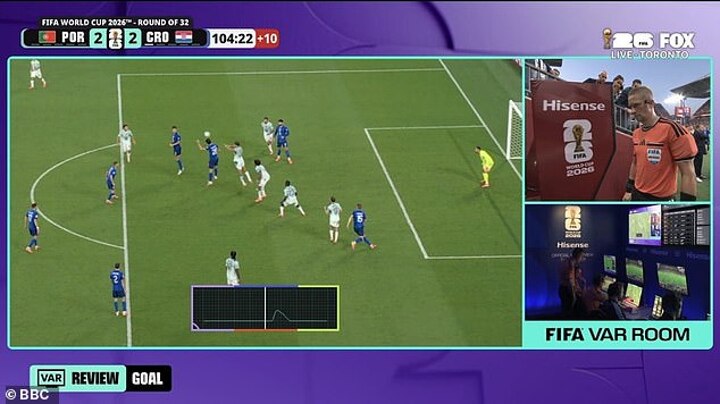
Josko Gvardiol's 103rd-minute equaliser was ruled out because, after a VAR check, his team-mate Igor Matanovic was adjudged to have headed the ball to an offside team-mate earlier in play.
It was impossible to tell with the naked eye whether he had touched it but a microchip implanted in the ball suggested that he had.
However, Croatian journalists are now pointing to a line in FIFA's semi-automatic technology rulebook which says that hair is only considered part of the body 'if it affects the movement or trajectory of the ball'.
Matanovic's touch, if indeed it happened, did not appear to influence the ball's flight on its way to Mario Pasalic, who set up Gvardiol.
Croatia thought they had made it 2-2 to force extra-time, but their goal was eventually ruled out after an extensive check - and they are now seething.

FIFA's rule states: 'Hair is only considered part of the body if it affects the movement or trajectory of the ball. This is only likely in cases of significant contact with a mass of hair, such as a top knot.'
Croatian website Gol has protested: 'Since the video footage is inexorable proof that the ball did not change its trajectory by a single millimeter after contact with Matanovic, it is clear that this possible contact with hair should not have been characterized as active playing with the ball according to FIFA's own regulations.
Meanwhile, Croatian referee Bruno Maric told Sportske novosti: 'If the chip registers a touch, then the referees would also have to find visual evidence that this contact actually existed. Only then can the decision be completely convincing for the players, coaches, fans and the entire football public.
'I am absolutely for technology, but every decision it makes must be supported by clear evidence. If the evidence does not exist or no one can see it, then doubt will always remain. And it is precisely trust in decisions that technology should build, not undermine.'
Elsewhere, Croatia's most well-known fan, model Ivana Knoll, posted from the stadium in Toronto: 'Norwegian referee you did such a s*** job!'
For what it's worth, Matanovic held his hands up and admitted that he had felt a touch. 'Honestly, I think I felt a little contact with the hair,' he said. 'And then I asked the referee what happened, I wasn't sure if I touched the ball. He said there was a chip in the ball and it was offside.'
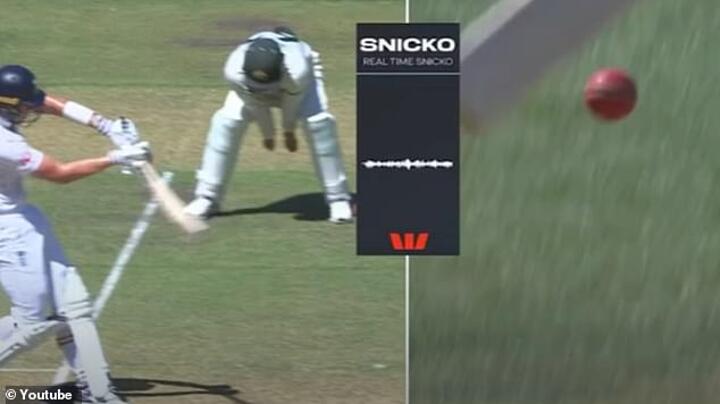
The decision was aided by technology known as The Snickometer, or 'Snicko' as it is more widely known.
It is more familiar to cricket fans, having been used since the 1990s, and has never had a more high-profile or controversial moment.

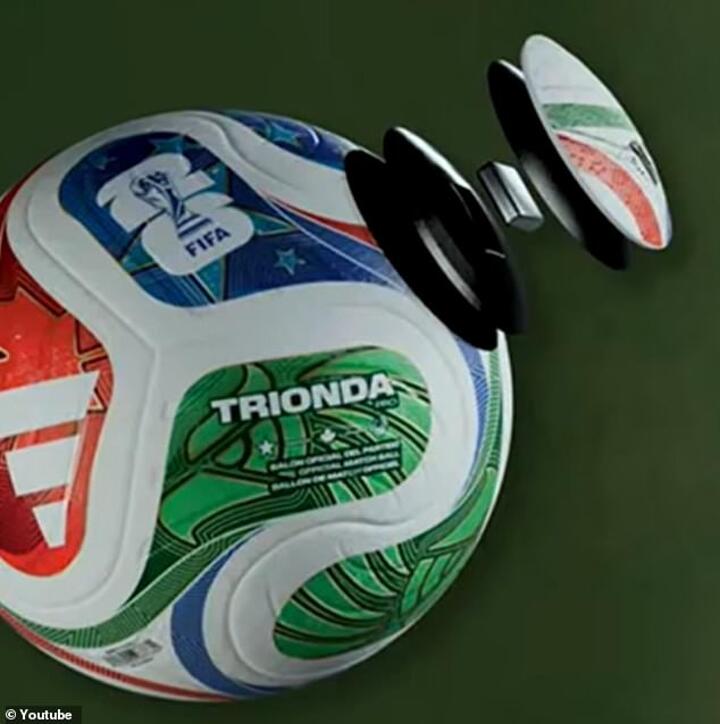
The VAR was given access to the information produced by a microchip implanted into every Adidas Trionda ball used at the World Cup.
It measures any impact through a motion-sensing device and fed the information back that there was indeed a small connection at the exact moment when the ball moved past Matanovic's head.
To the naked eye, it looked as though he hadn't touched it and the decision to disallow the goal not only enraged Croatia's players but also a huge number of fans, many of which feel the extent to which technology is overreaching is ruining the game.
TV viewers of the match were shown the images the VAR was analysing and could see the tiny wave on the screen that was deemed sufficient to disallow the goal.
Snicko first appeared in football in the 2022 World Cup but instances of it being used to make a critical decision have been incredibly rare.
The microchip produces accurate, instantaneous data on everything, including ball movement, speed, trajectory, and touches by players.
In cricket, Snicko comes to the fore in almost every match to check whether a batsman has edged the ball behind the stumps.
How much is David Beckham set to pocket from his World Cup brand deals? Take on our quiz in our newsletter HERE
 Croatia
 Manchester City
 Al Nassr FC
 Ronaldo
 Gvardiol
All Comments (8)
Today 01:05
Today 00:23
Today 00:19
Today 00:15
Today 00:01
Yesterday 23:51