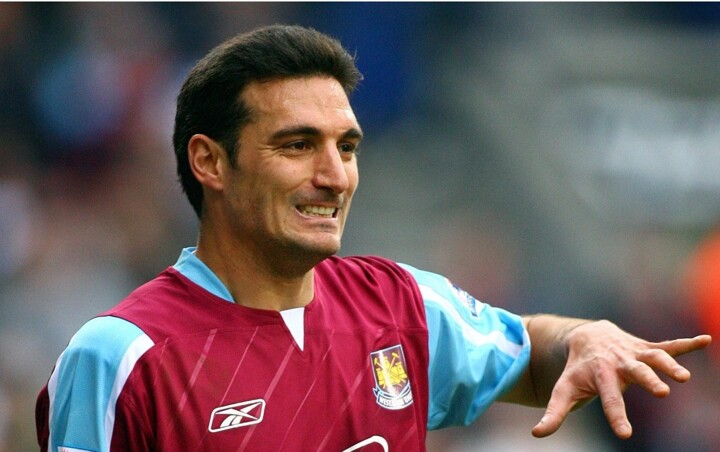
Alan Pardew wrote in The Telegraph that he once managed Scaloni, and it was a great experience. He was very different from traditional Argentine players. Unlike many players, Scaloni never proactively discussed tactics; he would only strictly execute the established plan and efficiently complete all tasks. During his playing career, he rarely missed assignments or made mistakes, completing his duties flawlessly. This trait remains unchanged today. While most Argentines are flamboyant and prone to emotional outbursts, Scaloni is completely different; he is calm and composed, which makes him the most suitable coach for the Argentine national team.
Original text from The Telegraph
In January 2006, I signed Lionel Scaloni on loan from Deportivo La Coruña in Spain. He played as a right-back. I still remember his agent telling me at the time, "You will definitely like this man."
The agent didn't use conventional language to praise his skills but emphasized his good character, a remark that stuck with me, and it turned out to be true.
Even before our official meeting, his on-field performance alone showed his upright character. When we first met, he had a gentle smile and was warm and generous towards people.
A likeable player personality often speeds up transfer negotiations, and our first interaction was very harmonious. After he joined, he was exceptionally easy to manage, quiet and low-key; there were many times I would even forget he was there.
Frankly, seeing him now as a FIFA World Cup-winning coach, aiming for his second trophy, and facing England in the semi-finals, it's hard to reconcile the current him with the full-back I managed back then.
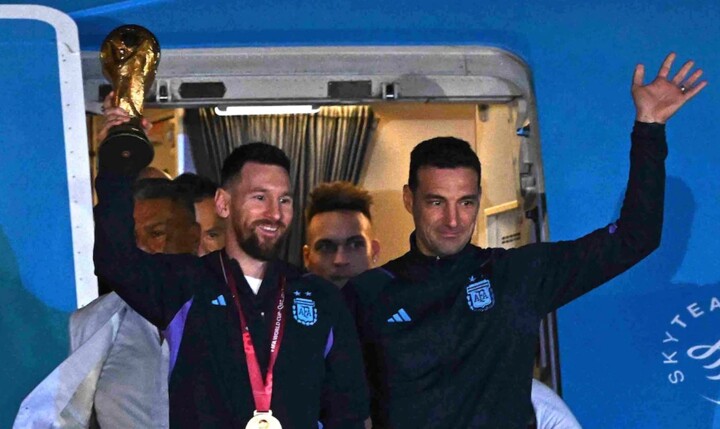
Many players would proactively communicate their tactical ideas with me. For example, Kevin Nolan, when I managed Newcastle United, would suggest, "Our set-piece efficiency is too low; we could try a few different approaches." Teddy Sheringham, who played for West Ham United, also once reminded me, "There's too much space behind the defense; we need to reinforce the midfield. Perhaps Mark Noble should play." Over the years, many players would actively offer advice; they were invaluable assistants on the field for a coach.
But Scaloni never proactively discussed tactics with me; I hardly ever talked about tactical arrangements with him. He would only strictly execute the established plan, thoroughly understand the full-back's on-field responsibilities, and efficiently complete all tasks.
"Efficient" is the most fitting word to describe him. During his playing career, he rarely missed assignments or made mistakes, completing his duties flawlessly; now, as a coach, this trait remains unchanged.
I've coached three or four Argentine players, most of whom were flamboyant and prone to emotional outbursts, like Carlos Tevez and Javier Mascherano. Scaloni is completely different; he is calm and composed, and this trait makes him the most suitable coach for the Argentine national team. Argentine players don't need intense motivation to boost their fighting spirit; that has never been Scaloni's coaching style.
I always recall the 1991 FA Cup final, when Terry Venables coached Tottenham, and Paul Gascoigne was overly excited before the match, making a reckless tackle on the field that caused a severe knee injury. As a coach, I've always taken this as a lesson: I must control the emotional balance of players, and Scaloni happens to bring this calm to the Argentine dressing room.
Facing absurd conspiracy theories from the media, such as FIFA secretly manipulating matches to ensure Argentina wins the championship, Scaloni's responses are clear, logical, and firm, just as I remembered him: "Such claims are irrelevant and have nothing to do with us; we only go on the field to win." His demeanor is proper, and his press conference appearances reflect his true self.
Ultimately, it all comes down to the word "efficient"; whether it's his way of handling things or his physical gestures, this is his most distinctive characteristic.
Tuchel, on the other hand, is the complete opposite type, often emotional and agitated on the sidelines, and once had a dispute with Djed Spence. When I was younger, my coaching style was also more emotional, but Scaloni always calmly observed the game, isolating himself from the noise of the stadium, and this composure is exactly what the Argentine team needs.
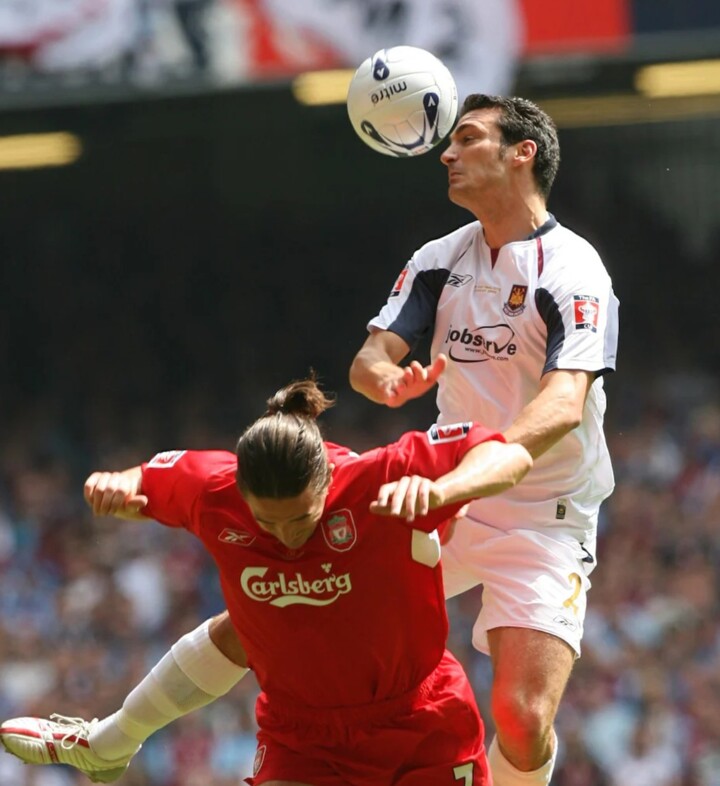
Of course, I won't shy away from that FA Cup final, which is also his most well-known and controversial incident in English football. At that time, he had only joined West Ham United a few months earlier, and this Cardiff final was later known as Gerrard's legendary match.
That was the only time I saw Scaloni lose his composure and perform poorly. Before that, he had almost zero mistakes, but this mistake came at a heavy cost.
In the 90th minute, we were leading 3-2. A Liverpool player was injured and fell to the ground, and Scaloni, out of sportsmanship, kicked the ball out of bounds. When Liverpool returned possession, the ball landed near our corner flag. He could have kicked the ball to the sideline or out of bounds again to waste time, but he directly crossed it powerfully into the middle, and the ball went straight to Gerrard's feet.
At that moment, Gerrard was exhausted, but he still passed the ball to John Arne Riise. The clearance was messy, and Gerrard unleashed a long-range shot from 35 yards to equalize. We only needed to run down the remaining time and should never have given possession back to the center.
The match went into extra time, and we eventually lost on penalties, missing out on the trophy. Many West Ham fans still feel bitter about it to this day. After the match, I hugged Scaloni to comfort him. We were just one step away from the championship, and everyone was full of regret. I could only tell him, "Don't dwell on it; we fought our hardest to get this far." The entire team was in pain after losing the final; there was no need to blame the players and add to their burden.
I've always had a good impression of him, and he has remained in my memory ever since that final. At the time, he was only a loan player, and after the match, the club decided not to complete a permanent transfer. It seemed like the best option for both parties at the time, and he then returned to the Spanish league.
Until now, I have never talked to him about that final. I would love to meet him, talk about his glorious achievement of leading his team to a FIFA World Cup victory, and also discuss that regrettable final from back then. I hope one day I can sit down with him for a coffee and have a good chat.
As for this semi-final, I fancy England to win. The two teams are evenly matched, and the game will be very tight. The return of Reece James and Bukayo Saka from injury will be crucial, especially Saka, whose frequent substitutions and lack of consistent starts have somewhat affected his confidence.
I would lean towards starting Saka, but the key to victory might be the impact of England's substitutes and their performance in set-piece attack and defense.
AF's PC site is now live! Browse full news, comments, match details and stats on your computer. Visit: www.allfootballapp.com
 Argentina
 Arsenal
 Chelsea
 Liverpool
 Tottenham Hotspur
 West Ham United
 England
 Scaloni
 Steven Gerrard
 Alan Pardew
 Reece James
 Saka
Saka
 Spence
 FIFA World Cup
All Comments (5)
Today 20:49
Today 20:48
Today 20:48
Today 20:47
Today 20:47