After England's World Cup semi-final defeat to Argentina, Sky Sports looks at the big questions facing Thomas Tuchel and the Three Lions squad.
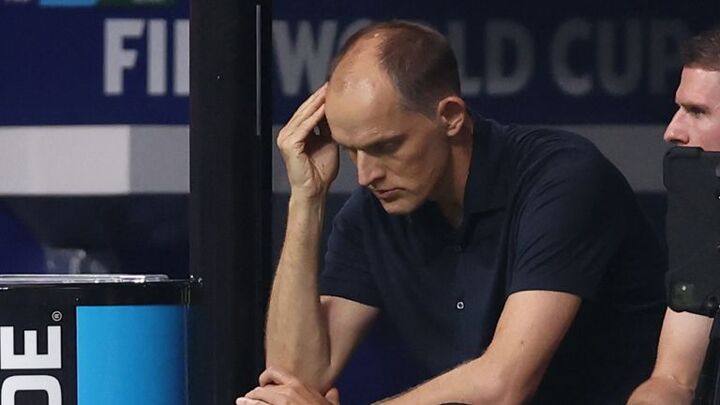
Is Tuchel solely to blame for England's defeat?
Five minutes plus stoppage time away from a first World Cup final since 1966. You couldn't get much closer.
But Thomas Tuchel is currently getting the flak for failing to see the game out from 1-0 up. His decision to go to a back five on 72 minutes proved pivotal. Argentina reacted to it by putting more forwards on. The flow for the rest of the game was set and it was too much for England to handle.
Argentina had created little before that change of England mentality. Did Tuchel not trust his players to get over the line? Did he feel there were no more punches his team could land on Argentina, despite having Harry Kane and Jude Bellingham on the pitch?
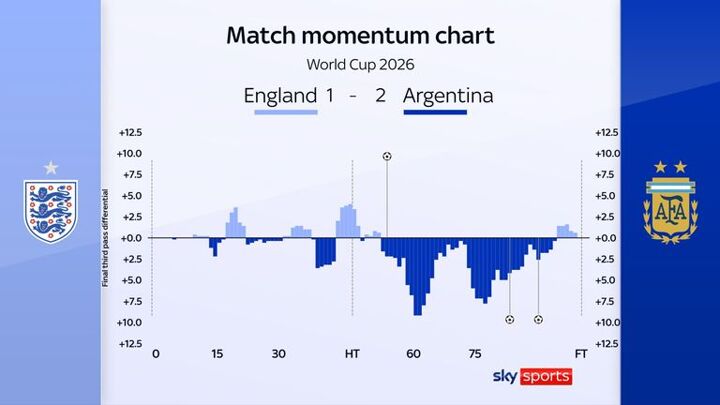
Tuchel says he did not expect England to go so deep - so some responsibility should also fall on his players. But what would have happened had England stayed with a back four? That's the burning question that will live long in the memory.
Tuchel's desire to remain in the role after signing a contract with the FA in February suggests the German retains the full backing of his bosses, who remain determined that he will still be in charge in two years' time.
But with France to come on Saturday's third-place play-off and Spain to visit Wembley in September, Tuchel and his big-game actions are being watched closely by the nation.
Sam Blitz
What happened to Tuchel's promise of a braver England?
"They were more afraid to drop out of the tournament than having the hunger and excitement to win it."
Those were Tuchel's words when assessing England's defeat to Spain in the European Championship final under Gareth Southgate. It was a sharp critique of a team that, in Tuchel's eyes, had played not to lose rather than to win.
It was also a promise.
Tuchel's England would be different. More front-footed. More aggressive. More willing to seize the biggest moments instead of simply surviving them. At times, that vision looked real.
Croatia were overwhelmed by an exhilarating spell after half-time in England's opening World Cup match. Mexico had no answer when Jude Bellingham burst into life, scoring twice in a matter of minutes as England played with purpose and conviction.
There were flashes of a team capable of imposing themselves on elite opposition rather than reacting to them. Which is why what unfolded against Argentina feels so difficult to reconcile.
England had the world champions exactly where they wanted them. Anthony Gordon's goal had put Tuchel's side 1-0 ahead and, more importantly, England still looked capable of carrying a threat. Argentina were chasing the game. England had momentum.
Yet, Tuchel abandoned the back four and introduced a back five. It was a move designed to protect the lead, but it achieved the opposite.
The change shifted the psychology of the contest. England retreated. Argentina advanced. The pressure became relentless. It is impossible to ignore the contradiction.
The manager who criticised England for fearing defeat appeared, in the biggest moment of his reign, to coach exactly that emotion into his own team.
Tuchel arrived promising courage over caution. He wanted England to dictate games, to make opponents uncomfortable and to embrace the biggest occasions without fear.
Against Argentina, with a place in the final within touching distance, England stopped asking questions and started protecting what they had. Same old story.
Lewis Jones
Had Tuchel already got it wrong when he first announced his squad?
Thomas Tuchel picked a squad to take to the World Cup which few others would have chosen. No Trent Alexander-Arnold, no Harry Maguire, no Cole Palmer - two years after scoring in a European Championship final. But he was bold in his choices, speaking of "specialists" to take England all the way.
That line had already struggled to hold before he started Djed Spence and Morgan Rogers out of position against Argentina owing to a dearth of other options available.
Presumably Tuchel was aware of the injuries Declan Rice and Bukayo Saka were carrying coming into the tournament. And if so, bringing Noni Madueke as his back-up right winger and leaving Adam Wharton, England's only other natural No 6, at home raises further questions.
When Reece James suffered a hamstring injury against Ghana in the group stages Tuchel said "no-one could see it coming". Plenty did outside of the England camp, only adding to previous bafflement at taking Tino Livramento - who had missed more than 30 club games with injury last season - as his back-up.
Tuchel's selections got England to a World Cup semi-final, but they looked run ragged in the Stateside heat from the last-16 onwards. The head coach and his camp were well aware of the pitfalls of playing in such conditions, so why did he not give himself more room to rotate by picking fit players, or solid back-ups in key positions?
Ron Walker
Was this World Cup a success for Tuchel's England?
"It's coming home," the masses have been saying with vigour since the last-16 win over co-hosts Mexico, but did anyone really think it would be coming home before a ball was kicked? I mean, when was the last time England won a World Cup on a foreign soil? How about never.
Yes, England snatched defeat from the jaws of victory against Argentina, but they made the South Americans look pretty ordinary in a historic first half hour where neither team mustered a shot - the first time that 's happened at a World Cup since records began.
We also mustn't forget the level of the opposition England faced. We're talking about the reigning world champions, the mentality monsters, the team that features a living legend and an all-time great in Lionel Messi, the team that is ranked number one in the FIFA World Rankings - one who will now play European champions Spain, who are second in the world rankings.
England are ranked fourth in the world, and despite losing to Argentina, they still have an opportunity to make history in this tournament. England will take on most people's pre-tournament favourites France in the bronze medal match on Saturday.
If they win Tuchel will do something no other men's England manager has done before by leading a side to third at a World Cup, which would represent England's best-ever performance at a World Cup on foreign soil. That's worth thinking about before people call for Tuchel's head.
Dev Trehan
Was England's lack of stability in defence a big reason for their exit?
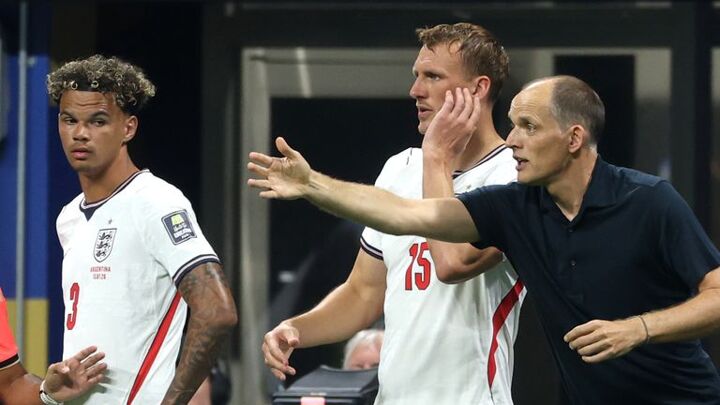
Tuchel constantly tweaked his backline - and did not name an unchanged defence in the entire tournament. Jarell Quansah, John Stones, Ezri Konsa, Nico O'Reilly and Djed Spence came in and out of the team.
Injuries and suspension played its part in that decision-making, but there was never any defensive momentum right from the opening game against Croatia.
England always felt open on the counter attack and big openings wasted by Yoane Wissa against DR Congo and Norway's Alexander Sorloth could have ended their tournament earlier.
So when Enzo Fernandez struck from distance unchallenged and Lautaro Martinez headed home unmarked in the box, was anyone really surprised Argentina found a way through against this England backline?
Spain have shown in this tournament how defensive solidity as a team underpins success, no matter how many matchwinners you have.
Sam Blitz
Is there a problem with the English mentality?
The mentality of the English is something that has long come into question since 1966. That has been even more the case over the last decade. Croatia in 2018. Italy in 2021. Spain in 2024. Now Argentina in 2026. When the going gets tough, England get going.
However, Tuchel insisted throughout the tournament it was not a question of mentality. He made that abundantly clear after the win over Norway. And I’m inclined to agree.
In the past, you could argue that maybe England’s top players just didn’t know what it was like to win the big ones. Harry Kane was trophyless at Tottenham. Declan Rice and Bukayo Saka had kept falling short with Arsenal. Truly, the only ones who had consistently got their hands on the big trophies in 2018 and 2021 were Kyle Walker and Phil Foden during Manchester City’s dominance. Neither of them were here this time.
But that argument has largely changed. Jude Bellingham is a Champions League winner for the biggest club in the world. Kane has got his hands on two Bundesliga titles. The Arsenal contingent in the squad are now Premier League champions. Even the likes of Morgan Rogers and Ezri Konsa have tasted European glory with Aston Villa.
These players have the mentality to win at the highest levels for their clubs. They are surrounded by others with the same mentality. Yes, the pressure of representing England is different, but the ability to take the same mindset you have from club to country isn’t. Or at least it shouldn’t be.
Callum Bishop
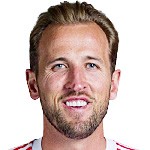
Kane not done yet - but where did he go?
"It's too early to talk about that. For me, it's about taking it year by year and how I feel."
Even Harry Kane doesn't know if this was his last World Cup. Not because of his ability, but because it is not a topic that has entered his thinking.
At the age of 32, the England skipper was coming off the back of one of his best-ever seasons with Bayern - he scored 51 goals for his club in all competitions - and looked to be carrying that form into the World Cup, especially in the first four games.
Against DR Congo especially, he dragged the Three Lions to victory - but the drop off after was clear, and Kane was clearly affected by the altitude of Mexico and the heat of Miami.
He was anonymous against both Norway and Argentina, falling away at the worst possible time. That could perhaps be said of a few England players, but as captain and the Three Lions' main goal outlet, they were the games Kane needed to be at his best. It turned out to be a step too far.
Some of the pre-tournament chat focused on what England would do if Kane was injured or wasn't scoring. Jude Bellingham and Anthony Gordon helped fill those shoes, but there is still not a clear answer - or Thomas Tuchel was somewhat lucky that he didn't need to solve it immediately, with other areas of the squad needing far more attention.
But that takes nothing away from the fact that England would not have even reached the semi-finals without Kane's six goals. He remains the best striker the Three Lions have ever had.
Kane is 33 in just under two weeks, and given the likes of Lionel Messi (39), Cristiano Ronaldo (41) and Mohamed Salah (34) all played at this World Cup, there's every chance Kane is included in 2030. He will likely want one more shot at immortality, and said himself: "The national team is my pride and joy, it's what I love to do most."
There's every chance he starts too, with the current options less than convincing. Four years is a long time, but as it stands now, Kane's England career is far from over.
Charlotte Marsh
If Kane doesn't continue - who replaces him?
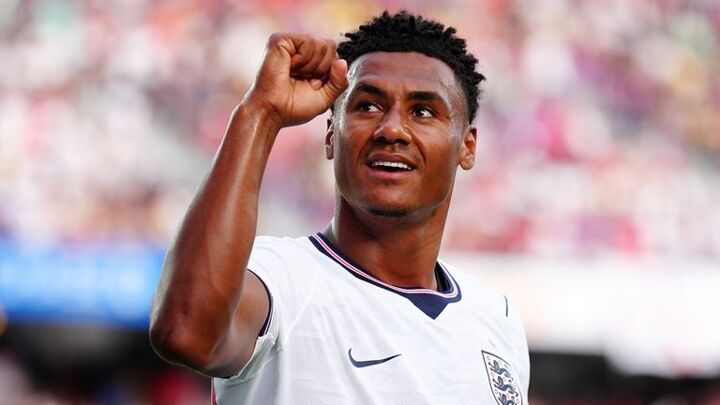
Kane will be approaching 35 when England embark on their next major tournament.
He stands a good chance of still leading the line for the Three Lions but if his powers do start to wane, England will be faced with quite the predicament.
Their current back-up options are Ollie Watkins and Ivan Toney. Both of those players, who have played a total of 7 minutes in the World Cup, will be 32 at Euro 2028.
Elsewhere, there is little to choose from. Liam Delap, Dominic Solanke and Dominic Calvert-Lewin were the other options in contention in the build-up to the World Cup.
Combining all three of their goal tallies in the Premier League (18) last season amounts to just half of Kane's output in the Bundesliga (36).
Kane is a generational talent and, quite simply, impossible to replace. When his England career eventually comes to an end, the void he leaves at the top of the pitch will be enormous.
Patrick Rowe
Why wasn't Mainoo picked and do England have a midfield problem?
It's a familiar manner of exit for England with a familiar problem at the heart of it: England don't have midfield players who can control a football match.
Or at least, they don't have any Tuchel was willing to select.
What was the point of taking Kobbie Mainoo to this World Cup? He hasn't got on for a single minute.
The 21-year-old - a starter in the Euro 2024 final, don't forget - played a key role in Man Utd's upturn in form in the second half of the Premier League season. Among midfield regulars, only Spain and Man City star Rodri had a better passing accuracy in the opposition half than Mainoo during that period.
How England could have done with some of that composure in the final half an hour against Argentina, when they gave up possession and territory to try to hang on. Against Mexico, even with the caveat of having a man less, and against Norway, England were unable to get on the ball and keep it to ease the pressure on their backline.
Elliot Anderson and Declan Rice were understandably first-choice for this tournament, but Tuchel turned to Reece James, Jordan Henderson, Jude Bellingham, Eberechi Eze and Morgan Rogers when replacements were required in the centre of the pitch ahead of Mainoo.
If Mainoo isn't his man, then that's the coach's call. But unless Tuchel can find a solution in midfield to England's age-old problem, he'll go on getting the same outcomes.
Peter Smith
 Arsenal
 Chelsea
 Manchester United
 Burnley
 England
 Bayern Munich
 Real Madrid
 Al Nassr FC
 Messi
Messi
 Ronaldo
 Walker
 Tuchel
 Salah
Salah
 Kane
Kane
 Rice
Rice
 Reece James
 Inter Miami CF
 Saka
Saka
 Bellingham
 Mainoo
All Comments (14)
Yesterday 23:57
Yesterday 23:21
Yesterday 23:19
Yesterday 23:19
Yesterday 23:11
Yesterday 22:57
Yesterday 22:51
Yesterday 22:45
Yesterday 22:42
Yesterday 22:25
Yesterday 22:21
Yesterday 22:20
Yesterday 22:19
Yesterday 22:11