On July 29, according to Japanese media outlet RONSPO, the coaching style of Japan national team manager Hajime Moriyasu has once again sparked controversy following the exposure of in-game audio from the latter stages of a match against Brazil.
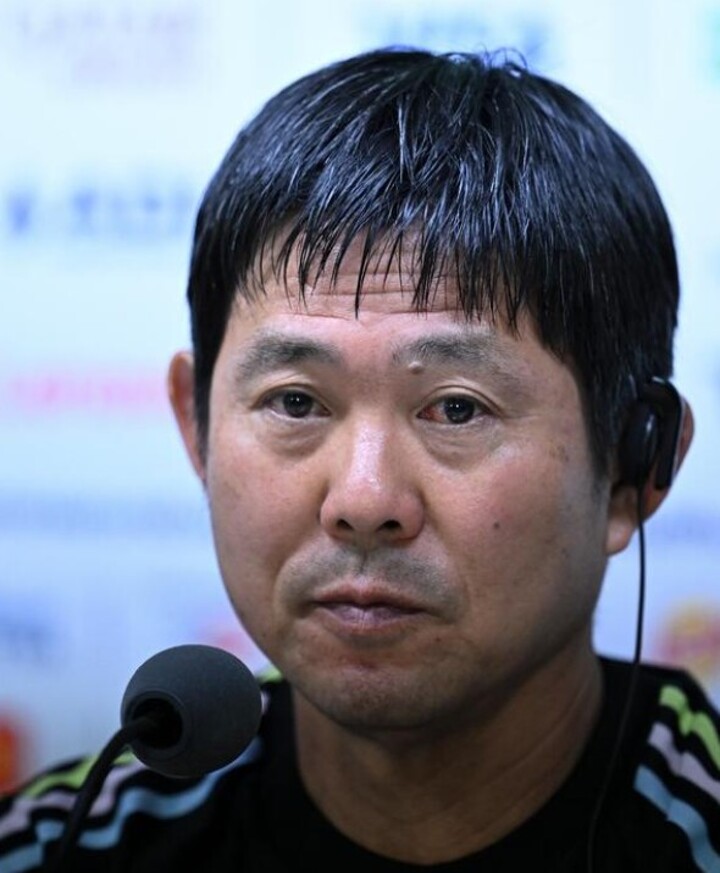
After the Japan Football Association decided to keep Moriyasu in charge of the Japanese team with the special arrangement of a "six-month contract renewal only," public skepticism about him has not diminished. Recently, the Japanese NHK television program "Sunday Sports" revealed previously unexposed inside information about the match, bringing discussions about Moriyasu's tactical adjustment capabilities back into focus.
In the 2026 World Cup Round of 32 knockout match between Japan and Brazil, Japan ultimately suffered a last-minute defeat, losing 1-2 to Brazil and failing to advance.
The footage revealed by the program shows that during a water break in the second half of the match, Moriyasu shouted to the players: "Just keep going like this! If we want to win, we'll go into extra time and then penalties!"
Although Japan was tied 1-1 with Brazil at the time, the game's momentum was completely controlled by Brazil, and Japan was almost in a passive defensive state. Therefore, this instruction, once exposed, quickly sparked a large amount of criticism on social media.
Many Japanese fans believed: "This is too lacking in a response plan. It's really shocking to see that situation and still say to keep it up."
"To still be giving such instructions against Brazil, the game was essentially already lost."
Water Break Becomes Focus of Controversy: Why Didn't Japan Change Strategy?
The key reason for Moriyasu's criticism came from a water break during the Round of 32 knockout match against Brazil.
In the 69th minute of the match, Japan and Brazil were tied 1-1. Previously, Japan had taken the lead in the 29th minute through Mainz midfielder Kaishu Sano and carried that advantage into halftime. However, after the second half began, Brazil coach Carlo Ancelotti quickly made personnel adjustments and changed the match strategy. Brazil began to increase attacks down both flanks, creating threats with numerous early crosses.
In the 56th minute, the Japanese defense was finally breached, and Brazil equalized the score.
Facing the change in momentum, Moriyasu did not make an adjustment until the 66th minute.
He successively substituted two wing-backs: on the left flank, Keito Nakamura of Reims was replaced by Junnosuke Suzuki of Copenhagen;
on the right flank, Ritsu Doan of Frankfurt was replaced by Yukinari Sugawara of Werder Bremen. Although both substituted players are attacking players, Nakamura and Doan had previously put in a huge defensive effort, and their physical condition had clearly declined.
Therefore, Moriyasu chose to bring on two players with stronger defensive attributes, hoping to strengthen the wing defense.
But the problem was that not only did the Japanese team fail to change the suppressed situation, but they gradually lost their counter-attacking threat.
It was under these circumstances that the match entered a water break.
And Moriyasu's instruction was: "Maintain the current situation. If you want to win, drag it into extra time and then win through penalties."
This decision became the core of the controversy.
Because at that time, with about 20 minutes left in the match, it was actually very difficult for the Japanese team to control the situation.
Ultimately, in the 88th minute, Brazil secured the winning goal.
The Japanese team regrettably exited the World Cup in the Round of 32, falling far short of their pre-tournament goal.
Moriyasu Explained Post-Match: "The game is like rock-paper-scissors, requiring continuous adaptation."
After the Japanese team returned home, Moriyasu discussed the loss at a summary press conference.
He likened tactical adjustments between coaches to "rock-paper-scissors."
He said: "There is no rock-paper-scissors where it's always a draw in football. When one side makes a move, the other side needs to adjust and surpass the opponent with their next move."
However, the public believes that if the so-called "next move" is merely waiting for the game to go into extra time and hoping to win through penalties, then this strategy can hardly be called proactive adaptation.
After the NHK program aired the relevant footage, criticism on the Japanese internet rapidly increased.
Many fans said: "Saying 'keep going like this' during the water break in the second half was truly helpless."
"Didn't he realize that continuing like this was just a matter of time? To think this way against Brazil, failure was basically inevitable."
"Watching the NHK report was truly shocking, it's not too late to bring in a foreign coach now."
"This shows the team lacks the ability to adjust, it feels like they played without a tactical plan."
"Thinking about winning by penalties in the 70th minute of the game, what kind of thinking is that?"
"The only reason they won before was because Japanese players improved their individual skills after growing up in Europe."
Moriyasu Reveals: Had Planned to Bring on Young Forward Kentaro Shiobe if Game Went to Extra Time
After returning home from the World Cup, Moriyasu also gave several interviews to Japanese media.
On the NTV program "news zero," he revealed that if the match had gone into extra time, he had planned to bring on Wolfsburg forward Kentaro Shiobe. Shiobe had gained attention during the World Cup for some provocative remarks before matches.
Moriyasu stated that he hoped to utilize Shiobe's speed and attacking prowess to find opportunities in extra time.
However, as Japan ultimately failed to hold on until extra time, this adjustment did not have the chance to be implemented.
Expert Opinion: Moriyasu Is Not Incapable, But In-Game Adjustments Remain the Biggest Challenge
Japanese football tactical analyst Yasushi Morita believes that public evaluation of Moriyasu needs to be more objective.
He said: "Moriyasu's coaching style is controversial, but it's not simply a matter of judging whether he is a good coach or a bad coach."
"His preparation capabilities did help the Japanese team reach its highest historical level. But his ability to make adjustments during matches still has issues."
Morita believes that every coach has their strengths and weaknesses.
The key is not just to find a "coach who can adjust the game," but to build a "team that can make adjustments."
He said: "World-class teams don't just rely on the head coach to change the game. The substitutes, coaching staff, and players themselves all need to collectively make game corrections. What the Japanese team needs in the future is not just a coach who can adjust, but an organizational system that can adjust the game."
Six-Month Contract Renewal Decision Questioned Again
Moriyasu had previously led the Japanese team to consecutive World Cups, achieving one of the best historical results for an Asian team.
However, after exiting the World Cup in the Round of 32 this time, discussions within Japanese football about whether to continue trusting him have increased.
The Japan Football Association had previously chosen to sign a special "six-month limited contract" with Moriyasu, one of the goals being for him to lead the team in the Asian Cup and improve their international ranking.
But this decision was questioned by some fans.
They believe that the lack of tactical adjustments exposed by the Japanese team when facing world-class opponents on the biggest stage like the World Cup indicates that the team still has a significant gap. Now, with the exposure of the inside story of the Brazil match, the debate surrounding Moriyasu's coaching abilities has once again become a hot topic in Japanese football. For the Japanese team, how to improve their ability to adapt on the fly while maintaining stability will be the biggest challenge in the coming years.
AF's PC site is now live! Browse full news, comments, match details and stats on your computer. Visit: www.allfootballapp.com
 Brazil
 Japan
Japan
 Hajime Moriyasu
All Comments (4)
Today 05:59
Today 05:17
Today 04:51
Today 01:25