39-year-old Messi maintains peak athletic condition: secrets include diet adjustments, yerba mate, and a unique running strategy.
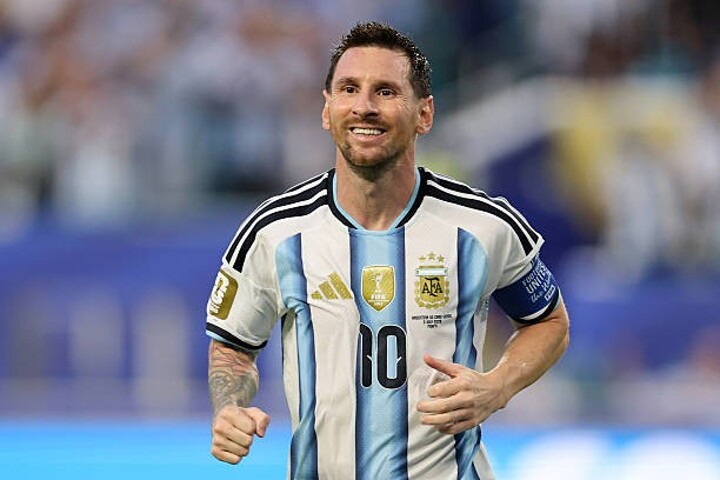
Pizza, Coke, and Magic
Messi was not supposed to be globally celebrated for his career longevity. The legend of the eight-time Ballon d'Or winner had already been written, sealed away by countless people to recount his greatness to future generations. Those nimble dribbles, spectacular solo goals, balletic grace and touch, extraordinary football IQ, and the ability to single-handedly change a game—these classic images are deeply etched in people's minds, as if he were a player who would never age.
Appreciation for elite talent remaining at its peak in middle age? This was supposed to belong to Giggs and Ronaldo, two football giants who trained like machines and possessed an unwavering obsession with persistence. Both were coached by Sir Alex Ferguson, a famously competitive manager—is it just a coincidence? For Messi, people valued his artistry more than his durability, while Ronaldo pushed durability to its extreme.
Of course, it's perfectly possible to appreciate both qualities simultaneously—like marveling at the Sagrada Familia and a supercomputer. In the first decade of his career, Messi sometimes vomited during games, a consequence of heavy consumption of processed foods like pizza and chocolate. His love for Coke was once described by the media as "addiction." His legendary genius was established at a relatively young age, but one thing is certain: the Argentine was not supposed to be globally celebrated for his career longevity.
Wise Adjustments
The arrival of Italian nutritionist Giuliano Poser changed everything. Widely credited with transforming Messi's physical condition and health since 2014, Poser has been asked about his methods many times over the years. He humbly responds with only obvious goals—methods any qualified sports medicine practitioner would advocate. He banned carbonated drinks and alcohol, eliminated processed foods, flour, refined wheat, red meat, and pork, and minimized shellfish and dairy products. Poser emphasized having Messi consume foods his body needed, rather than wanted. He strongly advised players to follow five key pillars: drink plenty of water, use only high-quality extra virgin olive oil, consume whole grains and legumes daily, and eat fresh fruit and fresh vegetables.
The Remaking of a Genius
At the end of the 2013-14 season, Messi had scored 41 goals in 46 games for Barcelona. On the surface, everything seemed normal, but there was concern within the club. The 27-year-old Messi began to suffer muscle tears and hamstring strains, missing games from time to time. That spring, during a warm-up match for Argentina against Romania, he vomited on the field just 7 minutes into the game. This had happened many times before, but never so early. Test results were inconclusive, and discussions were divided. It was at this point that Demichelis recommended Poser to his national team teammate, and Messi's diet underwent significant adjustments. Within weeks, he lost 3.5 kg, and the nausea on the field disappeared. Teammates began to comment that the Argentine looked sharper and more fluid in training. Poser was not only a nutritionist but also a kinesiologist, and he recommended a holistic therapy that included the use of Bach flower remedies (a stress-relieving treatment sprayed on the tongue) and lymphatic massage. Postural correction and emotional therapy were also undertaken. For the next seven years, Messi embraced all of this, seeing the benefits on the field and feeling significantly better off it.
In 2018, Messi candidly admitted in an interview: "For many years I ate very badly: chocolate, fizzy drinks, everything. Now I take better care of myself. I eat fish, meat, salads. Everything is organized, very carefully."
The Drink of the Gods
Messi's love for yerba mate is well-documented; he has been photographed many times drinking it from a traditional gourd cup. This traditional South American tea contains only one core ingredient—the crushed leaves of the Yerba Mate plant, mixed with hot water. Rich in antioxidants and vitamins, it is known as the "Drink of the Gods" in Colombian folklore, and its natural caffeine boosts energy and alertness. For players adhering to a healthy diet, it is also said to suppress appetite. Messi is so fond of the drink that he has inspired many teammates to also love it. Just last week, he reportedly gifted every member of Argentina's World Cup squad a custom yerba mate set, including a golden thermos engraved with his personal logo.
Greatness Achieved Through Walking
This summer, there has been much discussion about Messi's tendency to "walk" in Argentina's eight matches. Data shows that the legendary forward spent 62.7% of his time walking slowly, 24.7% standing still, only 2.8% running, and 0.1% sprinting. Of course, Messi has always been this way—it's a deliberate strategy that allows him to observe defensive gaps in opponents and evade central defenders. Rather than walking, he is cruising, assessing team structure and building what Guardiola once called a "mental map." No one can say this strategy doesn't work: in the World Cup, Messi scored 8 goals and provided 4 assists, creating 15 excellent chances (the third most in the tournament). Every time Argentina had possession, he was a potential threat. This method also allows him to conserve energy, enabling a 39-year-old player to play 120 minutes against Cape Town, Switzerland, and Spain, and 90 minutes each against Egypt and England. What we witnessed in America this summer is how a truly great player manages his excellence, unleashing it only when needed—a fascinating sight in itself.
AF's PC site is now live! Browse full news, comments, match details and stats on your computer. Visit: www.allfootballapp.com
 Argentina
 Messi
Messi
 Inter Miami CF
All Comments (21)
Today 21:21
Today 21:21
Today 21:03
Today 21:03
Today 21:01
Today 20:55
Today 20:53
Today 20:53
Today 20:49
Today 20:45
Today 20:43
Today 20:39
Today 20:37