The news on Tuesday, first reported by the Financial Times, that FIFA is preparing to sell off part of its commercial operations spread shock and outrage across the sporting world.
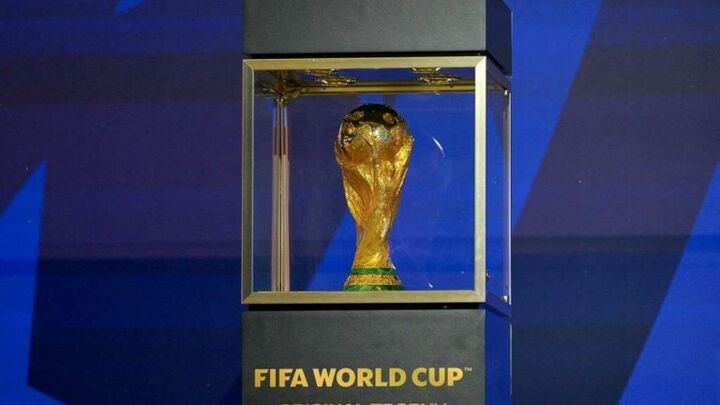
Football's world governing body plans to sell a 21 per cent slice in FIFA Forward Enterprise (FFE), a new subsidiary under which commercial operations and events - such as the World Cup, which, as detailed recently by The Athletic, is the key driver in FIFA's finances - will be consolidated. The intention is to raise $4.2billion (£3.2bn) from outside investors and the narrative quickly formed: FIFA wants to sell (part of) the World Cup.
The rebukes have been swift. By Wednesday night, three of the six confederations under FIFA's hand had criticised the move, as had several member associations - none of whom were apparently consulted before plans broke into the public domain. Shows of support have been a minority act.
Money, as ever with FIFA and football generally, is central to the plot. But what, exactly, is FIFA proposing under these plans? How do they compare to other sports and other entities within football? And why all the controversy?
What is the financial model being proposed by FIFA?
As is often the case, FIFA led its argument on this with big numbers. FFE is designed to be a specific, purpose-built entity, maximising FIFA's take from commercial and events operations.
Citing valuation forecasts carried out by JP Morgan Chase, a global bank, FIFA reckons FFE will be worth $20billion. Of that, it hopes to raise $4.2bn via an equity sale - hence the 21 per cent stake on offer to external investors.
FIFA needs the majority of its 211 member associations to sign off on its plan, alongside the 37-person FIFA Council (which president Gianni Infantino sits atop), but the carrot to those associations isn't the mere $4.2billion in proposed proceeds.
Instead, FIFA is offering $10billion in development funding over the next four-year cycle, spanning 2027-30. It is a huge uplift. In the ongoing 2023-26 cycle, $3.86bn was budgeted for development purposes, a figure that was only previously set to increase by $127m under the original 2027-30 budget.
Those latter figures include all development funds, not just the sums doled out under FIFA's Forward programme. It is that programme that FIFA notably spearheaded Tuesday's announcement with, saying this plan's approval would ensure "football development in every corner of the world would benefit immediately from increased funding available to all 211 member associations".
Conspicuous by their absence in both that announcement and a follow-up 'frequently asked questions' (FAQs) document published by FIFA on Wednesday were the six continental confederations, with no clarity given on what might fall due to them under the new financial model. They each receive $15million annually, or $60m over the four-year cycle, but FIFA's statements only made room for what the 211 member associations - who, crucially, will vote on whether or not to sell off a slice of FFE - will get.
What they will get is quite a lot of money.
When he was elected in 2016, one of Infantino's big promises was to send much more money to every nation under the FIFA banner, and he has firmly followed through on it.
Before his election, nations received around $3million each over every four-year cycle. Forward 1.0 (2016-18) increased that to $3.75m; Forward 2.0 (2019-22) almost doubled it to $6m. Forward 3.0, in operation until the end of 2026, confers at least $8m in entitlements across the cycle and, for 2027-30, Forward 4.0 budgeted to send members just under $10m each.
This proposal blows those figures out of the water.
To the 211 members, FIFA is proposing payments of $40million each over the next four years. That is comprised of $20million under Forward 4.0 and a further $20m under an optional new programme named FIFA Fast-Forward.
Multiply that second $20million by 211 members, and you get to the $4.2bn FIFA hope to generate from an equity sale. Fast-Forward has caused even greater consternation following the revelation it can only be tapped by those members who confirm their wish to participate by September 19.
As Fast-Forward is funded by the equity sale, agreeing to participate in it is akin to agreeing to the equity sale. Those who fail to opt in by that date won't be offered the funds. UEFA, in a statement on Wednesday afternoon, declared: "This says everything you need to know about this plan."
A byproduct of the news leaking before FIFA could put a proposal out themselves is that it left several matters uncertain. Wednesday's FAQs document sought to address those.
For one, how does a $4.2billion equity sale translate to $10bn in development funding?
That $10billion comprises a mix of new and existing funds - $4.2bn would be generated from the sale of a 20 per cent stake in FFE, but FIFA's logic goes that simply by creating FFE, it will generate greater revenues even than the $15bn they now expect from the 2023-26 cycle.
A professionalised commercial business, demarcated from governing football, would, its executives theorise, bring in even bigger bucks. As much as $2.7billion was already budgeted for FIFA's Forward programme in 2027-30. Under new proposals, that amount would increase to at least $4.2bn, being that $20m due to each member association (in reality, the sum will be even greater, as confederations and zonal/regional associations receive payment under Forward too).
FIFA reckons increased revenues generated by creating FFE will cover those increased Forward payments not just in the next cycle but beyond too. In 2031-34, member payments are proposed to rise to $22million over four years; in 2035-38, the figure rises again, to $24m. In all, across the next three cycles, FIFA believes FFE will ensure members receive $86m under Forward, or almost five times the $17m they've each been entitled to under the programme in its first decade of existence.
Even without the proposed equity sale, FIFA believes hiving off commercial and event operations into a standalone, focused entity will generate $4.2billion in Forward payments in 2027-30, $4.6bn in 2031-34 and $5.1bn in 2035-38.
Those are enormous sums, particularly for the many members who already rely on FIFA for a majority of their revenues. In tiny Mauritius in the Indian Ocean, for example, non-FIFA turnover in 2025 was just $0.4million. Assuming that figure remained unmoved and the Mauritian FA participated in Fast-Forward and received all $20m in 2027, alongside $5m from Forward 4.0, this proposal would mean 98 per cent of its revenue would be attributable to FIFA.
Notably, however, in the rush to sell the project to member associations, little thought appears to have been given to the confederations and the zonal and regional associations who also enjoy Forward funding.
Wednesday's FAQs confirmed the $10billion development pot was comprised of: $4.22bn to the 211 members via Forward 4.0, $4.22bn to the 211 members via Fast-Forward, and the remaining $1.56bn "comes from FIFA's other existing development programmes".
FIFA's original 2027-30 budget allocated $1.287bn to those, which, if that hasn't now changed, leaves just $273m to be doled out to the confederations and others who have previously received Forward funds but haven't been factored into the new $4.22bn figure. That appears problematic: in the current 2023-26 cycle, the six confederations were entitled to $360m and the other associations to $76m, a combined figure which is $163m higher than the $273m seemingly remaining in the $10bn pot.
How does it compare to elsewhere in sport? And what would investors get?
One justification offered up for FIFA's plan is a simple one: everyone else is doing it.
Look at, say, Formula 1, or rugby union in England or, heck, even across world football. La Liga sold off future rights to private equity firm CVC in exchange for more than €2billion in 2021 (more than $2.4bn; £1.7bn then). UEFA, one of FIFA's chief critics, jointly runs UC3, a venture set up to manage the commercial interests of its European competitions.
There are nuances to each of those examples and reasons they aren't exactly comparable with this, not least that in the case of UC3 none of it has been sold off to private investors. There's also the point that some sporting bodies have never really made any play toward benevolence or ensuring global inclusivity. F1 is a nakedly commercial and capitalistic enterprise, from which only a small crop of private owners benefit.
In contrast, FIFA is, by definition and law, a not-for-profit entity, one that, according to its own statutes, exists to "improve the game of football constantly and promote it globally in the light of its unifying, educational, cultural and humanitarian values". Which are definitely words being uttered with relish in private equity boardrooms the world over.
FIFA's not-for-profit status confers various benefits, including a low tax rate. Across the past decade - so not even including the huge profit it has forecast for 2026 - FIFA's pre-tax surplus of $1.241billion generated a tax charge of $66m, or an effective rate of just five per cent.
It is unclear how an obviously commercial entity like FFE would fit into FIFA's existing structure. FIFA pays no dividends, but what exactly would investors in FFE get in return, if not a share of future profits? FIFA has stressed the stake sale would grant no control to new investors, but there has to be something coming the other way.
In Wednesday's FAQs, FIFA included answers to that very quandary, but they weren't at all convincing. In return for their $4.2bn, investors would "hold a stake in FFE itself, which they could sell during future tender processes overseen by FIFA."
Yet what, exactly, would such value accretion be based on if a stakeholder receives no dividends or obvious financial benefit from being involved in the first place? Particularly, when, as those FAQs reiterated, investors would hold a "non-controlling" stake, no seat on the FIFA Council, no vote in FIFA's congress, and "no role in decisions on matters such as the World Cup's format, frequency, expansion, or any other sporting or regulatory matter". A price of $4.2bn for a stake that grants zero control, no apparent remuneration and a nebulous promise it will be even more attractive in the future? Sign me up.
Why has this proven so controversial?
For one, the unilateral nature of it. FIFA and Infantino have embarked upon the process of putting this plan into motion without, apparently, seeking the thoughts of any of its 200-plus members, many of whom have now expressed dismay at what they view as a lack of due process.
A source close to FIFA's thinking on the matter, who asked to be kept anonymous to protect relationships, offered that there was a bit of a double-edged sword in play. On the one hand, if FIFA presented the idea to members with little detail behind it, it would be viewed as unserious; on the other, as has happened, relatively well-advanced plans being made without consultation are viewed by some as a fait accompli.
That is open to interpretation, though the identification of a frontrunner among would-be investors even before any member associations were consulted has hardly helped FIFA's cause. Similarly, documentation seen by The Athletic which states any investor is required to complete transfer of funds by the end of October rather hints at a desire to rush the process through rather than take a considered, inclusive approach.
Nor has the identity of that frontrunner aided matters. After six weeks - and the rest - of cosying up to United States President Donald Trump, the news someone in Trump's extended orbit was the likeliest investor in FFE merely, for some, added to the growing list of examples of Infantino prostrating himself and football in exchange for favour.
That someone is Joshua Kushner, who heads up the investment vehicle, Thrive Eternal, that is "expected to lead the proposed investor group for FFE".
Kushner is the brother of Jared, Donald Trump's son-in-law, and it didn't take too long for a relational line to be drawn. Sources on the Thrive side have told The Athletic that brotherhood does not mean identical views are held and, indeed, Joshua Kushner, through Thrive Capital, donated $250,000 to a Democratic group during the 2024 election cycle and his wife, Karlie Kloss, has been a frequent donor to Democratic candidates.
Infantino's bonhomie toward Trump will, though, rightly or wrongly, obscure much of that.
That is not the main controversy. The World Cup, for all its ills, is a global event and controlled, for now, by an organisation that is not, at least officially, beholden to private interests. Selling a slug of it off to the highest bidder changes that formula irrevocably.
There's also the point of who truly stands to benefit from this. As The Athletic's Matt Slater points out, running FFE could be a possible future role for Infantino himself.
Member associations might hoover up a huge increase in funding, but already there are concerns about how transparently the World Cup money is spent - FIFA says lots about who gets what under Forward, but public disclosures from member associations are in many cases lacking. The rush to talk up how much more each member can get hardly inspires confidence that transparency is improving.
FIFA believes FFE, irrespective of any equity sale, will enable the body to reap greater reward from broadcast rights and the like, but to what end? Inviting private investment to the table hardly points football in the direction of philanthropy; they will want their money back and more besides. Private capital and global development, which FIFA repeatedly cites itself as an important player in, tend not to be bedfellows.
Why, exactly, does FIFA even need this extra $4.2billion from external investors? By its own proposal, FIFA expects FFE to ensure ever-improving revenues over the long term, with the proceeds from an equity sale merely being used to give member associations a one-off $20m bounty.
One source familiar with FIFA's thinking, who asked to be kept anonymous to protect relationships, told The Athletic that, irrespective of an equity sale, setting up FFE had "separation and focus" in mind, and that it was "eminently feasible" FFE could be set up and retained 100 per cent by FIFA. It begs the important question of why FIFA and Infantino even feel the need to bring external investment on board for a once-off payment, if an in-house refocusing could, by itself, confer long-term benefits.
Based on those FAQs, FIFA reckons the one-off Fast-Forward payments are needed to "unlock and turbocharge long-term development projects that would otherwise be out of reach within a single FIFA Forward cycle". The sudden urgency is curious given FIFA signed off on a much smaller Forward budget less than a year ago, and the apparent haste could easily have been aided by still forming FFE but not ramping up Forward 4.0 payments. The conditions attached to obtaining the $20million Fast-Forward fund cast significant doubt on the true intention of creating that new programme.
For some within football, the proposal is unpalatable. Condemnations arrived in rapid succession. But actions speak far louder than words - and the true vote is yet to be held.
This article originally appeared in The Athletic.© 2026 The Athletic Media Company
 Athletic Club
All Comments