“Football’s a fickle game, isn’t it? One minute you’re lifting the Premier League trophy, the next you’re looking for a new role elsewhere,” says Aaron Briggs. He knows that harsh reality firsthand, having been sacked by Liverpool two days before the end of the year. For a team consistently conceding from set-pieces, the set-piece coach rarely receives many festive well wishes.
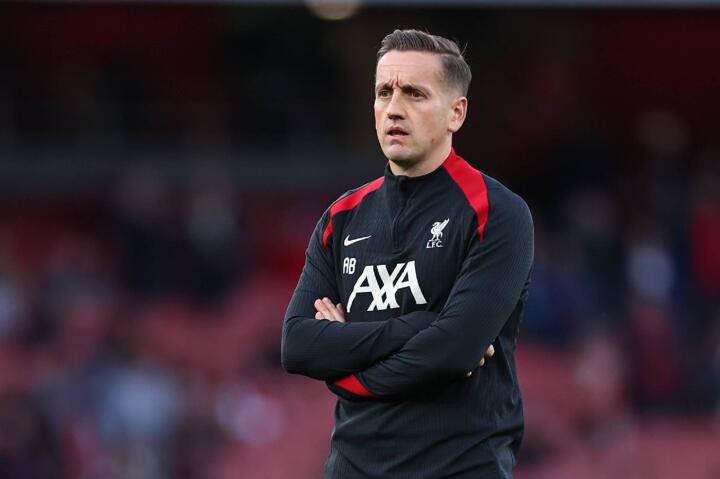
It took Briggs, 39, 20 years to work his way into the coaching staff of a European giant. He started out at Blackpool, working for free, holding a tilted umbrella to film matches and keep the rain off.
In 2008, Preston North End officially brought him on board. Three years later, he moved to Manchester City, working his way up through the Manchester City academy system before serving as a match analyst for Pep Guardiola’s first team for the 2018-19 and 2019-20 seasons.
In 2020, he joined Monaco, initially as an analyst before transitioning to a coach and later becoming the club’s Head of Methodology. In 2022, he moved to Wolfsburg, serving as Niko Kovac’s assistant coach for two seasons.
His upward trajectory was clear. In June 2024, he received an invitation for a FaceTime call with Liverpool manager Arne Slot. After the call, he was added to the first-team coaching staff at Kirkby as an individual development coach.
Although Liverpool had begun recruiting a set-piece coach in May, Briggs agreed to take on that responsibility as well by the time he arrived in Philadelphia for the pre-season tour of the United States. His analytical background was seen as a good fit for this new task.
“As an assistant, you try to help as much as you can, so I thought, ‘Why not?’” says Briggs.
“I knew how much was involved because I had seen Nico Jover’s day-to-day work at Manchester City. You watch a lot of opposition games, you study every single restart and set-piece for your own team, and you also watch other teams for inspiration. Analysts work an incredible number of hours each week. You really have to love it, otherwise, you can’t do it. I knew it would consume my life, and it did.”
The first year went smoothly. Liverpool barely faced any opponents and secured the Premier League title early. While their set-piece performance was mid-table, they didn’t concede their first set-piece goal until the second half of the season.
On the day they clinched the title with a 5-1 victory over Tottenham Hotspur, Slot even sent him onto the pitch to receive applause from the fans with the rest of the team. Micky van de Ven then patted him on the shoulder. Briggs had helped Kovac develop Van de Ven from a left-back to a center-back at Wolfsburg.
“He gave me his shirt and said, ‘Thank you for everything you’ve done.’ That meant a lot to me because of the respect and the relationship we had.”
With a championship medal, Briggs was full of confidence. What made him even more optimistic was that Liverpool had asked him to take full responsibility for set-pieces for the following season.
But in the second season, everything started to go downhill. Liverpool conceded 12 set-piece goals in the Premier League and only scored three themselves. Slot publicly complained about this record multiple times after matches.
In November, Slot called it “borderline ridiculous.” In December, after conceding a 96th-minute equalizer to Leeds United, he frankly stated that he was “very annoyed” by the situation.
“As an assistant coach at Wolfsburg and Monaco, I was used to being in the spotlight, but the thing about set-pieces is that they are very, very quantifiable, black and white,” Briggs says.
“That summer, I took on the job full-time and felt I could make a difference. I poured my heart and soul into it, investing all my time as much as possible.
“The club was also trying its best to help, so it wasn’t just me carrying the burden. The analysis team helped a lot. We weren’t just watching things slide downhill. We had meetings, communicated with players and the coaching staff. I would delve deeper, looking at all the chances we conceded and how those goals happened. Was I putting the wrong people in the wrong positions? Was the defensive setup problematic? But mostly, it was second and third balls, so the problem wasn't in the initial setup.
“We talked to key players, and I spoke a lot with Van Dijk. He was frustrated. So was I, the club was, and the fans were too. We were all helping each other, trying everything to correct it.”
Finding a solution was not easy. Most goals conceded were not from the initial challenge, but from subsequent phases of play. Slot also mentioned a certain element of luck when comparing expected goals data. The charts below show Liverpool slipping from mid-table to become one of the weakest set-piece teams, both offensively and defensively.


Even more perplexing was their Champions League set-piece record: five goals scored, zero conceded, yet they ranked seventh in the entire competition.
“I really wish I could tell you why. In the end, that Champions League data almost annoyed me more.”
In the title-winning season, Briggs had designed a corner routine that helped Salah score against Manchester City at the Etihad Stadium. Several covering players cleared the path, and the ball was played back to Salah. This combination had been perfectly rehearsed in training the day before.
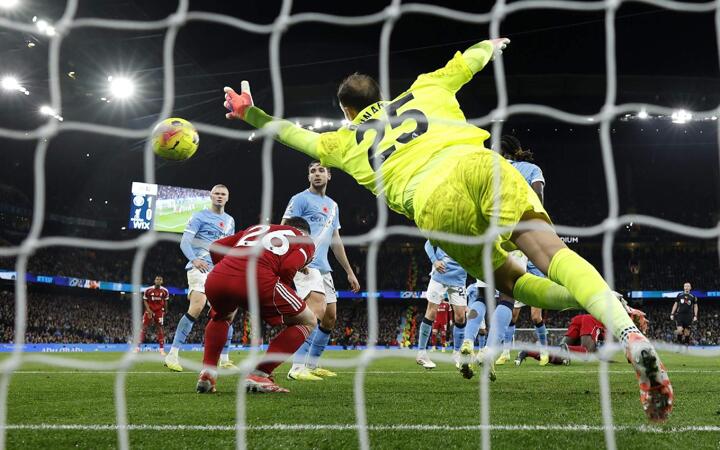
After a poor start to last season, he thought things were starting to improve in November when Van Dijk’s header from the same position at the Etihad Stadium helped Liverpool equalize against Manchester City. However, Andy Robertson was controversially ruled offside for interfering with goalkeeper Donnarumma. Then, Manchester City scored with a deflected shot from 30 yards out in first-half stoppage time; that attack, because they had taken a short corner first, was also counted as a set-piece goal conceded.
“That was a low point. The offside call was ambiguous, and you couldn’t help but think, maybe if the result had been different, the season’s trajectory would have been different, maybe the corner statistics would have snowballed. But at this level, the margins are truly so small.”
“When I put all my energy into it and didn’t get good results, it was difficult. Looking back, it didn’t work out for the club or for me, but I have no regrets.
“I was lucky enough to be part of that Premier League-winning team and to participate in the open-top bus celebration in Liverpool with hundreds of thousands of fans. I truly hoped the second year would be better, but everyone was trying their best, so I didn’t feel like I was carrying it alone.
“There was no bad blood between us. Arne was really supportive, and I talked to him a few weeks ago. The separation was peaceful. Unfortunately, the data is the data, and that’s part of football.”
Grant Downie, former Head of Performance at Manchester City, has been a mentor to Briggs, and his composure provided great comfort to Briggs during those difficult times.
As set-piece coaches have gained more attention in recent years, especially after Jover's rise to prominence under Arteta, this was also the most public role Briggs had experienced.

“He’s massively elevated himself in so many ways,” Briggs said of Jover. “He’s incredibly detailed in every aspect of set-pieces, including timing and movement. The set-piece itself finishes quickly, but what happens before, during, and after the ball is played is critical. The way he breaks these things down is remarkable.
“I’m not surprised at all by what he’s achieved because he really put in countless hours to create it. He’s constantly thinking and evolving. Even in the last two seasons, their approach has changed somewhat.”
As a Mancunian, Briggs joined Manchester City in 2011, just as the club was rising to become a superpower. In the academy, he worked with a group of players who later became famous, including Brahim Díaz, Foden, Sancho, and Frimpong.
By 2018, he had risen to head the U23 analysis department and was on the field for every training session. Then, a phone call changed his life.
“I was setting up a training session and suddenly got a call from HR. I thought, ‘Oh no,’” Briggs says with a laugh.
“It was the complete opposite. There was a vacancy, and the interview was for the first-team analysis lead. I then got another call saying I needed to go and meet Mikel Arteta that afternoon.
“We talked for an hour in his office, about everything, all football. Analysis, processes, mainly to see if I was a good fit for them. He started talking in great depth about center-backs and high lines. Body position, trigger points when the opponent receives the ball, knee bend, when to start running back, even breaking down a player 40 yards from the ball in such detail. That’s the level of detail he wanted.
“I remember walking out of that room with only one thought in my head, ‘Wow, this is a completely different level.’”
That wasn't all. He then walked through a door leading to the manager's office, and round two began. This time, Arteta and Guardiola talked football for another thirty minutes.
“I thought I understood football. I actually knew nothing. It felt like going back to school.”
By the end of the day, Briggs received a call informing him that he had been hired, and the work began immediately. Arteta wanted him to work closely with him, specifically focusing on individual development.
“He was very supportive of his staff, and also very demanding. He was direct and sharp. But the academy system was multidisciplinary, so I saw how these elements connected, which is what he liked.
“Mikel was constantly absorbing anything he could learn. He was like a sponge. You knew then that he would one day become a manager; it was obvious. He was full of passion and enthusiasm every day, with no days off. He was always moving with a purpose, which also drove the standards across departments.”

Briggs witnessed two of the most influential coaches of that era up close, but what impressed him most was Guardiola’s work ethic.
“We would produce very in-depth, very detailed opposition videos and written reports. Every phase, the precise build-up he requested, annotated video replays – all done. We had two full-time people dedicated to this. But he would still watch three or four more opposition games himself.
“I used to think, ‘Why is he doing this?’ Then I understood, because I saw how brilliant his half-time adjustments were. He had rehearsed countless scenarios before the game, so by half-time, he already had ideas on how to change things. He had to go through the entire process in his mind first, so at half-time, he could just ‘bang’ make a decision. He had already mentally played out everything. I don’t know if he wrote it down, but many of the things he came up with at half-time were incredible.”
In 2020, Briggs moved to Monaco. Laurence Stewart, now at Chelsea, hired him as an analysis coach to better connect video and training. This role is common today, but it was in its early stages then. This meant he would work with players to refine individual technical details, an experience he later brought to Wolfsburg, helping Maxence Lacroix improve.
“He’s always been driven, wanting to play at the highest level, so I’m not surprised at all that he went to Chelsea and made it into the French national team. He always had a very calm confidence: ‘I’m going to do this, I’m going to get better, and then I’m going to get there.’”
“I spoke to him the other day, and he still wants to keep improving. He doesn’t think he’s made it. He’s still thinking, can I optimize my pre-game preparation, my diet? He’s constantly looking at these things.”

At Liverpool, Briggs was in charge of individual development. He often worked with players like Rhys Williams, who were often not in the matchday squad but still needed tailored programs to maintain their fitness. He also helped injured players reintegrate into the team.
“The coaching staff divided the players into groups. Arne took the captain’s group, and each of us took six or seven players. Each player had a touchpoint every two to three weeks. It could be analysis, extra work on the training ground, or small-group/individual training after sessions.
“Ibrahima Konate was one of the players I worked with, and he was very committed to individual development. This is common among players now because it directly relates to them, everyone wants to improve, but everyone learns differently. Some top players love watching analysis, like Vincent Kompany at Manchester City, but others need to learn on the pitch. The key is to figure out how they can understand, because not everyone is suited for a classroom.”
After leaving Liverpool, Briggs returned to UEFA’s football insight department, where he attended four UEFA club competition finals in 12 days and worked with managers like Postecoglou, Ten Hag, Terzić, Sean Dyche, and Rui Faria to produce coaching education materials.
“Postecoglou is a very interesting character. He likes to think outside the box. He said, ‘Watch my next team, I’ll do something different again.’ He was already thinking about that then. Terzić is very fond of technology, artificial intelligence, and how to measure his game model.
“What I learned is that they all stick to their identities. That’s what they’re best at, so they stick with it. That’s a reminder for coaches too. You can’t just copy others. You have to be different and at the same time provide something top-notch.”
Briggs has since been in contact with behind-the-scenes teams at several clubs, but he is still waiting for the right opportunity, whether as an individual coach, assistant coach, or in a technical role.
“I’ve reflected a lot on my career so far, what went well, and what could have gone better. I’ve put together some documents on individual development, game models, behind-the-scenes team structures, division of responsibilities, and what approaches are more effective.”
Briggs doesn't want to be defined by his difficult final six months at Anfield, and he hopes to bring his 20 years of experience to his next club.
AF's PC site is now live! Browse full news, comments, match details and stats on your computer. Visit: www.allfootballapp.com
 Liverpool
All Comments (6)
Today 17:07
Today 16:43
Today 16:01
Today 15:53
Today 15:23