According to The Athletic, Man United reporter Andy Mitten has ranked the top 25 stars in the club’s history. They will be revealed in reverse order this summer, with this issue unveiling the number one legend.
He explained his selection process in the article.
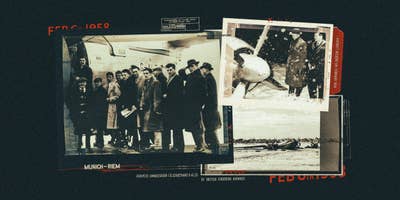
Sir Bobby Charlton wrote in his autobiography: "Since February 6, 1958, I have always been asked one question: all the achievements I had after that, including the European Cup and the World Cup, were accompanied by the question, 'Why me?'"
"Roger Byrne, Eddie Colman, Liam Whelan, David Pegg, Tommy Taylor, Mark Jones and Geoff Bent died on the spot, while Duncan Edwards, whom I deeply loved and admired, also hovered between life and death before eventually succumbing. Why did I search myself all over and find myself unscathed? Why was I able to inherit the glory that this group of talented young men should have continued to create?"
Charlton survived the Munich air disaster with almost no physical injuries, but the psychological trauma stayed with him for life. Ten years later, as captain, he led Man United to victory in the European Cup, making them the first English team to win the trophy. After the match, he vomited twice in the changing room; at the post-match party, he left early. Ten years earlier, he had lost several close friends in pursuit of European glory, and at that moment, he wanted only to reflect, not celebrate. Man United goalkeeper and Munich air disaster hero Harry Gregg said that Charlton changed greatly after the tragedy, with a different playing style and personality from before.
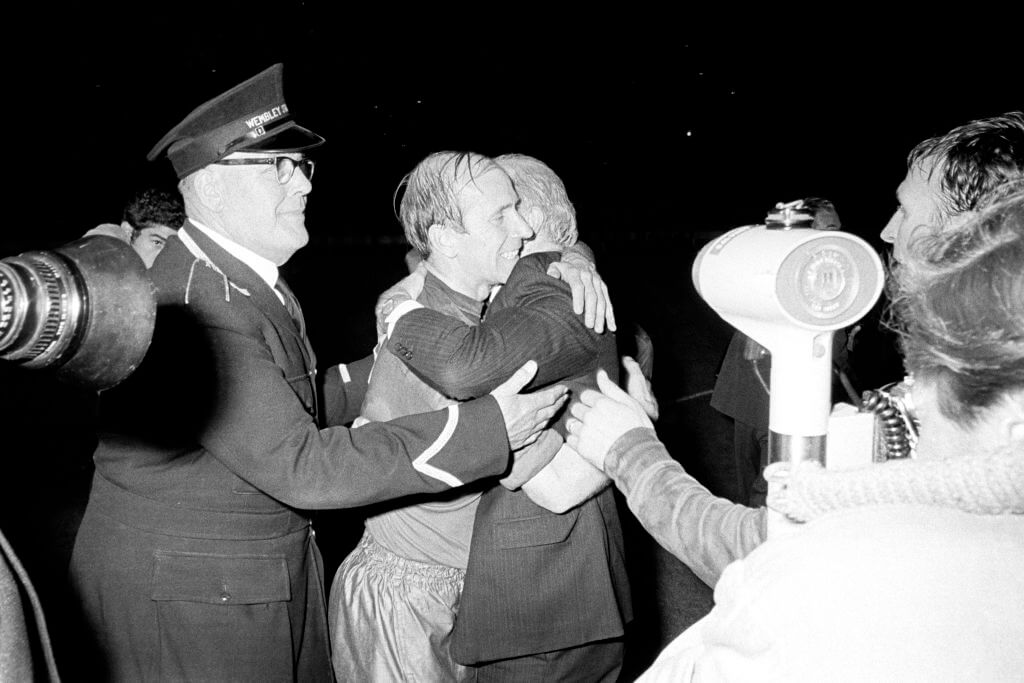
In the years that followed, the boy born in Ashington, near Newcastle, progressed from the Man United youth academy to becoming the best player in the league and achieving even greater heights. In 1966, Bobby Charlton was named European Footballer of the Year, ahead of two legends, Eusébio and Franz Beckenbauer; in 1967 and 1968, he finished runner-up twice more. That same year, he helped England win the World Cup on home soil, while his brother Jack was also part of the championship squad.
Charlton was renowned worldwide. In 1968, when Man United traveled to Buenos Aires to face Estudiantes in the Intercontinental Cup, the airport announcement declared the arrival of “El Supremo” (the supreme one).
After Man United won the 2008 Champions League final, Nemanja Vidić couldn’t relax until he had arranged for his non-English-speaking father to meet his idol, Bobby Charlton.
Sir Alex Ferguson wrote in his 2013 autobiography: "Bobby Charlton played 758 times for Man United, second only to Giggs, and 106 times for England, participating in four World Cup finals. He is what I call 'world-class'. He seemed to float when he played, balanced on both feet, able to play on the left, right and center, full of confidence and iron will. Despite his immense achievements, Bobby always remained humble and modest."
In 1980s Manchester, “Bobby Charlton” also referred to the football school he founded, where he personally guided players. David Beckham was once among those he coached.
In my twenties and thirties, as a fan traveling home and away with the team, I once felt that he wasn’t the “cool” choice. Charlton was a club director and was involved in many decisions that were unpopular with fans, such as firmly supporting Ferguson when most fans demanded his dismissal. He was upright and rational, and unlike George Best, he didn’t constantly appear in the tabloids.
Later, in 1992, I flew to Lisbon with Man United fans to attend Eusébio’s farewell match against Benfica, which was also Eric Cantona’s Man United debut. Charlton emerged from behind the first-class curtain, chatting with ordinary fans and signing autographs along the way. My impression of him changed considerably, but fans rarely lauded him as much as they did his teammates Best, Denis Law and Brian Kidd.
He consistently supported the Glazer family, which naturally displeased many fans, but there is no doubt that Sir Bobby Charlton was the greatest player in Man United's history.
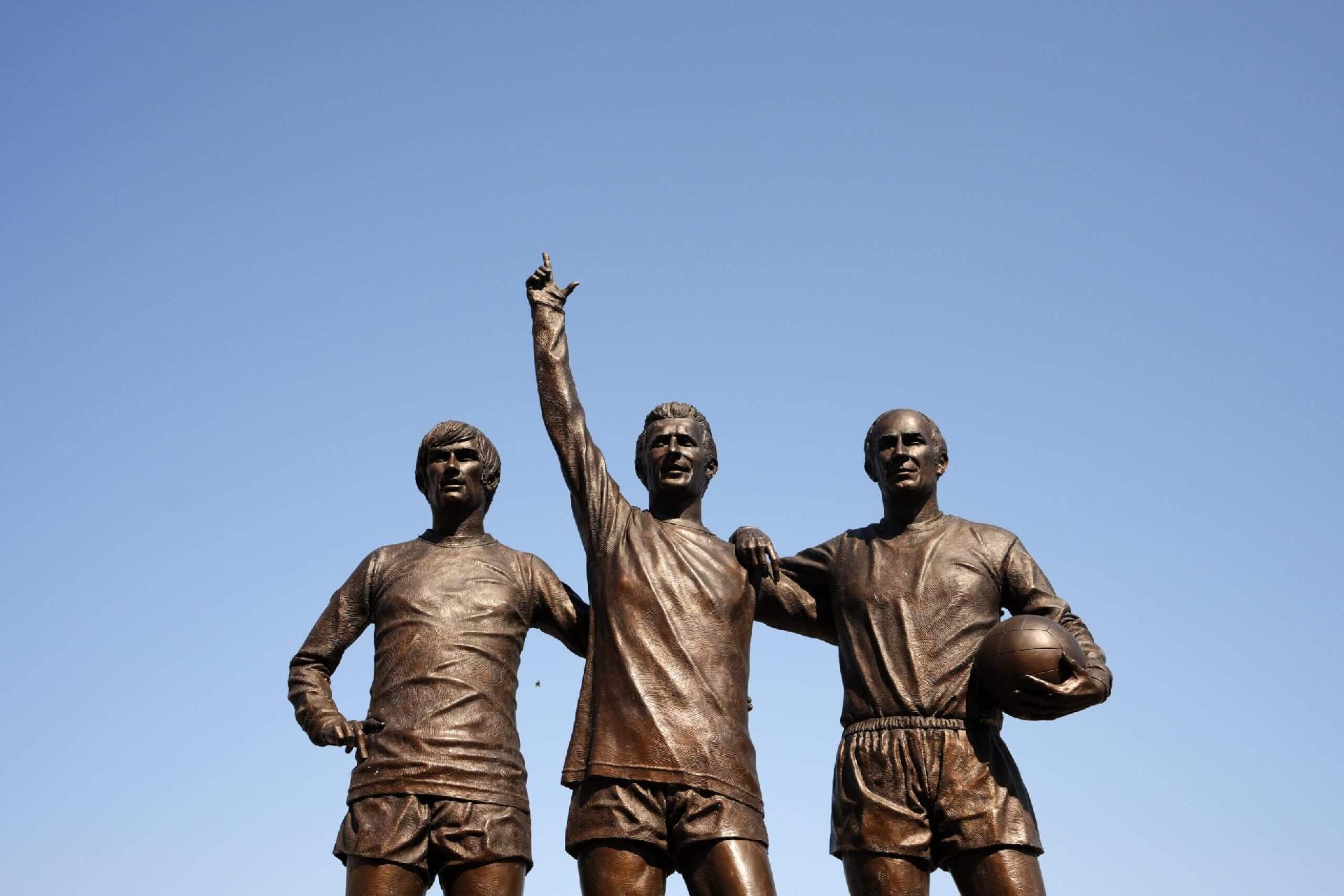
Charlton's Man United teammate Paddy Crerand told me: "Bobby was a very genuine player; football was his life. We'd meet on Saturday mornings, and he'd always be so excited, full of thoughts about the game. When he got the ball during the pre-match warm-up, he was like a child with a new toy. He was a great player, but he never lost that freshness of having the ball at his feet throughout his whole life."
“Bobby played like an artist. Compared with a tough player like me, he was like a ballet dancer on the field. Other players could perform his techniques, but when he did them, they looked twice as good.”
His powerful shots were effortless, requiring almost no backlift and never disrupting his elegant, sprinter-like stride. Only Wayne Rooney has scored more goals for Man United than Charlton’s 249.
Charlton won the FA Youth Cup three times with Man United before becoming a key member of the “Busby Babes” and a league champion. After the Munich air disaster, he stepped up once again, and seven years after the tragedy, Man United finally won the league title again, with Charlton as the team’s primary contributor.
In the final round of the 1964-65 season, Aston Villa defeated Man United 2-1, resulting in Man United and Leeds United finishing with equal points. Crerand recalled: "We could have lost the championship, but Bobby Charlton dribbled past five players and scored one of the most spectacular goals I've ever seen. In the end, we won on goal difference, which really angered Leeds United."
Crerand and Charlton shared a great understanding in the Man United midfield, and Charlton even helped Crerand settle in when he arrived from Scotland.
He explained: "During my first few weekends in Manchester, Bobby and Norma Charlton invited us out for dinner. I always respected and admired Bobby as a player. He was quite shy, so he specifically invited us to a pub near his home in Flixton, which I appreciated. Bobby asked what I wanted to drink, and I said sherry. I don't actually drink—not even sherry—but I thought it was a safe choice at the time."
"He paused for a moment, thinking that a big Glaswegian like me must be a heavy drinker, drinking neat sherry without beer. We had a great chat that night, but I barely drank anything. On Monday morning, Harry Gregg stopped me and asked how Saturday night had been. I said, 'It was fine, why?' He said, 'Because Bobby was so nervous, afraid the waiter would spill something or that someone would say something to you that would make you explode on the spot.'"
Crerand said: "It was very comfortable playing with Bobby. We had completely different personalities; he was quiet, and I was not. People thought he was dull, and sometimes he was, but the public didn't see the real him. He wasn't an outgoing person, but he was a very good man and loved Man United as much as any fan."
"Bobby only relaxed around certain people. When you saw him with close friends like Shay Brennan and Nobby Stiles, he was a completely different person: funny and spontaneous. He loved practical jokes and would often come to training raving about a movie he'd seen the night before, describing it so vividly that you'd want to rush to the cinema immediately."
"The result was that I took Noreen to see it, and before long she said it wasn’t good at all. Soon, you’d also realize it was one of the worst movies you’d ever seen. The next morning, Bobby was all smiles. He knew the movie was bad; he just wanted to drag others into his misery. ‘Getting him back’ was easy, too: just don’t let him have cream cakes. Other players avoided them for fear of gaining weight, but Bobby loved them immensely."
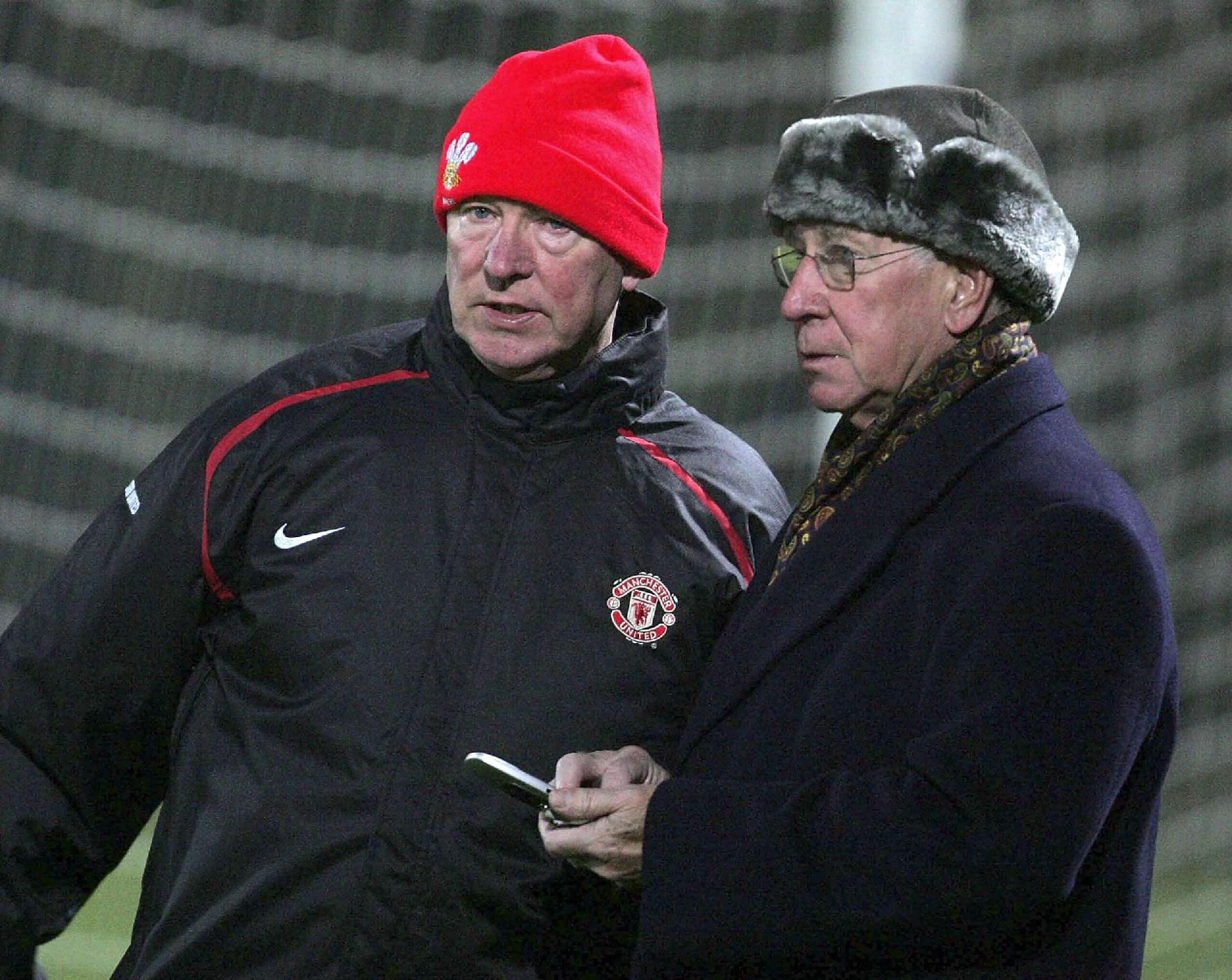
Before games, Charlton would also drink a small glass of sherry or whiskey to help him breathe more easily.
Teammates often remembered him for giving advice to younger players. Kidd said: “Bobby Charlton repeatedly told me when I was young: ‘Don’t think you’ve already made it; you’re not here to make up the numbers.’”
Globally, his name is synonymous with English gentlemanliness. Charlton became Man United’s chief ambassador. After the Hillsborough inquiry report was published in 2012, he laid a wreath at Anfield comprising 96 roses, one for each deceased Liverpool fan. Until his death at the age of 86 in 2023, he regularly attended Man United matches at Old Trafford, where the main stand is named after him.
Ferguson said in 2013: “You see Bobby after a win: his eyes light up, he’s rubbing his hands—he genuinely loves to win. I want to be like that too. I hope I can still go to Champions League matches in the future and tell people, ‘I’m proud of this team; this is a great club.’”
Bobby Charlton was the greatest player in English football history, and he devoted his career to Man United.
AF's PC site is now live! Browse full news, comments, match details, and stats on your computer. Visit: www.allfootballapp.com
 Manchester United
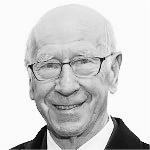 Sir Bobby Charlton
All Comments (7)
Today 05:37
Yesterday 18:19
Yesterday 15:47