Cucurella's return to Spain marks the beginning of a completely different phase in his career. After four seasons at Chelsea and winning the World Cup in 2022 with the national team, the player has started a new chapter at Real Madrid. Psychologist Lara Ferreiro explains that this means "exposure and external expectations will multiply."

The expert explains that the player had already established his position within the Chelsea team, with his strengths, weaknesses, and personal qualities recognized.
Now in Madrid, "the psychological scoreboard is essentially reset to zero," requiring the defender to adapt to a completely new competitive and emotional environment.
Ferreiro emphasizes that Real Madrid has not only signed the player he was in England, but also the player he could become in Spain. These heightened expectations create a major challenge for elite athletes: managing continuous scrutiny.
"At the Bernabéu, every mistake can be magnified, every match can become a test, and every poor performance can spark external debate, and the player must learn not to turn that external debate into internal self-doubt," says the psychologist.
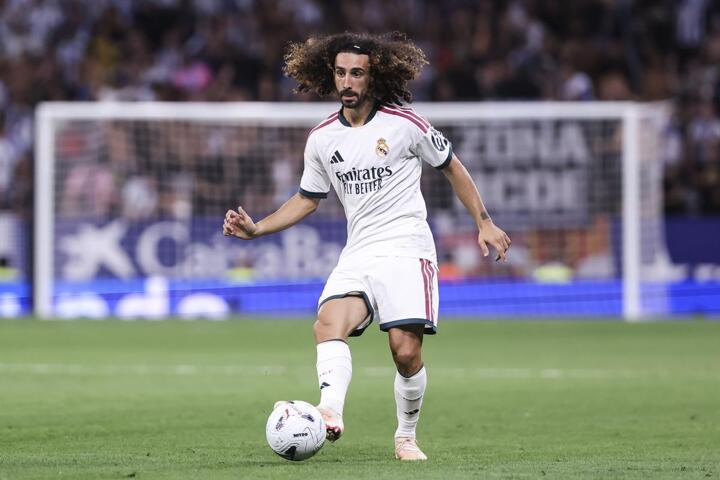
According to the expert, the key lies in how Cucurella interprets the initial difficulties he encounters. "If he thinks, 'I didn't play well today,' then he can correct it and move on; if he thinks, 'Maybe I don't have what it takes to succeed here,' then the problem is entirely different." The distinction between events and identity will be crucial in preventing pressure from becoming a psychological threat.
The Catalan player joined Real Madrid after over 100 appearances for Chelsea, during which he won the Europa Conference League and the FIFA Club World Cup. However, such achievements don't eliminate all potential concerns. "One of his worries can perhaps be summed up in a sentence: 'Now that I'm back, I have to prove I deserve to return this way,'" Ferreiro points out.
Real Madrid will continue to amplify public perception, external criticism, and internal demands, which could make him question his starting position, his on-field performance, and even his family's decision to return to Spain.
Despite the immense pressure associated with the club itself, Cucurella also has conditions that support his adaptation. He has returned to his home country, knows La Liga, has moved with his family, and possesses extensive international experience. "From a psychological perspective, he has several protective factors. He's not a young player moving abroad for the first time," explains Ferreiro.

The psychologist also emphasizes the importance of maintaining connections to London, establishing new routines in Madrid, and distinguishing between athletic performance and personal worth, so that the environment's high demands don't compromise his physical and mental well-being.
Ferreiro also analyzed Cucurella's statements following the official announcement of his transfer. In her view, these words conveyed "a sense of anticipation and viewing this move as an opportunity, not as a reluctant acceptance of change."
However, she also warns that this process won't be linear: "There will be times when he feels nostalgic, makes comparisons, and has doubts. When these emotions arise, it doesn't mean his adaptation has failed, but rather that he is adapting. Every significant change requires a phase in which the old and new life coexist."

The one variable that could accelerate the entire process is simple: playing time.
"If he gets consistent playing time, feels the manager's support, integrates with the squad, and receives recognition at the Bernabéu, then the pitch itself will accelerate his sense of belonging," explains Ferreiro. The feeling of being needed in his professional role will determine when Madrid truly feels like home.
Übersetzt von KI.
Die AF-Website ist jetzt online! Vollständige Nachrichten, Kommentare, Spieldetails und Statistiken auf dem Computer. Besuchen Sie: www.allfootballapp.com
 Real Madrid
 Cucurella
All Comments