On August 31 at 18:00 CEST, Lionel Messi announced on his personal social media that he had decided to retire from international football. Regarding whether Messi's Argentina No. 10 jersey should be retired, Argentina's "Olé" newspaper published an article stating that while the Argentine Football Association (AFA) could organize a retirement ceremony for Messi's No. 10 jersey, FIFA rules for official competitions do not allow the number to be permanently withdrawn from use.
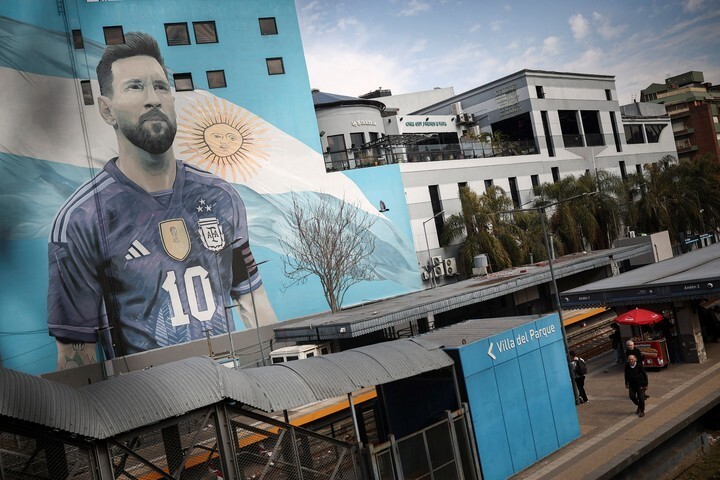
Messi's No. 10 jersey could be retired ceremonially like Manu Ginobili's jersey with the San Antonio Spurs, and could be displayed at the Monumental Stadium, Marcelo Bielsa Stadium in Rosario, or AFA headquarters.
However, the question remains: can the AFA actually prevent the No. 10 jersey from being used in official FIFA competitions? What happened to Maradona's No. 10 jersey at that time? All the answers are here.
During a ceremony held in March 2019, Manu Ginobili's No. 20 jersey was retired by the San Antonio Spurs at their home arena, the AT&T Center, to honor the star who helped the franchise win four NBA championships. The jersey will never be worn by another player again.
In basketball, it is common practice for teams to retire a jersey number when a player leaves an indelible mark on the franchise. Once the jersey is retired, no other player will ever wear that number again—it is raised to the rafters and becomes part of the team's history.
So, could Messi's Argentina No. 10 jersey receive similar treatment?
Who deserves such an honor?
The answer is both yes and no.
The AFA could organize a ceremony to honor their captain, retire Messi's No. 10 jersey as a symbol, and display it in a special location.
That location could be the Monumental Stadium, where Messi experienced many important moments with the national team. It could be the Marcelo Bielsa Stadium in his hometown of Rosario. Or it could be AFA headquarters, a museum, or another venue.
The jersey could be permanently displayed there and become a symbol of one of two greatest No. 10s in Argentine football history.
However, there is one thing the AFA cannot do unilaterally: completely withdraw the No. 10 from official FIFA competitions.
The reason lies in FIFA's regulations.
Take the 2026 World Cup as an example. National teams must assign jersey numbers 1 through 26 to their players. FIFA has confirmed that all 26 players on a team's roster must use numbers within this range, with No. 1 reserved exclusively for goalkeepers. In Argentina's squad, Juan Musso wears No. 1 and Damián Martínez wears No. 23.
Therefore, unless the relevant regulations change, Argentina can honor Messi by retiring his jersey ceremonially, but in World Cup competitions, there will still be a player wearing the No. 10.
Maradona's No. 10 Was Once Considered for Retirement
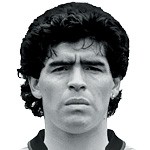
There is a similar precedent in Argentine football, and interestingly, Diego Maradona himself was involved in this case.
On November 10, 2001, after a ceremony honoring Maradona, AFA president Julio Grondona decided to retire the national team's No. 10 jersey in Maradona's honor.
The intention at that time was that no other player would ever wear the No. 10 again. The AFA even requested an exception from FIFA for the 2002 Korea-Japan World Cup.
The problem was that at the time, teams in the World Cup had to assign consecutive numbers to their players. Argentina wanted to use numbers 1 through 24 for its players and effectively remove No. 10 from circulation. One earlier roster even listed goalkeeper Roberto Bonano as wearing No. 24.
However, FIFA rejected this request. FIFA stated firmly that jersey numbers must comply with the regulations. FIFA president Joseph Blatter even suggested that No. 10 could be given to Bonano, calling it "another No. 10 worn by hand," referencing Maradona's famous nickname "The Hand of God."
Ultimately, Argentina's original plan to retire the No. 10 jersey was abandoned, and the number returned to active use. The player who wore it was Ariel Ortega.
In the end, FIFA prevented Argentina from officially retiring the national team's No. 10.
However, years later, in retrospect, FIFA's decision ultimately led to a nearly perfect outcome. Had the No. 10 been withdrawn in 2002, Lionel Messi might never have inherited the number that Maradona once wore.
Messi first played for Argentina in 2005. Over time, he became the new owner of the No. 10.
He wore the No. 10 for many years and won the most important prize in football—the World Cup in Qatar—while wearing this jersey, along with Copa América and the Finalissima titles.
What Should Happen to Messi's No. 10 Jersey?
Since Messi's international career has ended, the answer could be straightforward. A special place could be created to honor this jersey, a ceremony could be held, and like Ginobili's jersey in San Antonio, it could be retired as a symbol.
The AFA can decide on the location.
However, for future World Cups, someone will continue to wear the No. 10.
So, who is best suited to wear this jersey next?
AI ဘာသာပြန်ဆိုသည်။
AF ၏ PC ဝဘ်ဆိုက် စတင်ထွက်ရှိပြီ! သင့်ကွန်ပျူတာမှ သတင်းများ၊ မှတ်ချက်များ၊ ပွဲစဉ်အသေးစိတ်နှင့် စာရင်းဇယားများကြည့်ရှုနိုင်သည်။ ဝင်ရောက်ရန်: www.allfootballapp.com
 Argentina
 Messi
Messi
 Diego Maradona
 Rest In Peace
 Inter Miami CF
 San Antonio Spurs
 Manu Ginobili
All Comments