
According to Diario AS, Atlético Madrid CEO Gil Marín suggested limiting the number of matches players can compete in per season at the World Football Summit to ease fixture congestion and protect players.

The tenth edition of the World Football Summit concluded with a special roundtable discussion. LaLiga CEO Javier Gómez, Atlético Madrid CEO Gil Marín, and English Players' Union president Maheta Molango participated in the discussion, analyzing changes in the football industry over the past decade and projecting future developments.
Gómez stated: "LaLiga's revenue has grown over the past decade. TV revenue increased by 70%, and commercial revenue, stadium attendance, and social media engagement are also rising. We've experienced a social explosion, which allowed us to solidify our position as a global brand. Today, local and foreign owners are largely equal. In the past, we were a local league with international ambitions; now we are a global entity."
Molango spoke about the differences between the Premier League and LaLiga: "I complained to Javier Gómez more than once when I was at Mallorca, but now I'm on the other side. I've been through many difficulties, but I'm also familiar with the club side. The Premier League's success comes from excellent management, and there are some things there that LaLiga doesn't have. Language is one of them; they can access natural markets that were formerly colonies, and the mentality of fans in the stands is also different. In Spain, by the 60th minute, people understand that the team needs to control the game, whereas in the Premier League, teams always give their all. For fans, that's very attractive."
Molango also said: "Most Premier League owners are investment funds and Americans. An obvious change I've observed is that people are starting to follow players more than clubs. What was once special for us was that almost religious connection to the club. From an industry perspective, I think that's not good for us."
Gil Marín spoke about Atlético Madrid's growth over the past decade: "It's important to know where we came from. The club's growth is something to be proud of. Without the overall industry growth and regulation driven by Tebas and Gómez, it would have been impossible to reach where we are today. We came from a time when football management was still very amateur; now the situation has changed. The industry has become professionalized, and as a result, it's developed rapidly. Ten years ago, we were still at Estadio Vicente Calderón; now we're at Cívitas Metropolitano, which is completely different. Now we can offer services and experiences we never could before. Today, after deducting player sales revenue, our revenue exceeds 500 million euros. We've been in the top ten of the UEFA ranking for ten consecutive years. As one of six clubs participating in the Champions League group stage, that's something to be proud of. We've won 10 trophies and have deep social roots."
He also said: "When I started, there were no social media, but now we have over 100 million followers. We've grown and become more global, and we're proud of that. Next, we need to keep thinking about the next decade."
Speaking about the future of the football industry, Gómez said: "We're moving toward a polarization of resource distribution. Money is not infinite, and more funds are flowing to top clubs. This will become a focal point of discussion, and it already is. How this issue is resolved will directly impact the future of this industry. No one would think a bank would go bankrupt, but it happens. If resources concentrate in a few clubs, the league will fragment and a vicious cycle could emerge."
Gómez added: "We must find a model that protects football and achieves fair and balanced resource redistribution. This is achievable, and what the next decade looks like depends on how we act."
Regarding new competitions, Molango said: "The two biggest challenges football faces are governance and fixture congestion. We must rediscover the value of scarcity. We mistakenly believe that the more we compress, the better. Americans don't do everything at the same time, and the NBA doesn't run concurrently with the NFL."
He also said: "Our system is broken; it encourages misconduct. Decision-makers have never played football or been coaches. It's as if I went to Apple and spoke about everything except the iPhone. I see people in football governance who shouldn't be in those positions. For football's sake, we must change how we govern."
Finally, Gil Marín said: "My vision is not only for Atlético Madrid's future, but for football's future as a whole, because I work across different organizations. I work with Tebas at LaLiga; he champions the essence of football and also seeks balance between small and big clubs. The same applies to working with Ceferin at UEFA. Some federations don't have TV rights or ticket revenue. Governance is crucial."
Speaking about the match calendar, Gil Marín said: "UEFA and FIFA want more matches because it brings more money and more power. A balance must be found, especially for top clubs. I suggest limiting the number of matches players play, whether in the league or international matches. For example, a player who has to play 38 league matches should play a maximum of 31 total matches."
He also mentioned another challenge for the future: "The multi-club ownership model takes a different approach. They invest heavily in the Premier League, even incurring losses. The other day, I almost had a disagreement because someone suggested we change our philosophy to theirs, but I said it wouldn't work. The concept of a closed league doesn't work here. The idea of competition here is completely different. We must respect our values while adapting in other areas. We're already doing this by transforming the surrounding environment, creating a leisure city that serves our community."
Traduzido por IA.
O site do AF já está online! Acesse notícias completas, comentários, detalhes de partidas e estatísticas no seu computador. Acesse: www.allfootballapp.com
 Atlético Madrid
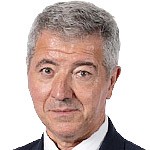 Miguel Ángel Gil
Alle Kommentare