
On the evening of October 3rd, the men's soccer final of the 2026 Aichi Nagoya Asian Games was held at Japan's Toyota Stadium. South Korea scored through Um Ji-sun in the 15th minute of the second half, defeating Japan 1-0 and achieving their fourth consecutive Asian Games gold medal in men's soccer. Since the 2014 Incheon Asian Games, Korea has won consecutively at the 2018 Jakarta-Palembang Games, the 2022 Hangzhou Games, and the 2026 Aichi-Nagoya Games, securing four straight titles in men's soccer.
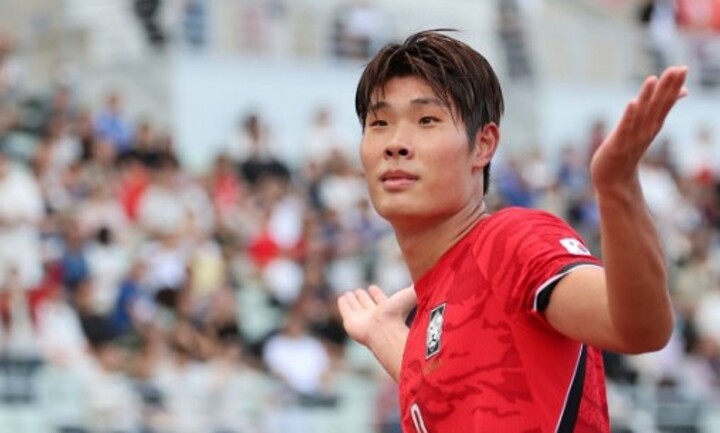
Despite a delayed arrival due to squad selection issues, Lee Young-jun quickly found his form, scoring three goals including two in consecutive matches during the tournament, and played a major role in Korea's gold medal victory.
In his post-match interview, Lee Young-jun first shared his feelings about the championship victory. "I feel relieved. Honestly, there was pressure before because of my teammates' military service situation. But I was able to contribute by scoring and helping the team create a good atmosphere, so I feel I fulfilled my role."
However, Lee Young-jun confessed that after actually receiving the gold medal, he felt a strange sense of emptiness.
"Actually, even though we won the gold medal, I suddenly felt a bit lost. After the goal was achieved, after the relief comes emptiness. Lee Seung-won and I made eye contact and both seemed to be saying, 'Finally, it's over.'"
Indeed, Lee Young-jun faced considerable external pressure throughout the tournament.
He explained: "I was aware of people outside saying, 'His military service issue is resolved, so why select him?' At that moment, I thought I shouldn't reignite such talk, I had to play better, and I had to repay the coach's trust."
For Lee Young-jun, this Asian Games held special significance. Having played in the Swiss league for many years, he was relatively unknown to Korean fans due to match schedules and broadcast times.
"When you play in the Swiss league, it's difficult for domestic fans to watch the matches, so probably many people didn't know me as a player. By playing alongside already famous players at this Asian Games, more people got to know me. I hope everyone will understand me better, and if there's a chance, I'd like to join the senior national team as well."
The "Letter from a Private Second Class" played in the locker room
After Korea won the gold medal, Lee Young-jun played the special song "Letter from a Private Second Class" in the locker room.
When asked why he chose this song, he laughed and answered: "I just wanted to ask them if they understood this feeling."
Lee Young-jun reflected on his military service experience. "Back then, when I got on the bus for the Korean military sports unit, the song played inside the vehicle and tears immediately welled up. Living together with them in the training center and then everyone parting ways—that feeling was truly strange."
At this point, he laughed again and said: "So I wanted Bae Jun-ho and Kim Ji-su to experience this feeling too."
Previously, when Korea won the gold medal at the Asian Games, several players who had not yet completed their military service became eligible for military service exemption. For Lee Young-jun, who had already completed his service, the significance of this gold medal was far more deeply understood than for his younger teammates.
After the China match, Lee Young-jun's celebration also drew attention. When asked if he did that celebration because Chinese fans were loud, he answered: "At that time, Chinese fans were noisy."
Subsequently, this comment received attention from some Chinese media. Lee Young-jun revealed he received many DMs but didn't take it too seriously. "I haven't really looked at them much. But I'm going to enjoy this too."
No intention of monopolizing the "Young-jun bus"
Regarding the external nickname "Young-jun bus," Lee Young-jun repeatedly dismissed it with a wave of his hand.
"I disagree with it. 'Young-jun bus'? That's not that great." (This comes from Korean internet slang "○○bus," which means "one player carries the entire team and leads them to victory." For example, when a player performs exceptionally well, fans say they're "riding his bus," which becomes the nickname "XX bus.")
However, he then laughed and added: "But I plan to take credit quietly while these guys are in the spotlight."
Previously, Yang Hyun-jun jokingly said he would buy everyone a meal if he went to Scotland. In response, Lee Young-jun grinned. "He said before that he would buy us a meal if he went to Scotland. I'll quietly send him my bank account number."
Finally, as a player who has already completed military service, Lee Young-jun offered words of encouragement to his teammates who received military service exemption due to the Asian Games gold medal.
He said: "I know well how precious the 1.5 years that they would have spent in military service is, and how much can be accomplished during that time."
"So whether they are my friends, younger or older brothers, I hope they will use this time wisely and achieve even greater things."
【Related Information】
"Letter from a Private Second Class" is a classic Korean folk song written and composed by Kim Hyun-son, most famously known through a 1993 cover version recorded by legendary Korean folk singer Kim Gwang-seok. In Korean culture, "private second class" refers to a newly enlisted soldier. The song delicately portrays the inner emotions—loneliness, determination, and wistfulness—of a young man saying goodbye to his parents, boarding the train to the training center, and facing the mirror with a shaved head. It is considered an essential tearful classic that Korean men listen to before enlisting or sing at farewell gatherings at karaoke. The song has appeared in many films and television productions, most notably as an insert song in the film "JSA," where it further deepens the inevitable emotions of the soldiers in the film.
AI翻訳。
AFのPCサイトが新登場!パソコンでニュース、コメント、試合詳細、詳細データをご覧いただけます。アクセス:www.allfootballapp.com
 Grasshopper
 Korea Republic U23
 Young-jun Lee
Alle Kommentare