
South Korea's U-23 national football team defeated Japan in the men's football final at the 2026 Asian Games in Aichi-Nagoya, securing their fourth consecutive Asian Games gold medal. However, the joy of victory was short-lived, as comments and actions by some players after the match sparked controversy in South Korea, once again bringing the long-standing issue of "Asian Games gold medals and military service exemptions" to the fore.
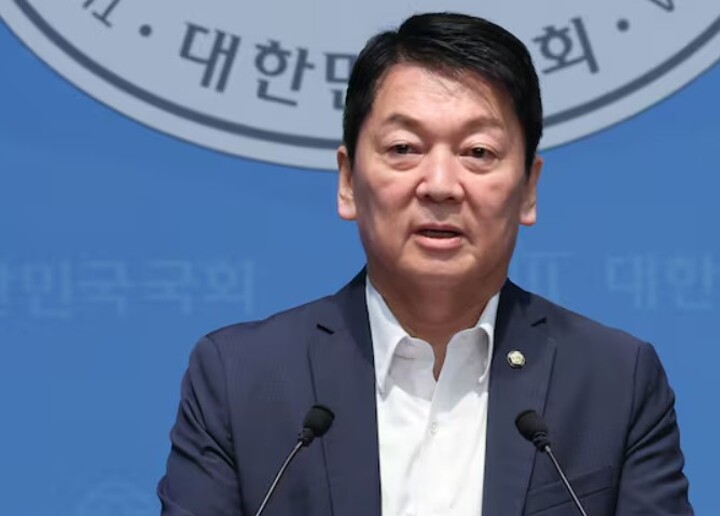
On October 4, Ahn Cheol-soo, a member of the conservative People Power Party, publicly criticized what he called "inappropriate" statements and celebrations by some national team players regarding military service exemption following their victory. He subsequently suggested that the system of military service exemptions for Asian Games medalists should be reconsidered.
Ahn Cheol-soo wrote on social media: "Is it appropriate to boast about not having to serve in the military? Is military service a despicable duty? Are soldiers who lose their limbs for the country foolish?"
He expressed that he was "deeply saddened" by the attitude displayed by some players wearing the South Korean national team uniform. In Ahn Cheol-soo's view, representing one's country should involve a sense of responsibility, and military service exemption should not be the primary achievement celebrated after winning a championship.
A significant cause of this controversy was the public statements made by some players following their victory.
According to South Korean media reports, one South Korean player stated in an interview that he "only thought about military service exemption" during the competition, believing that the gold medal and trophy were not the most important things. Another player revealed that a classical Korean song, "Letter from a Soldier," was even played during team training as "motivation" related to military service.
These statements quickly sparked controversy. Under South Korea's current system, athletes who win gold medals at the Asian Games are entitled to military service exemption. Following the U-23 men's football team's gold medal victory, all 20 players who had not yet completed their mandatory military service (excluding three who had already served) would receive exemption.
Against this backdrop, the players' direct statements about "military service exemption" quickly became a focal point of discussion in South Korean society.
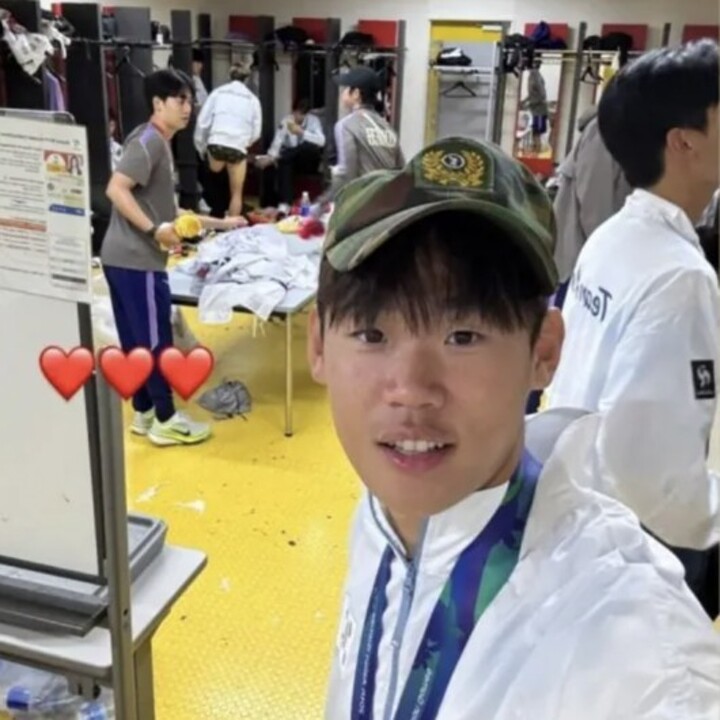
Among them, 19-year-old Newcastle United player Park Seung-soo also became embroiled in controversy over a post-match photo.
After South Korea's victory, Park Seung-soo wore a military reserve cap, commonly known as a "discharge cap," in the locker room and posted the photo to his personal social media. In South Korean culture, the "discharge cap" is strongly associated with completing mandatory military service and leaving the armed forces. As a result, some South Korean netizens quickly interpreted this action as celebrating early "military service exemption."
Notably, Park Seung-soo played for only 16 minutes in the final. Consequently, some South Korean media outlets and public opinion discussed the combination of "playing only 16 minutes" and "celebrating with a discharge cap after the match," suggesting that such a celebration could give the impression that "military service exemption was considered more important than the gold medal itself."
Ahn Cheol-soo also specifically reposted related reports, with headlines directly stating: "A careless 19-year-old player who wore a discharge cap after playing only 16 minutes, a player who only pursued military service exemption... 'chosen ones' who dampen South Korea's fourth consecutive championship."
Ahn Cheol-soo further criticized: "Someone who played 16 minutes in the final proudly posed in the locker room wearing a discharge cap, confirming non-service status, and even the so-called captain boasted about 'not having to serve' in an official interview, making light of it."
He asked: "Is military service a despicable duty? Is it a place that should not be visited? Are the many young people who enlist every year foolish?"
In Ahn Cheol-soo's view, the problem is not merely a few words or photos from some players, but the societal attitude reflected in their behavior.
He specifically mentioned that just days earlier, a soldier was wounded and lost his leg to a North Korean landmine on the western front line. Ahn Cheol-soo stated that such sacrifice, made while serving the country in dangerous areas, is what should truly be understood when discussing "serving the nation."
He also criticized some players for seemingly forgetting the respect and recognition shown by South Korean society to athletes who achieve success in international competitions and bring honor to the country, rather than making "military service exemption" itself the focus of their celebration.
Therefore, Ahn Cheol-soo explicitly proposed: "The military service exemption system for Asian Games medalists should now be reconsidered."
He also countered, questioning whether South Korean athletes could only win championships if they received military service exemptions, asking, "Aren't there many athletes who have won championships and gold medals without receiving military service exemptions?"
Ahn Cheol-soo ultimately stated: "It makes no sense to grant military service exemptions to national team players who have brought shame to the country and shown disrespect to the military."
However, this controversy has not only produced a narrative of "guilty players." Na Kyung-won, another member of the People Power Party, offered a different perspective from an institutional standpoint.
Na Kyung-won stated on social media, "This is not something that should be blamed on the players; their honesty is actually a result of the system."
She believes that if the state itself offers military service exemption as a reward for athletic achievement, it is unsurprising that players would consider this reward during competition. What truly needs to be reconsidered is the military service exemption system that has been in place for many years.
Na Kyung-won stated that South Korea's military service exemption system for sports and arts began in 1973 and did have historical context and practical significance at that time. However, after decades of social development, it is now difficult to convince all South Korean citizens that "bringing honor to the nation" is the sole reason for military service exemption.
She also specifically mentioned the K-pop group BTS. Na Kyung-won pointed out that BTS has achieved extraordinary international influence, yet its members still fulfill their mandatory military service obligations. Therefore, relying solely on "promoting national prestige" as a reason to maintain military service exemptions for sports and arts is increasingly difficult to justify to society.
Therefore, Na Kyung-won recommended that the military service exemption system for sports and arts be reconsidered, suggesting that the evaluation method could shift from "single achievement" to "accumulation of international competition results."
She emphasized that this is not to diminish athletes' efforts, but rather "to prevent athletes' hard work from ultimately being remembered as merely a ticket to military service exemption."
Diterjemahkan oleh AI.
Situs web AF kini hadir! Lihat berita lengkap, komentar, detail pertandingan, dan statistik di komputer Anda. Kunjungi: www.allfootballapp.com
 Korea Republic U23
 Newcastle United U21
 Seung-soo Park
Alle Kommentare