
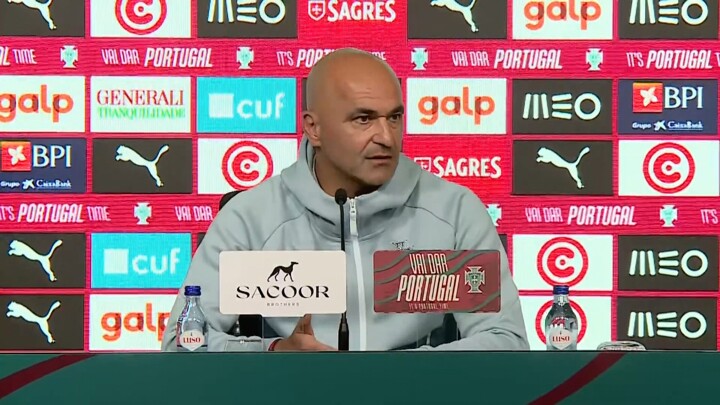
At 03:45 AM (CEST) on 11 June, Portugal will face Nigeria in a friendly match. Ahead of the fixture, Portugal's national team coach Martinez attended a press conference. This article covers the second half of the press conference.
Related Reading
【Martinez: There will be 11 changes tomorrow, only Diogo Costa will play the full 90 minutes】
Good afternoon. In March, Portugal played against two North American teams, and now we'll face teams from South America and Africa. In the group stage, we'll also play against Asian teams. From a tactical, physical, and technical perspective, what aspects of these non-European teams do you find most interesting?
I think it's a very important combination. We're talking about Asian teams like Uzbekistan, but they have an experienced European coach in Cannavaro with very clear tactical ideas. Beyond that, there's the unknown factor. For example, when facing a team that has never participated in the World Cup before, you don't know what adjustments they'll make during the match. It's easy to predict an opponent's level after three or four games, but difficult during the match itself.
I have experience leading a team against Panama in 2018, which was their first World Cup appearance, and there was uncertainty because it was career-defining for their players. Chile is similar to Colombia in terms of emotion, aggression, and one-on-one intensity. Culturally, South American teams are brave in taking risks and share a similar style.
Although Nigeria tomorrow differs from DR Congo, there are similarities—their strikers' ability to constantly attack space behind the defense and their numerical superiority in midfield mean they're tactically very diverse. But culturally, these four opponents—Mexico, the United States, Chile, and Nigeria—encompass all the qualities we need to face in our three group-stage matches.
Good afternoon. Regarding World Cup history, no foreign coach has ever led a non-native national team to win the championship. Does this give you confidence to be the first in history, or is it a "ghost" that will haunt you?
That's a challenge I really enjoy; it's fantastic because my career is full of similar challenges. This is the first World Cup with eight matches per group and the first with 48 teams. I believe this is a special moment to achieve something no one has done before, and that's what we want to do with Portugal.
Good afternoon. After Sunday's match against Chile, the FA president stated his ambition, saying the minimum goal is to reach the quarterfinals. Given your experience, can we set such a target now? Or should we wait until after the group stage to assess how far Portugal can go?
The president has the right to state his view, and I respect that. But for me, the World Cup is these three matches. I know that might sound boring, but that's the reality, and that's where my focus is. First is tomorrow's match, to prepare all the players, and then the three group-stage matches.
We don't have predetermined goals; our idea is to win everything—all eight matches, whether through 90 minutes, 120 minutes, or a penalty shootout. What we can control is our attitude, showing our quality, being brave in taking risks, and maintaining the spirit we showed in the Nations League. That's what we need to focus on now.
Good afternoon. Let me ask something off the pitch: the World Cup is about to start, and you'll travel to Miami on Friday. In recent days, we've seen several off-field incidents, such as Senegal's delegation being closely monitored upon entering the United States, and fans from countries like Haiti unable to attend to show support. Even a referee from Somalia—Africa's top referee—was denied entry. As a football man accustomed to these major competitions, does this concern you?
No, because that's the World Cup. This is my third World Cup, and similar things happen all the time—political matters and others. The World Cup is the biggest sporting event in the world, not just in sports. Nearly 7 billion people worldwide watch it, so these incidents are part of what the World Cup means.
But I can tell you I haven't paid attention to what you just mentioned. We're busy here preparing for training, and the President of the Republic also visited us. We're closed off, focused only on what we can control—the work we need to do to prepare for tomorrow's match, nothing more.
Good afternoon. Back to tomorrow's match—playing Nigeria is a big challenge. In the previous match against Chile, Portugal dominated but still conceded a goal. From that perspective, how do you view tomorrow?
I appreciate Nigeria's coach's ideas; they're a very tactically flexible team, playing in a 4-4-2 diamond formation, able to adjust positions at any time, quickly stretching the wings and utilizing two strikers. He leverages his team's strengths well; their strikers are very fast and powerful—a completely different style from Chile. So for us, training for these scenarios is very important. At the national team level, every day's effort is ultimately about winning the match. We need to execute what we've trained.
I thought the Chile match was very valuable. Sometimes a 2-1 win is better than 2-0 because it allows us to evaluate and improve ourselves better. Tomorrow will be the same; we'll try to win and show clear tactical intent on the pitch, while also creating competition among the players. Finally, we'll celebrate with our fans when the final whistle sounds, as this is the last warm-up match before the World Cup.
Good afternoon. You just mentioned it's important for Diogo Costa to play the full 90 minutes. Are you considering giving Ricardo Velho playing time as a reward? Or, given the position's importance, are you not considering this option at all?
It's about balancing the needs of all players. For us, it's important for Jorge Silva to get playing time, and it's also important for Diogo Costa to regain his rhythm, as he's played over 4,000 minutes this season and needs more training in preparation for the first official match.
Ricardo Velho has performed very well, and all players greatly respect what he brings to the national team. However, at this stage, the goalkeeper position requires a full 90 minutes before an official match. For Diogo Costa, the current process is perfect: training, preparation, recovery. This is the start of a new season for him. I feel he's shifted gears and begun a new season, so playing the full 90 minutes tomorrow makes sense.
Regarding tomorrow's match, what kind of challenge do you expect from Nigeria's national team? What lessons do you hope to learn from them after 90 minutes?
I'm not sure about our previous head-to-head record against Nigeria, but it's clear to us that playing against teams like DR Congo and Nigeria tomorrow... Nigeria's striker characteristics will be very helpful for us in training our defense. Nigeria is very competitive, and I really enjoyed their previous warm-up match against Poland. I liked the coach's ideas and the different formations they used. Although Osimhen and Lookman aren't here, the players replacing them have shown a very high level. I expect this will be a competitive match, facing experienced and well-coordinated players, which will be an excellent test for both sides in many aspects.
Diterjemahkan oleh AI.
 RD Congo
 Nigeria
 Porto
Porto
 Portugal
 Gençlerbirliği
 Uzbekistán
 Fabio Cannavaro
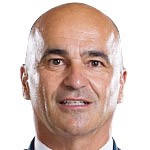 Roberto Martínez
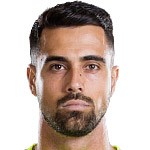 Diogo Costa
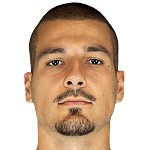 Ricardo Velho
Todos los comentarios (35)
6-10 13:50
6-10 10:37
6-12 08:30