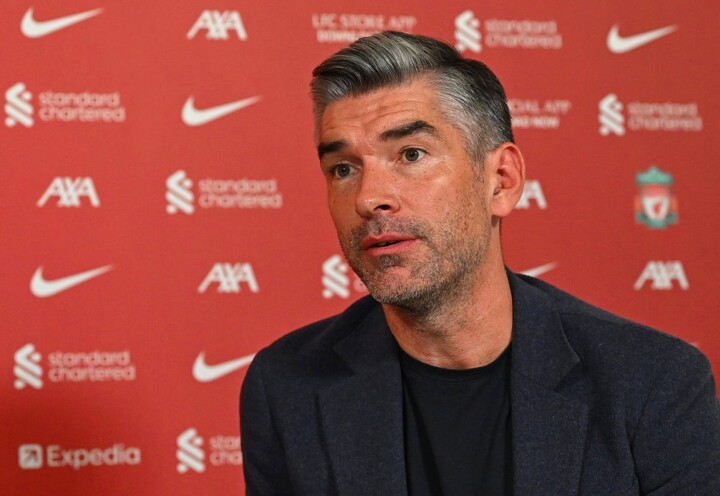
According to The Athletic, Richard Hughes, Liverpool FC's sporting director, has departed after overseeing £670m in squad investment during his tenure. However, he leaves with the sense that he has added more problems to Liverpool FC than he has solved.
Ten years ago this week, Sadio Mané scored on his home debut for Liverpool FC, helping them beat Leicester City 4-1. It was his second goal from a total of 120 for the club across 269 appearances in which he won nearly every major honour and left as a legend, with Liverpool FC recouping almost their entire initial investment.
The figures behind Mané should be a lesson for whoever succeeds Richard Hughes in overseeing Liverpool FC's transfer strategy. Despite inflation, it was good business to sign a 24-year-old striker for £30m and sell him for potentially £35m when he was 30, along with numerous trophies.
Mané ultimately did not profit Liverpool FC because he struggled to adapt at Bayern Munich and moved to Al Nassr in Saudi Arabia a year later, where he remains. This has led to suggestions that Liverpool FC should have kept Mané longer. When he departed, his 23 goals in the 2021-22 season represented his second-highest tally in six years at the club. However, in his final season at Liverpool FC, he was deployed as a central forward for long periods rather than on the left wing, where he had previously been extremely dangerous.
This decision was partly due to Roberto Firmino's declining influence. Meanwhile, Liverpool FC found Mané's replacement. Like Mané, Luis Díaz came from Porto and, as a member of a Premier League-winning team, eventually moved to Munich. But this time Liverpool FC made a significant profit. This type of operation is difficult to replicate, but Liverpool FC should learn from it.
Díaz's departure now looks like a mistake, given his excellent performances at Bayern and that no one at Anfield can fill his role. The team has struggled for several reasons since summer 2025. It is easy to conclude that it is not about how much money you spend on players or how much you recoup from sales, but whether the next player is suitable and successful. However, increased chances depend on sensible figures, which will expand the club's options.
Liverpool FC officially confirmed that Richard Hughes has stepped down as sporting director. Hughes informed the club's ownership of his desire to seek new challenges and departed with best wishes from everyone at Liverpool FC.
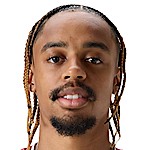
This brings us back to Hughes, whose departure was announced earlier today. Following Díaz's exit, Hughes and then-manager Slot did not pursue Bradley Barcola as a replacement but prioritized other positions, believing Cody Gakpo could step up. Giving opportunities to Diogo Jota was also a factor. Since then, Hughes has approved £670m in investment to reshape Liverpool FC, including the major deal that finally brought Bradley Barcola to Anfield last week. Liverpool FC's performances and Friday's away victory over Ipswich have boosted confidence, representing the most flowing and organized display since winning the title in 2025.
However, Hughes departs with accusations that he left a leaky squad lacking depth. Had he made smarter signings after Liverpool FC won the title, perhaps many of the subsequent problems could have been easier to resolve.
Given that Fenway Sports Group operates in a real financial world, it is surprising that so many players were allowed to leave Liverpool FC for free since 2021. Of the 14 players who featured in the 2019 Champions League final victory over Tottenham, eight eventually departed for free or minimal fees. If you include Trent Alexander-Arnold, whose market value is significantly higher than the fee Real Madrid paid to acquire him for the Club World Cup, the disparity is stark. Even before Hughes arrived, the resourcefulness that made Liverpool FC competitive had disappeared, as they received almost nothing back from their heroes except Mané, Fabinho, and Henderson.
Hughes's record deserves serious scrutiny, as it now appears that overspending in 2025 means he leaves with the sense that he has added more problems to Liverpool FC than he has solved. Even at the end of his three-year tenure, he was dealing with the consequences of poor decisions made by previous staff—some of which were overlooked far too easily.
The significant credit Liverpool FC received for team-building under Klopp has now become a fading memory. In six transfer windows from summer 2016 to summer 2018, Liverpool FC brought in Mané, Matip, Wijnaldum, Salah, Robertson, van Dijk, Fabinho, and Alisson. Only Naby Keïta could arguably be considered a mistake during that period. Meanwhile, player sales, Champions League performances, and commercial growth helped balance the finances.
Liverpool FC made almost no signings in 2019 but won their first league title in 30 years the following year, so the approach was justified. However, since 2020, after four similar changes in sporting director-level personnel, Liverpool FC's record in the transfer market and player retention has been decidedly mixed. When Slot won the title again in 2025, it is notable that the most influential players remained Alisson, van Dijk, Alexander-Arnold, and Salah, who began playing together in 2018.
When transfer decisions consistently score only six out of ten, eventually a team must undergo a major overhaul across consecutive transfer windows, as Klopp did after 2016. As he currently seeks to address challenges on the right side of the team, on the day Mané tore Leicester City apart at Anfield, Klopp deployed Milner in an unfamiliar left-back role, with Lucas Leiva alongside him in central defence.
แปลโดย AI
เว็บไซต์ AF เปิดตัวแล้ว! ดูข่าว ความคิดเห็น รายละเอียดแมตช์ และสถิติครบถ้วนบนคอมพิวเตอร์ของคุณ เยี่ยมชม: www.allfootballapp.com
 Liverpool
 Mark Hughes
 Cody Gakpo
 Bradley Barcola
Todos los comentarios