
Xavi recently gave an in-depth interview with Indian podcaster Prakhar Gupta. In the seventh part of this exclusive interview, Xavi discussed Messi's missed return to Barcelona, his views on Messi and Yamal, his coaching experience at Barcelona, and the reasons for his eventual departure.
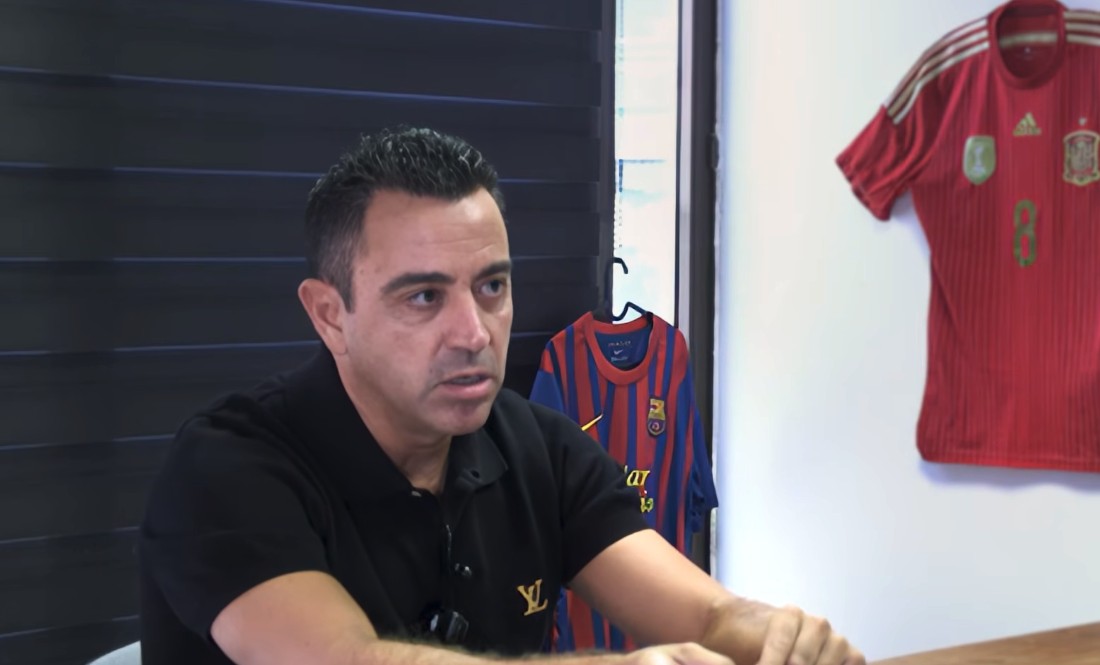
As a coach, you had the opportunity to coach Messi later on, right? What was that experience like? Because you played alongside him and knew him inside out. As a coach, did you still need to teach Messi anything?
Yes, we talked many times then. Messi is a very close friend of mine, and we were always in communication. He was very eager to return to Barcelona. And I was 100% in favor. It should have been our "last dance" at the Montjuïc Stadium, like Michael Jordan, right? We were in close communication for a full four months. However, in the end, President Laporta made the decision that he did not want to re-sign Messi, he did not want Messi to return to Barcelona. That's the truth of the matter. It was extremely strange because for those four months, we were even communicating and planning with the President. It was heartbreaking. The most painful part was for me to convey to Messi the decision that "the club could not complete this signing."
You were responsible for communicating that to him?
Yes, I tried my best to fight for it. But there was nothing I could do, it was too difficult, because Messi himself was full of expectations, I was full of expectations, the entire coaching staff was full of anticipation, but all of a sudden, the President called it off. Yes, that's how cruel the reality was. It was so hard to bear, because I thought the team desperately needed his leadership at that time. We desperately wanted him to return, and from a tactical perspective, he was still a perfect fit. That was right after he led Argentina to win the 2022 Qatar World Cup. If it had worked out, it would have been a dream chapter, but it ultimately came to nothing. It's such a shame.
Witnessing Messi's journey through all these years, experiencing the transformation of different stages, and now he has entered the twilight of his career—did that worldwide fame ever make him lose his way? When he became the undisputed absolute center of world football, did his mindset and way of dealing with people ever change?
In Argentina or in Barcelona?
For example, at Barcelona in the mid-2010s, and even now... when he became the world's number one, did he change mentally and psychologically?
He is a true, born winner through and through. Even if he's just playing a friendly match here, he has to win. His competitive spirit is incredibly formidable. He is a true warrior, a natural winner. That's why his mental strength is so powerful. His mindset and mentality are incredible, extremely strong, world-class. So he always wants to keep fighting. Just think about what Messi went through with the Argentina national team back then; he endured so much inhumane suffering. Countless media outlets and fans in his home country criticized him, and every time he returned to Barcelona, he was mentally exhausted. Under immense pressure, the outside world clamored, "Leo is underperforming; he's nowhere near as good for the national team as he is for Barcelona." He silently swallowed all the grievances and pain, but he never gave up, gritting his teeth and charging forward again and again, finally lifting the World Cup trophy in 2022. It was a miracle! And he almost won a second World Cup in the United States.
Did you talk to him when he announced his retirement from the national team? Is he content with his current state? Or is it still difficult for the warrior deep down to accept standing down?
Yes, we are often in contact. I think he is very open and at peace with it; he feels it's time to close that chapter. The next World Cup in four years is indeed too far away and too demanding for him. He would be 39. It's time to let go when it's time; he has already won everything: the Copa América, the World Cup, everything has been proven.
Tell me about Lamine Yamal from a coach's perspective. What did you see in him when he was 15?
I saw a true talent. I saw a player who stood head and shoulders above his peers.
What exactly was different? Was it his dribbling, or his tactical understanding?
Every technical decision he made on the field in an instant was textbook-perfect. As a coach on the sidelines, you'd think to yourself, "He should pass the ball now, quick pass." And he'd pass it immediately. "Now he's surrounded by three, deal with it, pass the ball out," and he'd instantly find the most reasonable solution. It was incredible. And he was only 15! When I first saw him at 15, his choices in handling the ball on the field were impeccable. Everyone in the stadium would gasp, "Wow!" What's more, when faced with one-on-one or even one-on-two dead ends, he could easily dribble past defenders with a Flick. In the final pass, in crosses from the wing, he could always create deadly opportunities. He was almost perfect; he was a genius.
Do you think he has the ability to become the world's best player of his generation?
Yes. But as we discussed with Neymar, Ronaldinho, and Messi before, it all depends on his discipline and ambition. He has the best mirror and role model in human football right in front of him, and that's Messi. His future path is entirely up to him. He's only 19 now and has already won the European Championship and the World Cup with his team. But I believe he must compete for the Champions League, and he yearns to lift the Ballon d'Or. He absolutely has that ability; he possesses all the talent needed to reach the top.
In a previous interview, you described coaching Barcelona as an almost "cruel and torturous" job.
Are you referring to the media opinion?
Including the media. When you coached Barcelona in the past, you said the job was exhausting, almost cruel. In what way was it cruel?
Because Barcelona is in my blood and my heart. Barcelona is inside me, you understand? It's not just a cold, professional job.
It's full of romanticism, a deep love in my bones.
Indeed, yes, for me, it tugs at all my emotions. When the team's performance wasn't good, the pain I felt internally was unimaginable to ordinary people; it was agonizing. The overwhelming criticism from the media caused my family to suffer, and my closest friends to endure hardship. It was an extremely tough, dark period. But from another perspective, those were also the years I regretted the least, because when we took over, the club was at a historical low point, with both economic collapse and sporting decline. We arrived at Barcelona's most critical moment in history, but we did our utmost to restore order and set things right. We did well enough, under the immense pressure of Real Madrid's consecutive Champions League titles, we brought LaLiga back to Barcelona and won the Spanish Super Cup. Although the last year was full of twists and turns, that's just how reality is. In competitive sports, success and failure dictate everything; a coach's fate is entirely determined by match results. When results didn't meet expectations in the final stages, manager changes at big clubs are common in football, it's true for Real Madrid and for Barcelona. But we completed a great rebuilding job, and I have a clear conscience; I feel proud. I gained immense growth from it; it was a valuable life experience. We promoted and protected these young talents and helped the club. I am deeply proud.
Because you did win significant titles during your time coaching Barcelona. You led the team to win LaLiga and the Spanish Super Cup, right?
Yes, during the club's most turbulent period. We ushered in a new era at that time. But when the results fluctuated in the last year, the club dismissed Jordi Cruyff and replaced Alemany—all these core management figures who brought me back to Camp Nou and worked alongside me were purged and replaced with new people. This made my last year at Barcelona extremely difficult.
Was the media pressure also the straw that broke the camel's back? Did that pressure constantly escalate and accumulate?
I was already used to the media's hype; the problem was that the attacks later turned personal. More crucially, the results didn't meet expectations, and many ideas couldn't be implemented as I envisioned. But this is an inevitable part of a coaching career.
When a coach is sacked, does management usually have a long talk with you, or do they just cold-heartedly inform you...?
In fact, the decision to leave was initially my own. As early as January, I honestly told the President, "President, I intend to resign at the end of the season. I think it's time for a change of coach. I am physically and mentally exhausted, too tired. And some key figures in management lack sufficient trust in me." They tried hard to persuade me to stay: "Don't go, please don't go." Subsequently, the team's performance significantly rebounded, with a winning streak that led us to the Champions League quarterfinals; it wasn't until we lost the Clásico at the Bernabéu that winning the league became completely impossible. At that point, management again persuaded me to stay, and I proposed several clear demands for sporting restructuring for the new season. They couldn't fulfill their promises, so we reached a consensus: "Alright, all good things come to an end; let's part ways amicably, no regrets."
AF's PC site is now live! Browse full news, comments, match details and stats on your computer. Visit: www.allfootballapp.com
 Argentina
 Ajax
Ajax
 Holanda
 Barcelona
 Lionel Messi
 Xavi
Xavi
 Jordi Cruijff
 Inter Miami
 Joan Laporta
 Mateu Alemany
 Lamine Yamal
Todos los comentarios (5)