
On the morning of September 29, 2024, Liam Twomey, Chelsea correspondent for The Athletic, published an extensive column analyzing the future of Chelsea's stadium, Stamford Bridge, under the sole ownership of Clearlake Capital.
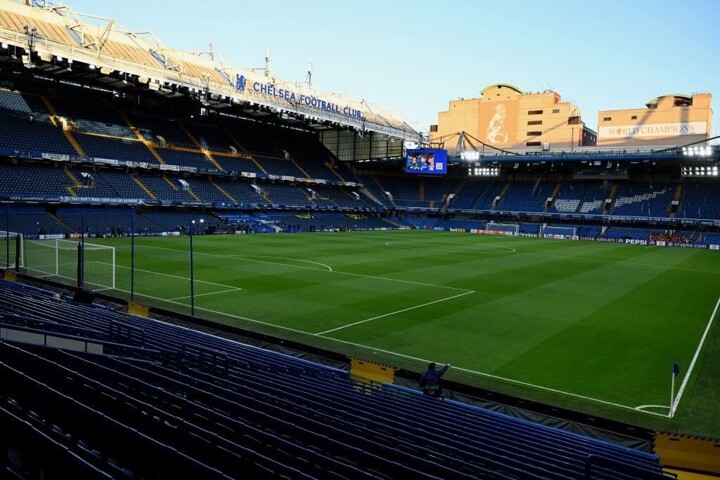
With Todd Boehly's departure, a new era has officially begun in which Clearlake Capital has full control of Chelsea. This long-anticipated and uncomfortable internal board tension has finally been resolved, reigniting hope that Chelsea's ownership will finally address the significant issues casting a shadow over the club's future. Recent developments from Stamford Bridge indicate that infrastructure will become an increasingly important focus in the next phase of Clearlake Capital's stewardship of the club.
What does this mean exactly? First, the club's training ground at Cobham, built in 2004, will undergo necessary renovation. More importantly, there is renewed urgency among all parties to finally advance a selected new stadium plan.
As things stand, this plan could involve the complete demolition of Stamford Bridge and its reconstruction on the same site, or the construction of a new stadium on a nearby parcel—specifically, a 40-acre plot less than a mile from Chelsea's current stadium, the former Earl's Court Exhibition Centre.
Last year, The Athletic revealed that the option to renovate Stamford Bridge section by section had been ruled out by ownership due to its impracticality.
However, regardless of which path is ultimately chosen, any Clearlake Capital plan involving a temporary or permanent departure from Stamford Bridge must clear one hurdle: it requires approval through a vote by the Chelsea Pitch Owners (CPO). The CPO is a supporters' organization that holds full ownership of the land on which the current stadium stands.
The story dates back to the 1980s, when property developers attempted to force Chelsea out of Stamford Bridge, but Chelsea "fought them off." Ken Bates, then Chelsea's chairman, tasked his lawyer Mark Taylor with creating an organization to ensure this never happened again.
The resulting organization was the CPO, which gave supporters the opportunity to purchase shares in the company that owns the Stamford Bridge land. In the early 1990s, when share sales were slow, Chelsea provided funds to the CPO in the form of a loan lasting up to 199 years to acquire the property; in return, the club received a 199-year lease, allowing it to continue playing there at a practically symbolic and extremely low rent.
Furthermore, if anyone attempts to move the club from Stamford Bridge without CPO consent, the organization can demand the right to claim ownership of the "Chelsea Football Club Ltd." name. In other words, unless the CPO approves, Chelsea cannot use the name "Chelsea" at any other ground. This represents extraordinary checks on the owner's power, and its significance should not be underestimated.
It is also a democratic safeguard that benefits every segment of the supporter base through the CPO's existence. Stadium projects are never minor matters; they are generational events that, for better or worse, can fundamentally alter the character and trajectory of a football club. Twenty years after the painful departure from Highbury, Arsenal supporters have largely embraced the Emirates Stadium as their home, but can the same be said of West Ham United supporters who moved from Upton Park to the London Stadium in 2016?
These decisions cannot be made lightly; and when decisions are driven more by shareholder value than supporter sentiment, the result can easily become contentious. The CPO's existence mitigates this risk by ensuring that at least a significant segment of Chelsea's core supporter base must give the green light to any stadium plan.
However, some have attempted to portray this power in a more sinister and self-serving light.
Recently, rumors have intensified on social media claiming that the CPO is blocking Chelsea's plans to move to another stadium. This prompted the CPO to release a video statement featuring its chairman, Chris Isitt. The video, taken from the organization's annual general meeting earlier this year, reiterates that the club has yet to present them with any concrete stadium proposal.
The reality is that the CPO has never blocked a Chelsea stadium proposal in its history. Roman Abramovich's memorable and ultimately failed attempt in 2011 to buy back the property did not include a concrete stadium plan, nor a firm commitment to limit a new site search to the immediate area. Essentially, he was asking CPO shareholders to vote to dissolve their own organization and hand him complete control over the club's future based solely on trust.
Such a proposal had little chance of securing the 76% approval needed to succeed. In contrast, Abramovich took a more collaborative approach with his Stamford Bridge renovation project, the "Cathedral of Football" plan he proposed. That project received planning permission in 2017 and likely would have been received very differently, but due to visa issues between the Russian businessman and the British government, it was shelved indefinitely two years later, before the CPO had the opportunity to vote on it.
Therefore, any suggestion that the CPO is an obstacle to Chelsea acquiring a bigger, better, and more modern stadium—a stadium Chelsea urgently needs to maintain its status as an elite club—is purely hypothetical.
The CPO's existence undoubtedly requires any Chelsea owner seeking to address stadium issues to consult, listen, and ensure that the concerns and priorities of supporters (many of whom are season ticket holders or regular match attendees) are central to any proposal to rebuild Stamford Bridge or relocate. Are these not perfectly reasonable demands?
The CPO also scrutinizes each share purchase individually to ensure the integrity of its ownership structure. This precautionary measure was implemented before the 2011 vote, following accusations of suspicious mass share purchases by people linked to Abramovich ahead of the ballot.
Nevertheless, club supporters, regardless of where in the world they are located, can purchase CPO shares through Chelsea's official website, and the more shareholders there are, the more likely any future vote on a stadium proposal will represent the majority opinion of supporters.
Democracy always requires public participation. The CPO gives Chelsea supporters a real voice in the future home of their club—something most supporters of rival clubs can only dream of. When Clearlake Capital officially announces its chosen stadium plan, any supporter who decides not to participate will effectively be opting out of one of the most important decisions in the club's history.
Traducido por IA.
¡El sitio web de AF ya está disponible! Consulta noticias, comentarios, detalles de partidos y estadísticas en tu ordenador. Visita: www.allfootballapp.com
 Chelsea
Todos los comentarios