
On October 1, Beijing Time (CET), Ronaldo announced his departure from Portugal's national team training camp. Regarding Ronaldo's departure, José Manuel Delgado, a former Benfica player, former editor-in-chief of Record, and columnist for A Bola, published an article expressing his views.
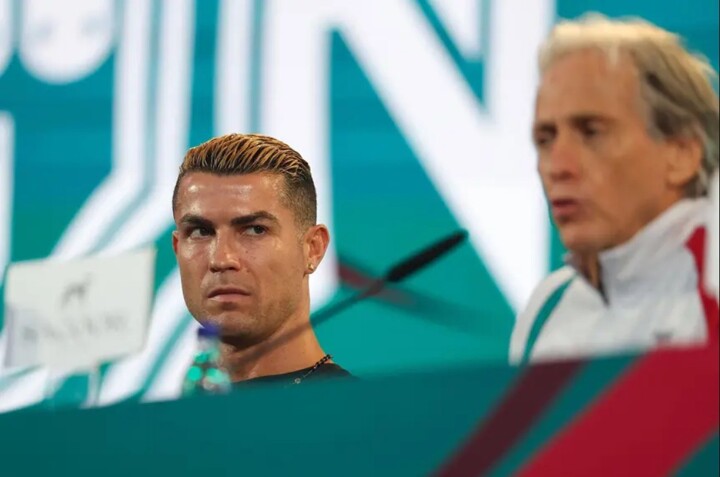
Here is the full article:
Let's be direct: Cristiano Ronaldo, at 41 years old, has no place in Portugal's national team where he could contribute his charisma, experience, and playing time to Jorge Jesus's squad. However, his bloated ego has blinded him to reality, ultimately leading to his bitter departure.
Over the past 23 years, Ronaldo has made 268 appearances for Portugal's national team across all competitions, playing a total of 21,110 minutes, scoring 164 goals, and helping the team win one European Championship and two UEFA Nations League titles. For a player destined to be immortalized in world football history alongside Pelé, Maradona, and Messi, these achievements are extraordinary and nearly impossible to replicate.
But nothing is perfect, and Ronaldo does not know how to age gracefully. He failed to realize he should have retired from international football in 2022, and he persistently believes he remains the same competitive player he once was. Over the past four years, despite winning the Nations League under Roberto Martínez, Ronaldo has caused more harm than good to the national team. The only reason he remained in the starting lineup was his enormous commercial influence.
I feel comfortable discussing this topic because, after the World Cup in Qatar, I published a lengthy article in A Bola titled "Cristiano Ronaldo, Thank You, Goodbye." Thank you, because I am grateful and remember what Ronaldo has done; goodbye, because it is clear his body can no longer do what he wishes, and the generation of players who grew up with Ronaldo are also far from performing at the expected level.
A few months ago, after the World Cup in North America, I compared Ronaldo to the classical ballet dancer Rudolf Nureyev. After shining at the Teatro Nacional de São Carlos, Nureyev returned to Lisbon years later to perform at the Coliseu dos Recreios: the first performance was brilliant, the second was regrettable. Sadly, like Dorian Gray without his portrait, he refuses to accept the laws of time, determined to remain young forever, as Dylan and Alphaville sang.
As time has passed, Ronaldo's intimate relationship with football has deteriorated due to excessive strength training, and the speed he once relied on to rival Usain Bolt has also vanished. Eventually, he became a poor imitation of his former self, constantly trying to prove that time has left no mark on him, yet never realizing that his current standing in international football is sustained only by his social media followers and jersey sales.
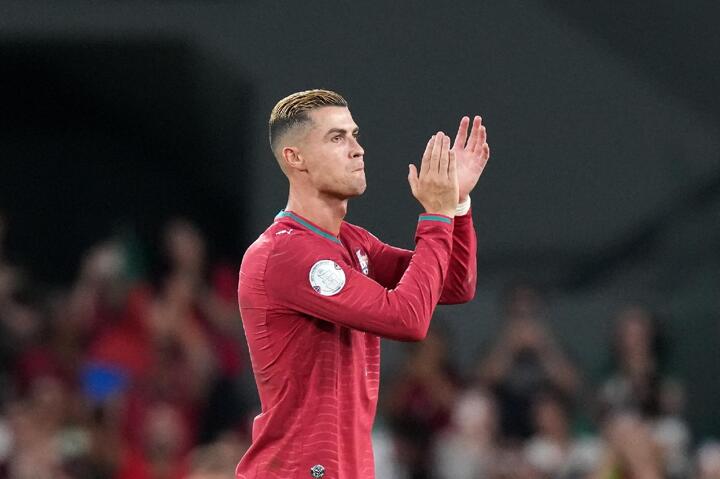
From his breakthrough at Sporting CP, through his brilliant journey at Manchester United, conquering the world in Madrid, and two glorious seasons in Turin, Ronaldo's performances have since declined, beginning with his final season in Serie A, continuing through his second spell at Old Trafford, and finally finding refuge in Saudi Arabia, far removed from his golden era competing in El Clásico alongside Messi. Yet the comfort Ronaldo found was not limited to Al Nassr.
In the national team, despite his competitive performances not justifying it, he remained a key player, expecting everything: in 450 minutes of Portugal's matches at the 2026 World Cup, he missed just 10 minutes!
When Jesus took over Portugal's national team from Roberto Martínez, coming from Al Nassr in Saudi Arabia, some believed the team would continue to be led by Ronaldo, plus 10 other players.
Their initial statements seemed to confirm this: Jesus acknowledged Ronaldo's status and emphasized his importance to the team; Ronaldo also expressed his willingness to do anything for the national team: start, come off the bench, or play whenever the coach deemed it appropriate. However, I am convinced Jesus already understands that no national team can win trophies with only nine outfield players. This is precisely the situation when Ronaldo does not participate in defense, forcing the team to use zonal marking, while offering limited attacking threat due to inadequate speed, technique, and reaction time.
In Jesus's first match, Ronaldo started and played within his limited capabilities; in the second match, he was on the bench, Gonçalo Ramos scored the winning goal, and afterward, the team's situation deteriorated. Some will waste time trying to find excuses—whether it's what Jesus did, what he said, or Ronaldo's bloated ego that betrayed him.
But none of that matters.
What truly matters is that Ronaldo's era has ended, and clearly, the current Al Nassr captain's level is insufficient to make him a starter for Portugal. He should only be considered for the squad if he is willing to contribute to the team by bringing charisma and experience, rather than hindering it as he did in Oslo by turning his back on both the team and the fans.
I will always be grateful for everything Ronaldo has done, and I am fully aware (commercial effects aside) that he has become a burden to Portugal's competitive level. I regret his departure this time. However, I believe Ronaldo and his circle still think he is the same player who won the Best Player Award on November 19, 2013, at the Friends Arena in Solna. (Note: This refers to Ronaldo's hat-trick in the World Cup playoff that eliminated Sweden, a match that ultimately led to Ronaldo winning the Ballon d'Or.)
Diterjemahkan oleh AI.
Situs web AF kini hadir! Lihat berita lengkap, komentar, detail pertandingan, dan statistik di komputer Anda. Kunjungi: www.allfootballapp.com
 Portugal
 Al Nassr
 Cristiano Ronaldo
 Jorge Jesus
Todos los comentarios