
According to Goal, Spain's return to the top of world football over the past 25 years has been largely driven by the strong foundation of club youth academies and systematic development by the football federation.
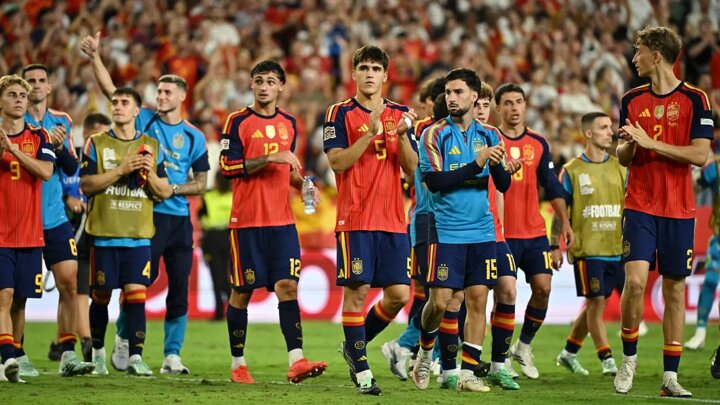
At the end of the 20th century, Spain's national team trophy cabinet held only one European Championship from 1964, and their best World Cup performance was fourth place in 1950—a record that stood as their best World Cup finish until 2010.
Now, 25 years later, Spain has reached the pinnacle of world football and continues to demonstrate its influence in European competition through the UEFA Nations League. This past summer, Spain lifted the trophy, securing their second world title. How did Spain achieve this transformation?
At the heart of this resurgence are various club youth academies, with Barcelona's "La Masia" leading the way. On October 20, 1979, the facility was converted into a residence for young players from outside the area, and today it houses more than 300 young players.
Barcelona has invested heavily in its youth academy. A 2015 Harvard Business School report showed that Barcelona's youth academy had an annual budget of 30 million euros. The report also noted that half of Barcelona's players aged 18 and 19 were in the academy, the highest proportion among elite European clubs.
Competition extended beyond Barcelona. Real Madrid's youth academy, "La Fábrica," houses nearly 300 players with an average tenure of three years. Athletic Bilbao, Villarreal, Valencia, and Sevilla also operate sophisticated youth academy systems.
The fundamental difference is that these youth academies prioritize tactical understanding and technical skills over physical attributes, producing players like Xavi and Iniesta, who might have been discarded by other development systems.
La Masia's influence peaked in 2010, when all three Ballon d'Or finalists came from the academy: Messi, Iniesta, and Xavi.
At the institutional level, the Spanish Football Federation has unified its playing philosophy across all national teams at various age groups and maintained coaching staff stability, allowing coaches to transition smoothly from one age group to the next.
Results came quickly. Spain won the U19 European Championship in 2002, 2004, 2006, and 2007, and matched Italy's record with five U21 European Championship titles, including consecutive victories in 2011 and 2013.
This development was further supported by centralized infrastructure. On May 12, 2003, the Spanish Football Federation opened the "Football City" in Las Rozas, investing approximately 46 million euros to establish a permanent training base for all national teams.
According to The Guardian, by 2017, Spain had approximately 15,089 coaches holding UEFA "Pro" or "A" licenses, while England had only 1,796.
The secret lies in lower barriers to entry: in Spain, an "A" license costs £960, compared to £3,645 in England. Spanish children can receive professional coaching from their first contact with football.
The results of this system are evident in the national team: of the 23 players in Spain's 2008 European Championship-winning squad, 20 came from various Spanish youth teams, and most had won titles during their youth careers.
In the 2010 World Cup final, seven Barcelona players started, and all of Spain's goals in the tournament were scored by Barcelona players. This generation went on to achieve a historic hat-trick at the 2012 European Championship, becoming the first national team to win three major tournaments consecutively.
The most unique aspect of Spain's experience is that the system did not collapse after players like Xavi and Iniesta retired. Current head coach Luis de la Fuente is a clear example. He coached various youth teams starting in 2013, leading them to the 2015 U19 European Championship and 2019 U21 European Championship titles, before being promoted to head coach of the senior national team. Under his leadership, Spain won the 2024 European Championship, becoming the national team with the most European titles, with four victories.
The most significant achievement came this past July. Ferran Torres scored the winning goal in the 106th minute of the World Cup final, helping Spain defeat Argentina 1-0 at MetLife Stadium. De la Fuente, at age 65, also became the oldest winning coach in World Cup history.
Compared with traditional powerhouses throughout history, Spain's achievements are even more remarkable. Since 2008, Spain has won two World Cups (2010 and 2024) and three European Championships (2008, 2012, and 2024).
In contrast, Germany has won only one World Cup in 2014 and no European Championships; Italy has won only the 2020 European Championship; and England remains anchored to its 1966 World Cup title.
These years have proven that Spain has transformed success into a long-term system: youth academies teach the same philosophy, national teams at all age levels follow the same approach, there is a large pool of certified coaches, and the senior team's head coach also comes from this system.
As a result, Spain also became the first national team to simultaneously hold the men's and women's World Cup titles, and the first national team to win the World Cup more than once in the 21st century, while traditional powerhouses like Germany, Italy, and Brazil continue searching for their way back to the top.
Diterjemahkan oleh AI.
Situs web AF kini hadir! Lihat berita lengkap, komentar, detail pertandingan, dan statistik di komputer Anda. Kunjungi: www.allfootballapp.com
 España
Todos los comentarios