
Liverpool FC's official website published Ian Rush's autobiography, in which Rush recounted his journey to Liverpool and the circumstances that nearly saw him join a different club instead.
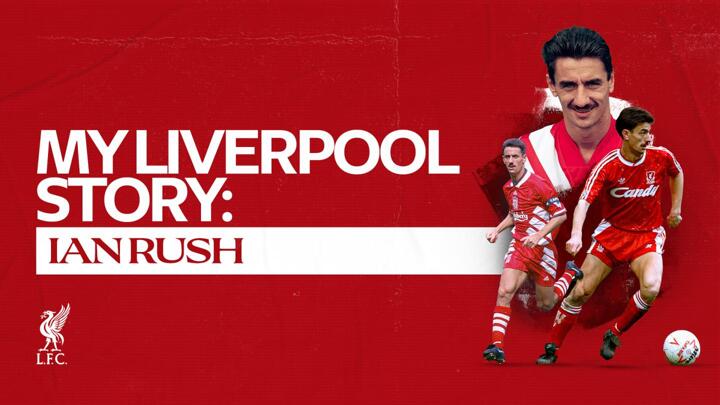
From the Official Website
My time as a Liverpool player is well documented. The fans already know how I arrived at the club. I came from Chester as a young player and went on to become Liverpool's all-time leading goalscorer with 346 goals. I'm incredibly proud of that journey and grateful for everything the club gave me.
This time, I want to share some stories that differ from the usual articles—things the fans might enjoy hearing directly.
The reason I joined Liverpool was because of Chester manager Alan Oakes. He understood how I played. I believe Liverpool offered me £300,000, while Manchester City showed interest and offered £500,000.
Alan had played for Manchester City, so I thought he might push me towards them. But he advised me to go to Liverpool instead. He felt it would be better for my long-term development. That must have been a difficult decision for him, given the financial difference involved.
Manchester City tends to push young players into the first team immediately. Liverpool, on the other hand, gives players time to adapt, improve, and learn. Because of that philosophy, I was able to develop my qualities as a striker and goalscorer in a way that shaped my entire career. I owe Alan a huge debt of gratitude for that wisdom.
I was only 18 when I arrived at Liverpool. The club told me they'd give me two years to establish myself in the first team. I could make mistakes in the reserve team, fix problems, and learn Liverpool's style of play.
I signed the contract and made my debut not long after. Within five or six months, by the end of that season, I'd earned my place in the first team. I played in the League Cup replay and in the European Cup semi-final against Bayern Munich.
The following season, I expected to be part of the first team setup, so I went to Bob Paisley and asked for a pay rise. I felt I was now a first-team player. When he refused and I got angry, I asked to be put on the transfer list. He agreed without hesitation.
He asked how many matches I'd played. At that point, I'd played about seven. He pointed out that I hadn't scored a goal yet. But I'd played well in the matches I'd appeared in and we'd won, so I felt I had something to say. He told me he'd put me on the transfer list and that was that.
After that, I was desperate to leave Liverpool and played with real intensity. I scored two goals for the reserves and got an opportunity in a European Cup match against Finnish side Oulun Palloseura. We were leading 4-0 when Bob brought me on, and I scored a beautiful goal in front of the Kop. It was my first goal for Liverpool.
He then played me in both legs against Exeter, and I scored in both matches. I then added two more against Leeds United, so I'd scored seven goals in about three matches. After that, Bob called me in and said he'd give me the pay rise I wanted. I asked him to take me off the transfer list, and he said I was never on it in the first place. That was a clever way to motivate me.
When I first arrived at Liverpool, I was genuinely shy. I was only 18, and I remember changing next to players like Ray Clemence and Alan Hansen—players I'd only seen on television.
I was nervous at first, but gradually I settled in. I realized I was as good as they were. Bob would regularly call me up to train with the first team on Thursdays, then send me back to the reserves on Saturday. Being around stronger players raised my level to match theirs, which I think he understood immediately.
I'll never forget when the Kop first sang my name. I was so excited I didn't even clap. Sammy Lee had told me to acknowledge them. After the match, I was focused on everything happening on the pitch, which was right. But as I grew more confident and started scoring, when the fans sang for me, I gradually came to love that feeling.
I remember standing in front of the Kop on the day I signed, and the fact that they sang my name just once made me feel I could do well. I never dreamed I'd become Liverpool's all-time leading goalscorer. If I'd known then what would happen, I'm not sure I'd have believed it.
I've always believed that scoring goals is my job. After one goal, I want a second, a third, and more. Seeing the Kop smile when I score makes me want to feel that again and again. That's what matters. It doesn't matter how you score—just that you do.
My greatest achievement at Liverpool is winning the 1986 FA Cup. No other trophy compares to it. As a child, I dreamed of scoring the winning goal in an FA Cup final. Television coverage ran from 9 a.m. to 5 p.m., and after watching the final each year, I'd run into the backyard and pretend I was the goalscorer of the day.
Looking back at the trophies I'd won before that—league titles, League Cups, and two European Cups—I'd won almost everything. But I never thought I'd win the FA Cup.
Yet my dream became reality. We beat Everton, and I scored two goals at Wembley Stadium. That's something I'll never forget. When I talk to children now, I always tell them to have a dream and believe in it. Whether it's football or something else, you must work towards it. Dreams can come true. Mine did, so why shouldn't yours?
Everyone knows about my time at Juventus. But what many don't know is that I almost joined Napoli, another Italian club. After they signed Diego Maradona, he asked the club to sign me. I learned about all this later, from him during his time as a manager, not long before he passed away.
In the summer after I scored 47 goals in one season, Napoli offered £4.5 million with a £1 million signing fee. Liverpool refused immediately.
Honestly, that was quite upsetting. At that time, the financial opportunity could have taken care of my family. I had serious disagreements with chairman John Smith. He wasn't even willing to discuss it with me. We didn't speak for about a year. Ultimately, though, he was looking out for my best interests. I now understand that. Napoli won the league that season anyway.
Eventually, I went to Italy and joined Juventus. I was happy there, but I quickly realized that playing for Liverpool was something special from an outside perspective. In a way, I left as a boy and returned as a man. Everything else is history.
When I decided to leave Juventus, many clubs showed interest. Manchester United manager Sir Alex Ferguson called me. Everton was interested. Rangers manager Graeme Souness contacted me, and Bordeaux also called.
But this is where it gets interesting. When Kenny Dalglish rang me, he simply said he'd book me a flight for tomorrow morning. That was it. He didn't mention wages or anything else. I just wanted to wear that shirt again.
Having the chance to return meant everything to me. From the outside, you realize that playing for Liverpool actually spoils you. In a sense, I left Juventus as a man and came back to Arsenal as an experienced player. The rest is history.
AI ဘာသာပြန်ဆိုသည်။
AF ၏ PC ဝဘ်ဆိုက် စတင်ထွက်ရှိပြီ! သင့်ကွန်ပျူတာမှ သတင်းများ၊ မှတ်ချက်များ၊ ပွဲစဉ်အသေးစိတ်နှင့် စာရင်းဇယားများကြည့်ရှုနိုင်သည်။ ဝင်ရောက်ရန်: www.allfootballapp.com
 Liverpool
 Manchester City
 Ian Rush
Todos los comentarios