
According to The Athletic, the former Manchester City and England winger Sterling recently pleaded guilty in court to dangerous driving and possession of nitrous oxide, a Class C drug (laughing gas), with the judge warning that he could face a custodial sentence on 25 November. From Premier League champion and World Cup international to facing potential prison time, Sterling's downward spiral is shocking, but a fundamental question remains unanswered: what exactly led him to this point?

As Sterling prepared to leave the courthouse, a member of his staff informed him that a small group of photographers were waiting outside.
After one of the most ignominious experiences of his life, it was time to face the cameras. "If I were you, I'd walk out backwards," someone suggested.
Sterling had just been told by a district judge that he could face prison when he returns to Basingstoke Magistrates' Court on 25 November, having pleaded guilty to dangerous driving and possession of nitrous oxide, a Class C drug (laughing gas).
In other words, for a player who not long ago was winning Premier League titles with Manchester City, playing for England in the World Cup, and receiving an MBE from the late Queen for his services to football and racial equality, the worst may still be to come.
Certainly, after the details of his reckless motorway driving were revealed in court, few people would be willing to defend someone in such a situation, or, for that matter, willing to listen to tales of misfortune.
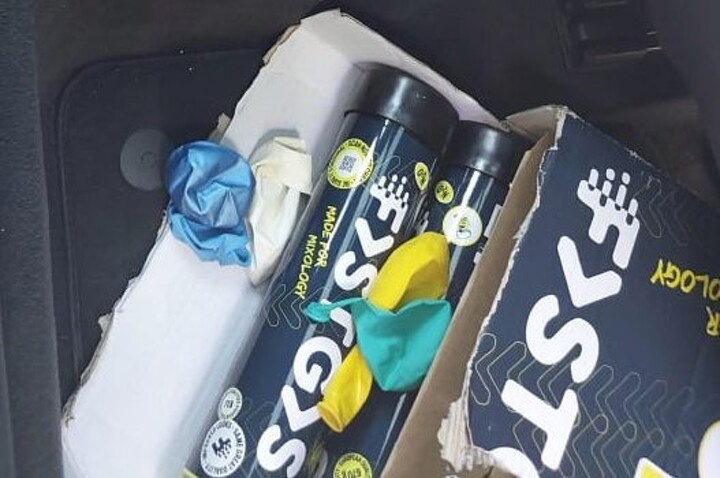
Sitting in courtroom one during his trial, you could sense up close how reckless Sterling's mindset was before he crashed his car after taking drugs during rush hour on 28 May this year – because "reckless" is the only truly appropriate word.
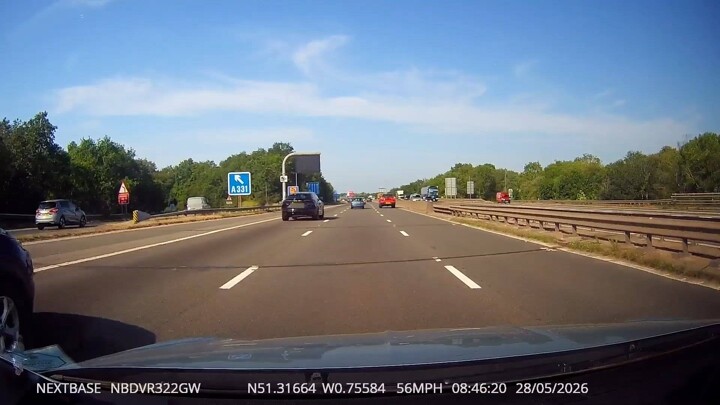
We saw dashcam footage, which makes it easier to understand why one of the drivers who called the police said she was genuinely concerned that someone could die.
We heard that over 67 minutes, from 7:45 to 8:52, a barrage of 999 calls alerted three police forces to Sterling's £270,000 Lamborghini, which was weaving through traffic, often far exceeding the speed limit, while he inhaled gas from balloons at the wheel.
We saw the damage to his vehicle after he eventually veered off the A327 in Hampshire, and, most shockingly, we heard that he had been driving in this dangerous and uncontrolled manner well before reaching the motorway. In fact, the first 999 call was made at 1:10 a.m., when he accelerated through a McDonald's drive-through in Hayes, north London, and began inhaling gas from balloons while waiting for his food. Sterling later admitted he hadn't slept all night.
However, we never received detailed answers to the questions that inevitably arise from a case of this nature.

Sterling, what happened? What led you to this point? Where did everything go wrong? And, perhaps more pertinently, what lessons can football learn from this?
Before we proceed, perhaps it would be fairer to reserve some judgment. Let us not fall into the trap of thinking that simply because clubs such as Manchester City, Chelsea, Arsenal, and Liverpool have paid Sterling exorbitant wages, he would be immune to the vulnerabilities others face.
It is not easy being a footballer who doesn't play, and Sterling has had to contend with everything that comes with it in ways he could never have imagined in recent years: the loss of status, the erosion of identity, a sudden sense of inadequacy. At 31 years old, his career appears to be over, or certainly perilously close to the end. He has been without a club since leaving Feyenoord in the Eredivisie at the end of last season. This has been a painful and extremely public fall from grace.

This is not to excuse his reckless behaviour behind the wheel, which could easily have resulted in more serious, potentially fatal, collisions on the M25 and M3 motorways. Only luck and the actions of others prevented possible fatalities.
But it is also important to clarify whether Sterling's problems stemmed from his final season at Chelsea, when he was ostracised and not even permitted to train or interact with his former teammates.
Sterling spent seven months at Chelsea without playing a single match, eventually having to hire a private trainer to maintain his fitness. Again, this does not entirely excuse his poor decisions. However, it could give us a better understanding of his mental state, the reasons for his lack of professional focus, and why he struggled to make any positive impact after joining Feyenoord (which was supposed to get his career back on track).
For now, the only thing we can be truly certain of is that if a talented and high-profile footballer endangers lives in this manner and admits to police that he has a "problem" with nitrous oxide, then things have certainly gone seriously awry.
His defence will argue that a suspended sentence is sufficient, meaning he will not be imprisoned provided he commits no further offence within a specified period. Perhaps the judge will be lenient, agreeing that his timely guilty plea and lack of previous convictions should keep him out of prison.
But when you consider that this individual not long ago was regarded as a role model for countless people, and not merely because he twice finished in the top 15 for the Ballon d'Or (2019 and 2021), this case remains deeply troubling. Whatever the verdict in November, Sterling has seriously damaged his reputation.
This is perhaps the saddest aspect, especially given years of discussion about Sterling's media coverage and the headlines a young, successful Black footballer can attract.
Many of us defended him at the time. We argued that he should be accepted, and that it was we who needed to change, not him.
Today, however, attempting to take his side is far more complicated. The headlines will be fierce, and rightly so. When the sentence comes down, whatever the judge decides, they will be just as fierce. And the danger here is that amid all the commentary, the fundamental point may be lost: that there is a young man who admits to having a "problem".
Nearly four months after his arrest, it was never clearly explained in court whether this problem still exists. Or whether "problem" is another word for "addiction". But it is to be hoped that the Professional Footballers' Association and other competent bodies are working to establish this. Because it is highly likely that Sterling needs not only punishment, but also help.
Tradotto dall'IA.
Il sito web di AF è ora online! Notizie complete, commenti, dettagli delle partite e statistiche sul tuo computer. Visita: www.allfootballapp.com
 Chelsea
 Raheem Sterling
Tous les commentaires