
Sterling was previously reported to have been charged with dangerous driving, illegal possession of nitrous oxide, and refusal to provide a sample. In response, The Guardian published an article stating that young players nowadays have no control over their own destinies, and their minds are being twisted.
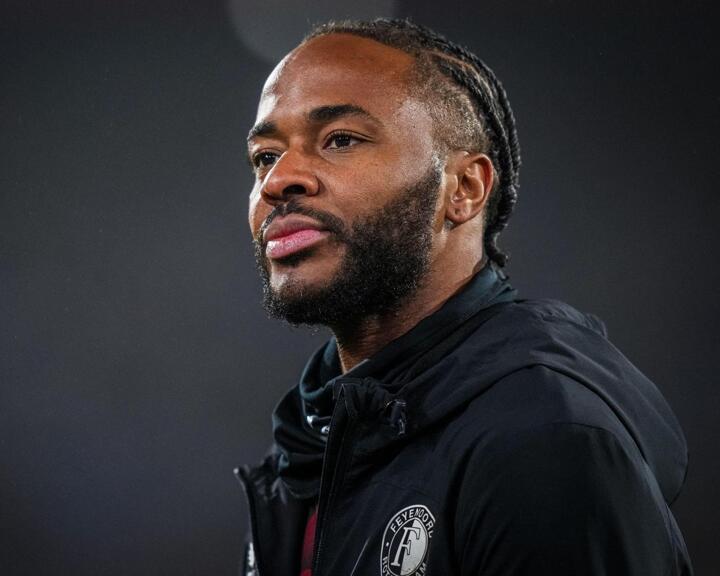
"What's your name?"
"Raheem."
"Surname?"
"Sterling."
And so, a story ended. On a bright May morning, at 9:13 AM, by the A327, he sat in the passenger seat of a crashed Lamborghini, frantically shoving nitrous oxide canisters into the back, forced to state his name from the beginning. A police officer asked him who was driving the car when it crashed into a metal barrier on a Hampshire country road. Sterling said nothing; the driver's seat was empty.
Details revealed in Basingstoke court this week showed that police received multiple calls from the public about a vehicle driving erratically and unpredictably on the M3 motorway. Sterling had been driving all night. It was ironic, and bitterly so: this was precisely the characteristic Sterling was known for on the field, weaving through crowds, dribbling with no fixed pattern, following only the unique logic in his mind.
The district judge has already issued a severe judgment: we have every reason and ought to heavily condemn this serious, life-endangering crime to which Sterling pleaded guilty. At the same time, we must acknowledge that the only reason this matter came into public view is football. You wouldn't be angry at other dangerous drivers, whose names you don't know and wouldn't look up. But for him, there is extra indignation: this player, worth £50 million four years ago, now faces jail time, and his 31-year-old career might end abruptly.
That's right: he is younger than Kepa, younger than Solly March, and even younger than Ariana Grande. To be honest, the collapse of Sterling's value as a professional player actually happened earlier. It was roughly after his Arsenal loan expired, and Maresca made it clear that Chelsea no longer needed him. Even with young children at home, he was arranged to train alone after 8 PM; Maresca, however, said it was no big deal, as fishermen also work long, hard hours.
In a sense, Sterling also became a victim of the industry cycle he himself helped propel. At 15, he transferred from Queens Park Rangers to Liverpool for a fee that could reach £2 million, becoming one of the first high-value youth transfers. Over a decade later, football increasingly valued one-on-one duels, direct sprints, dynamic dribbling, and unpredictable, patternless runs, leading to a craze for young players with no physical injuries. This created a self-perpetuating "child labor" market, which almost no one truly questioned, let alone challenged.
For years, the Premier League's talent focus has continuously shifted towards younger players, with half of the league's players last season aged 25 or younger. The three youngest first-team debuts in Premier League history (Jeremy Munga, Dowman, Nwaneri) all occurred after 2022. Beyond Europe, Lamine Yamal (15-year-old La Liga debut) and Cavan Sullivan (14-year-old MLS debut) have made child stars commonplace: these athletes are not yet old enough to legally buy e-cigarettes but have already reached the pinnacle of world football.
This week, there were numerous reports that the highly talented 15-year-old attacking midfielder JJ-Gabriel, sought after by multiple clubs, requested to leave Manchester United's academy. Let's assume that Gabriel himself did not proactively go to The Daily Telegraph office to release this news. Essentially, the entire matter surrounding a child spawned a plethora of rumors: various parties briefing, debunking, gossip, online discussions, and sports front-page reports.
Before even discussing the endless issues of protecting minors, we should consider the economic incentives behind it. Scouting networks are continuously expanding and deepening, clubs are increasingly transforming themselves into trading vehicles, and the premium on rare young talents has become too high to ignore. If Gabriel leaves Manchester United, there is no doubt that he will have his pick of top European clubs.
Players and their agents have also begun to realize their scarce value in this market. In the past, Carrick might have gradually brought Gabriel into Manchester United's first team, planning his development in the long term, much like Arteta nurtured Dowman at Arsenal. But if Yamal can play first-team football at 15, why can't JJ-Gabriel? If all top European clubs are looking for the next super talent, then in this relationship, who holds the power – the child, or a world-class football club?
This itself is absurd, and this absurdity is deliberately created. Pointing this out is not to excuse Sterling's subsequent actions: pushing someone down such a path is inherently ridiculous. Possessing unimaginable wealth in his youth, pushed into the center of public attention, and discarded as useless before the age of 29. Such a life is extremely strange: starting far outside the ordinary trajectory of life, it would be a miracle to maintain a normal state of mind within it.
Life-changing wealth, constant scrutiny, no privacy, various agents and representatives, dwindling trust, incessant external noise, strangers all wanting a piece of you. And don't forget, you're still just a child at this point, with an entire lifestyle packaged as life's highest ideal. Remember, you now have to support your entire family. Reportedly, Gabriel was originally known by his father and agent's surname, Osiurhul, but later changed to Gabriel, simply because the name was easier to pronounce and had higher commercial promotional value.
My core point is: no one can fully control their own career. The fate of young players today is subject to a multitude of forces over which they have almost no control. His career depends on countless people: coaches refining skills, medical teams managing workload, teammates passing him the ball, and the support circle that could have dissuaded him from getting into a car filled with nitrous oxide canisters in the early hours of the morning.
By any standard, Sterling is considered fortunate. He achieved fame young, reached the pinnacle of football, played 82 times for his country, won four league titles, played under the greatest manager in history, and tasted the sweetness of glory, even if that glory ultimately turned against him. There are thousands of unknown young people, ruthlessly exploited and twisted by this system, thrown into the world of football, whose skills you will never see, whose names you will never hear. To provide us with entertainment, how much humanity are we willing to sacrifice to this machine?
Perhaps in the post-Messi-Ronaldo era, we are beginning to abandon the illusion that great individual players can single-handedly rewrite history. This fallacy, let's call it the Ballon d'Or industrial complex. Injuries, circumstances, tactical trends, changes in physical condition, and the inevitable passage of time—these are the attendants of talent, the monsoons that determine fate, the amulets of luck. From afar, any football prodigy you see is a fascinating illusion woven from talent and privilege. But if you look closely, you'll find: The driver's seat is empty.
AF's PC site is now live! Browse full news, comments, match details and stats on your computer. Visit: www.allfootballapp.com
 Manchester United U19
 Raheem Sterling
 JJ Gabriel
Tous les commentaires