
England will face Spain at Wembley to begin their new Nations League campaign. At the pre-match press conference, captain H. Kane discussed the Ballon d'Or, contract extension negotiations with Bayern Munich, his feelings after the World Cup semi-final defeat, and responded to discussions about England's playing style. This article is the first part of the press conference.

Before we talk about this important match, I'd like to ask about the Ballon d'Or. I apologize for jumping straight to the topic that centers on you. For years, statistics, records, and goals have been your driving force, and you've measured yourself against them, constantly striving for perfection. It seems you now have your best chance to win the Ballon d'Or, and perhaps you've never been closer to this award. Do you see it that way?
At this moment, yes, it's my best chance. Whether there will be other opportunities in the future, only time will tell. But for now, this is undoubtedly the best opportunity in my career. I've been very open about this in the past season: from a personal perspective, it was undoubtedly my best year; from a team perspective, whether it's winning trophies or how the team played, it was also my best year.
Winning the Ballon d'Or would certainly be a major achievement. I know a lot has already been said, and discussions will definitely continue over the next month until the results are announced. That's part of the process. If I win, I'll be very proud. Last year I accomplished a lot that I'm proud of. But as I always say, ultimately it depends on the judgment of others, on how they see players and how they evaluate performances from last season. So we'll have to wait and see what happens. I know this won't be the last time I talk about the Ballon d'Or, as there's still about a month until the results are announced. For now, I'm focused on helping England secure a victory tomorrow evening.
Perhaps this will be a difficult question. H. Kane, do you think you should win the Ballon d'Or?
So I... I'm trying to avoid... (laughs)
Great answer, mate. We're seeing you for the first time since the World Cup, and you've had time to reflect on that tournament. England got a lot of positives from it, but the semi-final exit was obviously very disappointing. Anthony Gordon said something interesting yesterday: he agreed with Thomas Tuchel that England should play to its strengths. Perhaps we can't control the ball as well as Spain, and perhaps we should play more direct, using our physical power and pace. As you can imagine, this has sparked a lot of discussion among journalists and fans, because we also see you and other players often playing in that style for your clubs. What are your thoughts?
I completely understand what he means. Spain's style of play has become part of their football culture. From five or six years old, they play a certain style and method, right through to when they become professional players. The situation in England is quite different.
That doesn't mean we can't control the ball or handle it under pressure. We also have very technical players who can do that. But we also have many advantages that they don't have, such as physical attributes, pace, and power. Before the World Cup, many people talked about how physically demanding it would be for England, but I said then that I actually see it as one of our greatest strengths. Our pressing, our ability to consistently apply pressure and win duels — all of this has characteristics of Premier League football.
So I think tomorrow you'll see an England team that demonstrates these qualities. When we're at our best, we can combine both aspects. We won't be a team that plays exactly like Spain. They're very good in their style, but we also have many strengths we can show tomorrow evening, such as playing more direct, running in behind, and set pieces, which are also very important in today's game, as well as many other characteristics.
I think it's important to have your own style rather than simply trying to imitate other teams. Of course, you can borrow elements from different teams' playing styles, and you can do that when playing for your club. But ultimately we need to play as England, demonstrating our own qualities, especially in important matches.
H. Kane, I want to ask about your future and your contract. Your contract with Bayern Munich expires this year, and I know you're in negotiations about an extension. Can you provide any update on where things stand? Also, at the start of the new season you're in the best form of your career, but you're facing uncertainty about your future. How are you managing these two things?
The negotiations are going well, and I've always been very open about this. We're still in communication, and I think everything is moving in the right direction. Both sides are relaxed about it because, I think, everyone can see how happy I am there. My performances on the pitch and my words off it demonstrate that. I've always been very open about this. So I hope both sides can reach an agreement.
As for how this affects me psychologically, I think I just go about my business as usual. I like to take things season by season. Contractually I have nine months left, so from that perspective nothing has really changed. However, during this international camp, I obviously prefer to focus on being here and on the England team. Contract negotiations can wait for now, and my team around me can continue to communicate and work on them. I think a decision should be made in about a month, and I believe it will be a positive outcome.
I also want to specifically ask: you've always placed great emphasis on recovery after matches throughout your career. You're now over thirty, and many would say a player at this age is approaching the end of their career, though you're in excellent form right now. Do you think your commitment to post-match recovery over the years is now starting to pay dividends?
Absolutely. Recovery is extremely important in our sport, especially given the modern schedule — season after season with virtually no break. You get three weeks off, and then you have to start all over again. So recovery has become the most important part.
I laid the foundation from a young age. This is also thanks to good people and a good support system around me, which allowed me to learn early on about nutrition, recovery, gym training, and everything that helps maintain good fitness. I think these things have got me to where I am today and make me feel as good as I do now.
Over the last ten years or so, football and even sport in general have changed. Sports performance is being discussed more and more, and there's growing understanding of the role recovery plays in it. I wouldn't be surprised if more and more players in the future are able to maintain a high level for longer. Cristiano Ronaldo, Modrić, Messi, and Lewandowski are examples. They continue to deliver outstanding performances in their thirties, even approaching forty. That's my goal too.
Sometimes when players reach this age, it's easy to start thinking about when their career will end. But why not keep pushing forward as long as your body or mind tells you that you really can't anymore? Tom Brady is one of my heroes; he played at the highest level until he was 44. That shows it's possible in sport. Of course, it requires great dedication, and at a certain age, perhaps even greater dedication. But I enjoy this part of the work. I think these efforts have really got me to a good place right now.
Переведено ИИ.
Сайт AF теперь доступен! Читайте полные новости, комментарии, детали матчей и статистику на компьютере. Посетите: www.allfootballapp.com
 Angleterre
 Bayern Munich
 Espagne
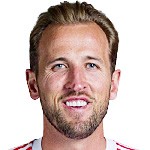 Harry Kane
Tous les commentaires