
Recently, Lee Yong-gyoo, a South Korean media expert, wrote an article about the turmoil within South Korea's national football team. The article suggests that as the AFC Asian Cup approaches, the Korea Football Association (KFA) can no longer ignore internal conflicts and should intervene as soon as possible.
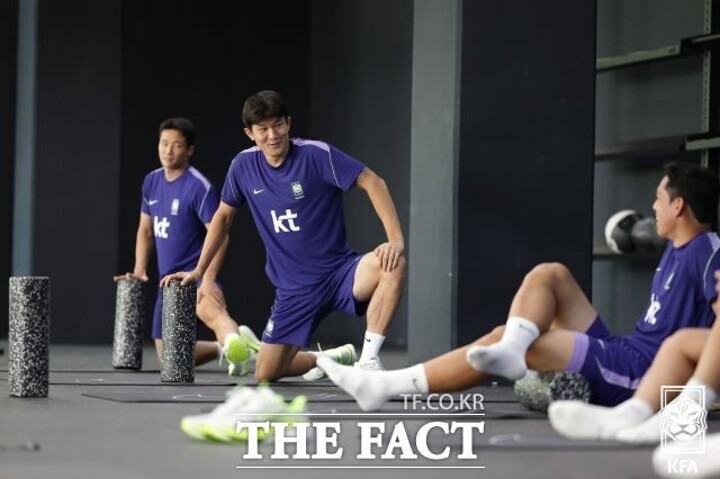
Internal conflicts within South Korea's national football team remain unresolved, with speculation and rumors continuing to emerge, intensifying the impact of the situation.
Recently, rumors about players from the "Class of '96" potentially withdrawing from the national team have escalated tensions with captain Son Heung-min. Some reports have emphasized what has been called a "confrontation between the Class of '92 and Class of '96" through speculation. Although these reports claim to be based on certain interviews, the current references to generational conflict between players remain largely speculative based on existing circumstances.
Since most related reports rely on secondhand information or infer connections by piecing together past events, while the players involved have not provided adequate or specific explanations, speculation and outside interpretation continue to pour in.
In this situation, the most pressured figure is Robert Moreno, interim coach of the South Korean national team. When he took over, he was assigned to manage the team temporarily for just six matches. He has already led the team through four matches amid ongoing internal conflict without achieving significant success, and he must face two remaining matches in November. However, there are currently no signs that this turmoil will ease or be resolved.
If he were a permanent head coach, he might be able to intervene directly and facilitate solutions with his authority and management skills. However, as Hwang In-beom acknowledged, an interim coach faces practical limitations when intervening in player disputes. Moreno cannot easily handle the situation proactively, but merely observing also makes it difficult to address the current crisis.
The KFA Can No Longer Remain Silent
So when faced with a national team in crisis, should events simply be allowed to unfold? The organization that should step in first to resolve the issue is undoubtedly the Korea Football Association.
The KFA may attempt to shirk responsibility by citing the vacant presidency, but using the absence of a president as cover for organizational accountability is unacceptable. If the lack of a president means the KFA cannot operate normally, what are the senior management and administrative staff responsible for organizational operations doing?
The Korea Football Association cannot remain a passive observer of the crisis facing the national team.
Currently, external reports only mention that Hyeon Yong-min, chairman of the KFA's national team development committee, has been in discussions with and persuading the players involved overnight to prevent them from withdrawing from the national team. But can the problem truly be solved through persuasion alone?
First, it must be determined whether this incident stems from players neglecting their responsibility and discipline to the national team, or whether it reveals long-accumulated problems within the squad. Regardless of the circumstances, the situation cannot be hastily concluded through persuasion and containment alone.
The Korea Football Association should immediately launch an investigation to clarify the full details and nature of the incident. Based on the investigation results, it should punish those responsible and address problems requiring improvement. The KFA should not merely listen to individual players' accounts or rely on secondhand information from outside sources. Instead, it should verify concrete facts and establish measures to prevent similar incidents from occurring again.
Appointment of a Permanent Head Coach Cannot Be Delayed Indefinitely
The process of selecting a permanent head coach for the South Korean national team also cannot be postponed indefinitely until the KFA presidency is filled.
To prepare for the AFC Asian Cup scheduled for January next year, the Korea Football Association must present a clear plan for selecting a permanent head coach. There appears to be little expectation that Moreno will gain public acceptance in South Korea and continue as coach through the Asian Cup. But if this plan falls through, does the KFA have alternative options prepared?
If, as Hwang In-beom stated in his post-match interview against Venezuela on October 2, the national team has many long-standing unresolved problems, the KFA's historically lax management and inefficiency cannot be overlooked.
When the "ping-pong incident" occurred two years ago, the Korea Football Association exposed internal player conflicts publicly, yet ultimately failed to fulfill its responsibility as problem-solver. At that time, the KFA was criticized for scapegoating players for poor Asian Cup performance to deflect public pressure resulting from its own failed coaching appointments and mismanagement.
If the KFA was aware of problems at that time, it should have conducted thorough investigations afterward, punished those responsible, and rebuilt national team discipline and authority.
However, the KFA ultimately concluded that the incident was resolved through personal reconciliation, with Lee Kang-in apologizing and Son Heung-min choosing to forgive, then closed the matter. In effect, the Korea Football Association created conditions conducive to continued internal conflict and discord within the national team.
From a competitive perspective, these players are vital national team members. But if discord persists, the team cannot fully combine everyone's abilities. Problem-solving cannot stop at reconciling individual player disputes; it must include identifying the true underlying problems within the national team and implementing measures to prevent similar incidents from recurring.
Fact-Finding and Accountability Must Come First
And the organization that should take action is the Korea Football Association.
Faced with continuous rumors and speculative reports, the Korea Football Association can no longer remain idle. The author calls on the KFA to urgently establish a "fact-finding task force" to investigate the true circumstances of the incident and determine appropriate countermeasures and follow-up actions.
Merely because the players involved are key national team members cannot an incident that potentially disrupts team order be overlooked as if nothing happened.
If the players' actions resulted from impulsive decisions, they should be held accountable. The national team cannot be an organization that unconditionally caters to individual player demands. Conversely, if this incident has exposed longstanding irrational phenomena within the national team, the KFA must investigate the root causes and address them thoroughly.
Regardless of the circumstances, fact-finding and establishing accountability should be the first step.
The Korea Football Association should no longer rely entirely on resolving problems through player persuasion and personal reconciliation among them. The KFA should conduct an independent and impartial investigation and transparently announce investigation results and follow-up measures.
Restoring national team discipline and trust is not solely the players' responsibility. The Korea Football Association bears primary responsibility for this turmoil.
แปลโดย AI
เว็บไซต์ AF เปิดตัวแล้ว! ดูข่าว ความคิดเห็น รายละเอียดแมตช์ และสถิติครบถ้วนบนคอมพิวเตอร์ของคุณ เยี่ยมชม: www.allfootballapp.com
 Corée du Sud
Tous les commentaires