
In the Brazilian league, scenes of goalkeepers collapsing on the turf after a save and writhing in pain are becoming increasingly rare. This is due to a new rule: when a goalkeeper receives treatment, at least one outfield player from their team must leave the field for one minute. Since its implementation in Week 23, the number of treatment incidents has decreased by 65%.
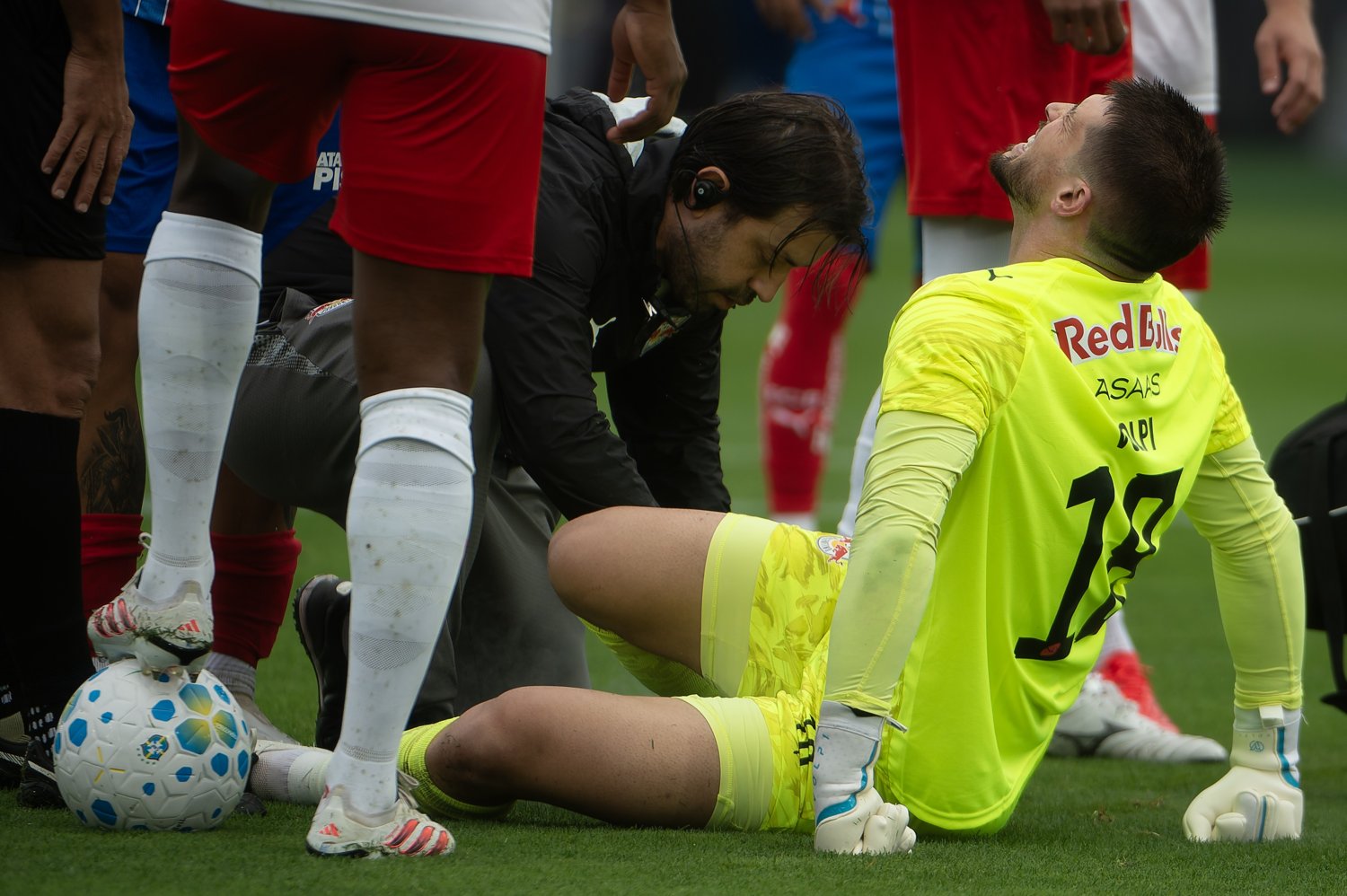
Before the rule change, goalkeepers received treatment 88 times in 215 matches in the 2026 Brazilian league. After the new rule, this number dropped to 9 times in 62 matches. See the breakdown below:
Before Week 23: Goalkeepers received treatment 88 times in 215 matches, averaging 0.409 times per match. From Week 23 onwards: Goalkeepers received treatment 9 times in 62 matches, averaging 0.145 times per match.
Since 2022, Gato Mestre has tracked all game interruptions caused by medical staff entering the field to treat goalkeepers. During this period, 805 treatments were recorded across 1,797 matches, averaging 0.45 treatments per match. The chart below shows the decrease in treatment incidents after the implementation of the new rule.
Over the past five years, the moving average of goalkeeper treatments naturally fluctuated, generally remaining around the historical average of 0.46 incidents per game, with peaks exceeding 0.7 in some periods during 2023 and 2025. After the new rule took effect in Week 23 of 2026, the curve broke this pattern and continued to decline, dropping to 0.1 per game in recent rounds—the lowest level in the entire historical sample.
2022: Goalkeeper treatments 173 times, averaging 0.455 times per match. 2023: Goalkeeper treatments 167 times, averaging 0.439 times per match. 2024: Goalkeeper treatments 161 times, averaging 0.423 times per match. 2025: Goalkeeper treatments 207 times, averaging 0.544 times per match. 2026 (before new rule): Goalkeeper treatments 88 times, averaging 0.409 times per match. 2026 (after new rule): Goalkeeper treatments 9 times, averaging 0.145 times per match.
Of all treatment records from 2022 until the implementation of the new rule, 717 occurred when the team was drawing or leading, accounting for 90%; only 79 occurred when the team was trailing, accounting for 10%.
The new rule has completely changed this situation. Of the 9 recorded incidents, none involved a goalkeeper seeking treatment when their team was leading. Five of the 9 occurred during a draw, accounting for 55%; four occurred when the team was trailing, accounting for 44%.
Team drawing or leading (before new rule): 717 times (90%) Team trailing (before new rule): 79 times (10%) Team drawing or leading (after new rule): 5 times (55.6%) Team trailing (after new rule): 4 times (44.4%)
After a player requests medical assistance on the field, they must wait at least 60 seconds before returning to play, leaving the team shorthanded during this time.
If the injured player is the goalkeeper, an outfield player will be removed from the field for one minute. The Brazilian Football Confederation's refereeing department aims to curb time-wasting tactics by goalkeepers who feign injury. The confederation also believes this pause gives coaches an opportunity to give instructions to players and slows down the resumption of play.
Who leaves the field? There are two possibilities: the coach designates a player within 10 seconds, or the captain leaves immediately after the medical team enters. If the goalkeeper is also the captain, a player selected by prior draw will leave the field.
AF's PC site is now live! Browse full news, comments, match details and stats on your computer. Visit: www.allfootballapp.com
 São Paulo
 Cruzeiro
 Internacional
 Palmeiras
 Fluminense
 Flamengo
 Santos
 Corinthians
 Vasco da Gama
 Botafogo
Semua Komentar