
On October 1, The Athletic's Amy Lawrence wrote an article discussing the impact of Manchester City's financial fair play case on the Premier League and football itself.
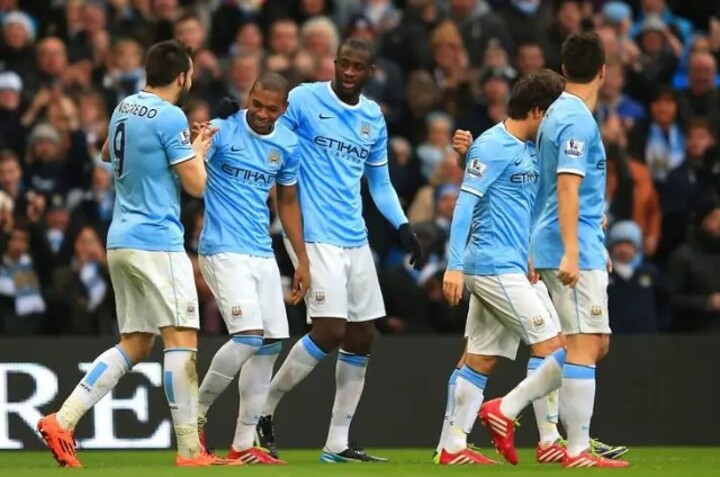
The article argued that football's enduring appeal to fans stems largely from the unpredictability of match results, and that systemic rule-breaking could undermine fair competition and erode fan trust in the sport. It reviewed the Premier League's commercialization since its inception, as well as the impact of Roman Abramovich's takeover of Chelsea and the Abu Dhabi United Group's acquisition of Manchester City. It also referenced warnings from figures like Arsène Wenger and Jürgen Klopp regarding "financial doping" and sporting integrity.
Below is the column content:
"Nothing matters but football."
This sentence, written by Nick Hornby in his classic work on fan culture, "Fever Pitch," captures the essence of a fan's life. For them, the boundary between football and daily life seems perpetually blurred.
The statement "nothing matters but football" doesn't truly hold up to scrutiny. But we all understand what Hornby truly meant.
It signifies that people dedicate a massive part of their soul to this maddening yet mesmerizing sport—a sport beyond their control. It is sometimes mundane, sometimes miraculous.
And precisely because we can never be certain whether we will experience a mundane day or a miraculous one, football continues to captivate us so profoundly.
Football has always been a great, unscripted, emotionally driven spectacle for the masses.
But now, this "charade" has thrown it all into question.
Why do we care about sports? Why do we feel sports so deeply? The answer is closely tied to their wonderful unpredictability.
Sport is never a simple formula or algorithm where the strong always defeat the weak or the rich always overcome the poor.
In sport, there are always exceptions, miracles, and possibilities.
Competitive sports should possess all sorts of beautiful coincidences, upsets, and surprises. Things that seem almost impossible can genuinely unfold before our eyes.
No matter which team you support, no matter how fervent your fandom, systemic cheating completely undermines the entire principle of fair competition.
It is quite meaningful that "Fever Pitch" was published in 1992.
Because in 1992, the Premier League was officially established. The Premier League separated from the existing English football pyramid, beginning its pursuit of new wealth, marketing opportunities, lucrative broadcasting contracts, and commercial partnerships, while also putting potential global expansion on the agenda.
This "separation" was built on the allure of profit and greed, aiming to further commercialize and expand football. It also sought to reshape the sport's environment following the tragedies of Bradford, Heysel, and Hillsborough in the latter half of the 1980s.
Improve the product.
Chase the dream.
Sprinkle stardust on football.
All of this happened very quickly.
In 1992, Manchester City was a beloved club with a long history.
In the final season before the Premier League's formation, they finished fifth; in the inaugural Premier League season, they finished ninth. It was an era filled with novelty and gleaming promises.
Manchester City has experienced many ups and downs.
While their cross-town rivals Manchester United gradually built a dynasty in the 1990s and Manchester City even dropped to lower leagues at one point, Manchester City fans always relied on self-deprecating black humor to face reality.
This naturally brings us to May 1999.
For a certain generation of football fans, "Agueroooo!" is not necessarily the most iconic moment in Manchester City's history.
Neither is Paul Dickov.
That year, Manchester City finished third in England's third tier, sandwiched between Walsall and Gillingham.
They faced Gillingham in the promotion playoff final.
With two minutes remaining, Manchester City trailed 0-2.
They seemed destined to remain in the depths of the lower leagues.
However, Manchester City scored two goals in the dying moments, throwing the match into chaos.
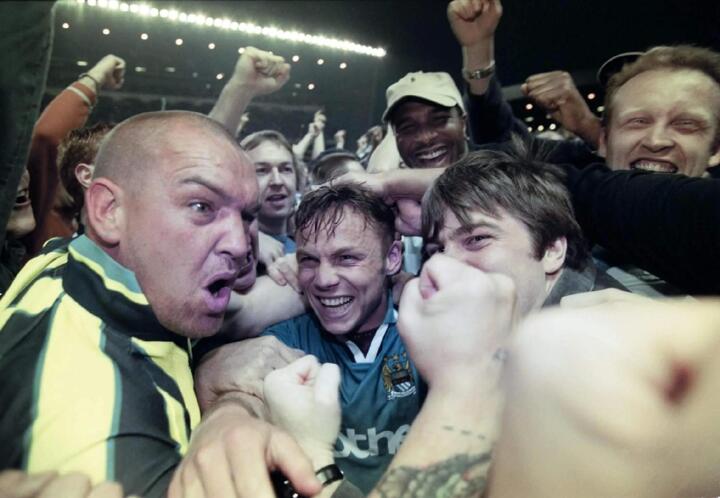
Just look at Dickov's celebration after scoring the equalizer—he rushed to the corner, sliding on his knees, as players and fans alike erupted in pandemonium.
Those raw, unblemished moments are what truly explain why people love football.
This is why "nothing matters but football."
Unexpected turns.
Fate-defining moments.
The moment an ordinary player becomes a hero.
These are the purest emotions.
At least, football should be this way.
Manchester City ultimately won the match in a penalty shootout, successfully earning promotion and regaining their dignity.
Without that promotion, who knows if they would have become a target for overseas investment a few years later?
The Premier League gradually became a magnet for capital investment.
And globally, this attraction continues to grow.
The problem is that all of this happened too quickly, leaving football's governing bodies with insufficient time and capacity to fully assess these changes, let alone establish adequate safeguards in a timely manner.
In the process of attempting self-governance, some of the most fundamental principles of competition were gradually eroded from within.
Chelsea under Roman Abramovich and Manchester City after the Abu Dhabi United Group's takeover both possessed immense resources to spend, along with a willingness to push the boundaries of rules they disliked.
Thirty years ago, during the period when the Premier League was established and expanding, and football's horizons were constantly broadening, a Frenchman arrived in England from Japan's J-League to manage Arsenal.
From the common perception of English football at the time, his arrival seemed almost like he had descended from the moon.
Arsène Wenger, upon arriving in English football, sought to find a balance between traditional identity and his own philosophy.
He had witnessed corruption firsthand.
While managing Monaco, Wenger saw their rivals Marseille engaged in rule-breaking, which eventually led to their investigation and punishment.
As an economist and football man, Wenger was one of the first figures in English football to openly and strongly oppose so-called "financial doping."
When he first witnessed the impact of Abramovich's arrival at Chelsea, he began to warn against this model.
Without the financial maneuvers that helped Chelsea and subsequently Manchester City rise rapidly, the latter part of Wenger's tenure at Arsenal would undoubtedly have been different.
In recent years, Jürgen Klopp has also publicly spoken about issues of sporting integrity multiple times.
During his time managing Liverpool, he competed against Manchester City's "enhanced" operational model repeatedly and narrowly missed out on titles.
Today, numerous clubs and many football professionals are re-examining their personal experiences.
Because the world of football they once knew could have been, and should have been, completely different.
Both Klopp and Wenger had warned about financial rule violations in football.
Since the Premier League's birth, football clubs have needed—and still need today—better protection.
Because clubs are too important.
They are an indispensable part of our social fabric and should therefore be regarded as assets that need safeguarding.
We need a new regulatory model.
Only then can clubs no longer be arbitrarily used and manipulated by those with enough wealth to seize control, nor can these individuals be allowed to run clubs according to their own rules.
"Nothing matters but football."
But if football itself is a "charade," then football cannot truly matter.
AF's PC site is now live! Browse full news, comments, match details and stats on your computer. Visit: www.allfootballapp.com
 Manchester City
Semua Komentar (2)