
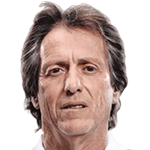
Portugal will host Norway in the fourth round of the UEFA Nations League. Ahead of the match, head coach Jorge Jesus attended a press conference and discussed topics such as Ronaldo, the players' physical condition, and preparations for the match against Norway. This is the second part of the press conference.
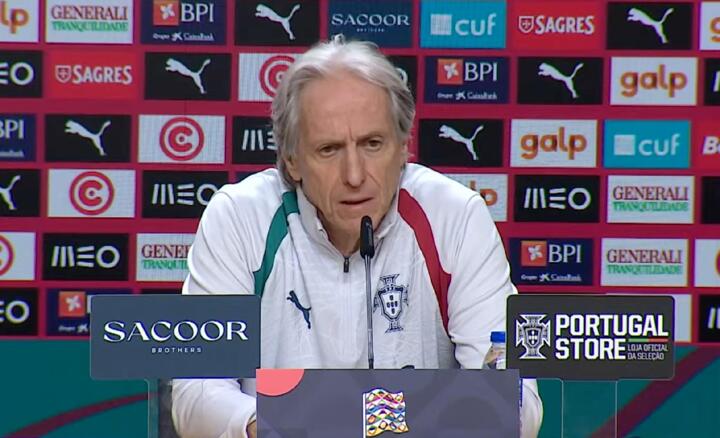
A Bola reporter: Among the three opponents you have faced so far, Norway is the team that has dealt best with Portugal's press, either through Martin Ødegaard dropping back into midfield to receive the ball, or through center-backs carrying the ball forward. What adjustments are you planning to make to your pressing against Norway's build-up play? Also, how important is it to have midfielders with sufficient athleticism to keep up with Norway's midfield movement and positioning changes?
Yes, we have advantages in some aspects and disadvantages in others at certain phases of the game. We are at a disadvantage in terms of physical contact and winning aerial duels. Five of their players on the field are between 1.88 and 1.90 meters tall.
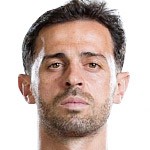
But we also have our advantages. Our players are not as tall, but they are more technical and faster. So there is a balance, right? We also build our advantages through these aspects. Our midfielders, such as Bernardo Silva, Vitinha, and Neves, are around 1.70 to 1.75 meters tall. But when the ball is at their feet, you will find it very difficult to stop them.
Therefore, we must follow this approach, utilize the characteristics of our players, and bring our advantages into the game, just like we did against Denmark. Of course, tomorrow the Norway coach, like me, will have a deeper understanding of the Portuguese team. Before, facing a new coach, he didn't know what that coach's ideas were. Now he has seen the first match and watched video of it, so this time it might be more difficult.
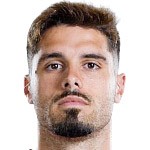
TSF reporter: If you look from midfield forward, the only player who has started every game is Pedro Neto. I want to ask, besides tactical factors, is it because his physical condition is better than other players' that he has started so far?
Yes, what he has shown in these three games indicates that. Also, we lost Conceição, right? So that also gave him some advantage in terms of playing time. But tomorrow is already the fourth game, and his body is starting to show signs of fatigue. We'll see how training goes today.
Mais Futebol reporter: You talked about taking risks at the end of the Denmark match. Applying this to tomorrow's game, Portugal's qualification situation is very good, and we're playing at home. Will the team be more cautious in weighing risks when the score is level or when leading? After all, Norway may be the team that has created the most difficulties for Portugal, with more expected goals, shots, and chances. Of course, the two sides have already played once, and now they understand each other better. In addition, Norway has players like Nusa, Haaland, and Schjelderup from midfield forward.
Indeed, I agree with everything you said, including the statistics. The statistics after the match are facts. Norway is a very strong team. About five or ten years ago, the players we saw in Norway were tall, blond, and physically strong, but not particularly technically gifted. I also told my players this.
Now it's different. They are still tall and strong, and at the same time, they have improved technically. So we respect these players. But we will not change anything. Neither I nor my players will change our approach. We will fight for victory as usual and take risks. My defensive philosophy inherently involves the team taking risks, and it will be the same tomorrow.
TNT Brazil reporter: I will also ask in Portuguese, but with a slightly different accent. Coach, Portugal did what Brazil couldn't do against Norway, which was to win, right? This victory caused a big stir in Brazil. I wonder if you used Brazil's World Cup match against Norway as a reference for preparing for these two games, and if you had the chance to watch that match at the time. What did Brazil do in that match to win against Norway that you need to avoid? What is the secret to winning?
I can only talk about what the Portuguese team should do. As for what Brazil didn't do or what they should do, Ancelotti certainly has a different opinion now, because that game is over. The strategy we developed after our analysis is to limit Norway's performance in certain aspects of the game. I won't say exactly which ones, but our strategy is to limit at least three or four of their strengths.
This refers to their performance with the ball—those are areas where Norway is very strong. We succeeded to a certain extent, and that's why we won.
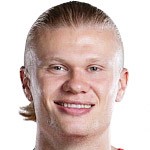
Norwegian reporter: Just like Portugal, Norway also has a star player who shines brighter than the rest of the team. Portugal has Ronaldo, and Norway has Haaland. What are the challenges of coaching a team that has such a player whose status is clearly higher than that of his teammates? Can you talk about it?
Host: We don't answer questions about Ronaldo. Understood?
Reporter: This is not a question about Ronaldo.
Host: I already said it before. You can ask another question. Would you like to? Another question about the match?
Reporter: Okay. Can you talk about how you plan to limit him? For you, what is most important: limiting Haaland himself, or cutting off the supply to him by limiting Ødegaard and other players who pass to Haaland?
I understand. This is a very interesting question. Which is more difficult and which is more important? Is it limiting Haaland when he gets the ball, or stopping the ball before it reaches Haaland? This is something a coach has to consider. We want to do both.
We will limit Norway's overall attack, making it difficult for the ball to reach Haaland. Then, when the ball does reach Haaland, our center-backs or the players facing him in a one-on-one must be as strong as he is in the challenge.
Norwegian reporter: Towards the end of the match in Oslo, Bernardo Silva made a late tackle on Martin Ødegaard. After the match, Ødegaard and the Norwegian players reacted very strongly to it. Bernardo Silva himself said: "That's football." What do you think? Is this part of football? To what extent do you think the tension in tomorrow's match in Porto will escalate?
Well, what exactly happened between Bernardo Silva and that Norwegian player? What did you see that we Portuguese didn't see?
I didn't understand. I didn't notice anything unusual there at the time. And Ødegaard—I think you're referring to Ødegaard, right?—he also played in the next match against Wales. So that indicates there was no problem.
SNTV reporter: Coach, you have always emphasized that all attention must be on tomorrow's match against Norway. But I want to know, with so much happening, how difficult is it for you to maintain focus on the match? Have these past few days since the match against Norway in Oslo been the most difficult period in your long coaching career?
Host: We're going back to the same topic, aren't we?
Jesus: But this is the Brazilian media. I was very well treated in Brazil. For a coach, the most difficult thing is always solving problems, especially when you don't win—finding a way to keep the team performing well, game after game.
I can say that the victory in Denmark made me very proud as a coach because my players did those things. But I can also say that at the end of the match, I was very happy, but I could have been happier.
AF's PC site is now live! Browse full news, comments, match details and stats on your computer. Visit: www.allfootballapp.com
 Chelsea
 Manchester City
 Norwegia
 Portugal
 Real Madrid
 Al Nassr
 Cristiano Ronaldo
 Jorge Jesus
 Bernardo Silva
 Erling Haaland
 Pedro Neto
Semua Komentar (2)