
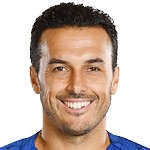
Pedro, recently retired, gave an extensive interview to Mundo Deportivo. In the fourth part of this interview, Pedro discussed the atmosphere in Barcelona's dressing room during the Guardiola era, drew parallels between Barcelona's current team and the legendary squad of the past, and reflected on the future of young players like Yamal. He also shared his thoughts on Tito Vilanova's mentorship and the former manager's unique approach to dressing room management.

Related reading:
【Pedro: I cried and begged my father to take me home; he told me this was my only chance in life】
Journalist: What kind of atmosphere could you feel in that dressing room? Was it this atmosphere that created what is known as Barcelona's greatest team in history?
Pedro: The dressing room atmosphere was incredibly special, filled with understanding and harmony, with a natural chemistry among all the players. Everyone was extremely clear about their tactical role and position, without personal ambitions overshadowing the team, and everyone moved in perfect synchronization. We had an incredibly clear consensus on our match objectives and how to achieve them. We aspired to play football of ultimate beauty, backed by unimaginable hard work. The outside world always talked about the brilliance of our tactics, the appeal of Tiki-Taka, our remarkable possession rates, and how easily we won, but that was far from the truth; it involved an immense amount of sweat and effort.
Although the team brought together first-rate talent and quality, we delivered unimaginable hard work in terms of the intensity of our high pressing and the rigor of our movement off the ball. It was a perfect combination: a unique tactical master in pursuit of excellence, a group of talented players at the peak of their powers, plus the greatest player in football history, Leo Messi. All these favorable conditions came together to create an unparalleled legend. And what is encouraging is that Barcelona's current team seems to be recreating these qualities. The club is building a wonderful project with tremendous future prospects, and once again, a new generation of incredibly gifted young local talents is emerging, like Lamine Yamal, a natural genius. We hope he can maintain this elite level for many years, just as Leo did back then. At the same time, the team has an extremely solid foundation from La Masia, just as we did at the time: Pedri, Gavi, Fermín, Gerard Martín, Cubarsí. This is a very solid, young, and highly promising group of academy players, and we hope this will lead to a continuous flow of trophies in the future.
Journalist: Do you see similarities between these two generations of teams? Do you think this Barcelona team can reproduce your past achievements?
Pedro: I do. They absolutely have the strength and conditions to achieve that. In fact, as I just mentioned, this group of players is extremely talented, and in terms of age structure, they could even be younger than we were at the time, which means if everything goes well, their period of maintaining peak performance and winning championships could be even longer than ours. If they can continue moving forward steadily on the right path, Barcelona's future will surely usher in an extremely glorious era.
Journalist: You've just shared many details about Guardiola. Tito Vilanova, who was his assistant and later became your head coach, was also a key figure. What memories do you have of Tito? And how did he help you?
Pedro: Tito was a person of immense charisma. He was one of the most honest and loyal people I've ever met in football. Watching him battle illness at that time was an extremely hard blow and great sadness for all the players who had known him for many years, because he always warmed us with his unique personality. He nurtured me so much, both footballistically and personally. On a personal level, from when I worked with him and Guardiola at Barcelona B, I was a naive young man, and he helped me improve rapidly, taught me to truly understand the essence of the game, and helped me make breakthroughs in tactical positioning. He was an extremely wise person with keen understanding of the game. He was just as good as Guardiola. Later, he had the chance to take the reins of the first team, and I was fortunate to continue receiving his guidance. Professionally, he was extremely straightforward.
I remember a very humorous anecdote about him: for a while, even though I was playing regularly as a starter, I was going through a goalscoring drought, not scoring for several matches. One day, he came to me and said: "Listen, Pedro, right now you couldn't score even if you shot at a rainbow. You can't score a single goal. It hurts me, but I need to put you on the bench and give other players a chance." I immediately replied: "Boss, no problem at all. You're right. My recent performances have indeed been disappointing. I can't score a single goal, and it's completely reasonable for you to give other players a chance (I don't remember if it was Sánchez or another striker at the time). You don't even need to explain it to me. I'll continue training hard and try to regain my goalscoring touch and form, but I completely understand and accept your decision. You really don't need to explain it." But he still took the time to come reassure me, to give me a sense of security and confidence, saying: "Don't get discouraged just because you're rested after two or three poor performances. On the contrary, I'm doing this to maintain healthy competition, and I believe you'll be back in the starting lineup very soon."
This is the common trait of great coaches, and it's the coaching quality I admire most: honesty and empathy. If I ever become a coach in the future, this empathy will be essential. It's never easy for a head coach to put themselves in someone else's shoes; saying such things to someone's face requires courage, because facing players with different mental states, others might not be able to handle it, might break down, or even give up. Mastering this empathy is the most difficult part of coaching: delivering a unified message to the entire team, making everyone feel they have a fair chance to compete when possible, and that they're part of the team's winning plan. Over the long course of a season, there are enough matches for everyone to shine.
In my career, coaches who are good at motivating everyone and understand interpersonal dressing room management tend to be more successful than those who only have tactical theories but don't understand people. Whether it was Pep or Tito, it was my great fortune to meet them in my career. They were the two most important mentors of my career, and without their strong support and guidance back then, I wouldn't be where I am today, and I wouldn't have had such a long and brilliant career afterward.
Traduit par IA.
Le site web d'AF est désormais en ligne ! Actualités complètes, commentaires, détails des matchs et statistiques sur votre ordinateur. Visitez : www.allfootballapp.com
 Chelsea
 AS Roma
 Lazio
Lazio
 Barcelona
 Lionel Messi
 Pedro
Pedro
 Pep Guardiola
 Tito Vilanova
 Rest In Peace
 Inter Miami
 Lamine Yamal
Semua Komentar