
After narrowly securing three points against Wales at Estádio José Alvalade, Jorge Jesus made substantial tactical adjustments to the national team, which proved highly effective. But is it fair to attribute all the positive results solely to Ronaldo being on the bench? A football match cannot be determined by just one factor.
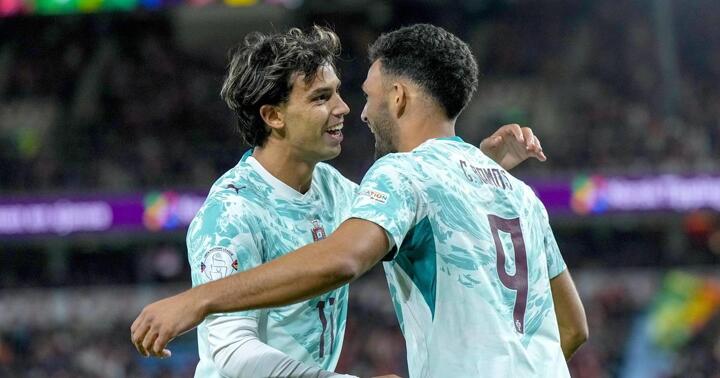
Portugal secured a major victory in Oslo, where Ullevaal Stadium is one of the most inhospitable venues for visiting teams in European football. After barely scraping three points against a Welsh team that is a shadow of its former self, Jorge Jesus made significant adjustments to the national team, and the final result was excellent.
But is it fair to attribute all positive changes solely to Ronaldo being on the bench? A football match is not determined by a single factor, so those who wish to oversimplify and comment based solely on this reason are undoubtedly mistaken.
The core issue runs much deeper, primarily relating to how Portugal, when all eleven players are in peak physical condition, can press high, disrupt the opponent's build-up play, and regain possession earlier. This style of play, more aligned with modern top teams, cannot function with ten players doing the work of eleven; it requires cooperation, unity, and commitment.
With Ronaldo on the field, Portugal's defensive work only began about ten meters behind the halfway line; without him, Portugal could press directly from near the opponent's penalty area. This is not a minor detail but a fundamental change that affects the core of the game and tactical logic. What I mean to say is, at 41 years old, Ronaldo no longer possesses the physical condition of his prime; does this mean he should no longer be called up? Given that he can still contribute effectively in 15 or 20 minutes of intense play; given the motivating effect he can have on teammates when in good form; and given the psychological and tactical pressure he exerts on opponents, Ronaldo remains valuable to Portugal—but should not be rewarded with a starting place simply because of his immense contributions to the nation over the past 23 years.
The question is whether Ronaldo himself will accept this reality, or whether he still believes he should be the one carrying the other ten players. Only he can answer that.
After the victory over Wales, it was noted that this Nations League would be a transitional tournament for Portugal, and that Portugal no longer has a player capable of carrying the entire team. I hope Ronaldo can contribute to this transitional era for the national team, using his presence off the pitch to reflect the greatness he once displayed on it.
Unlike their Latin counterparts, the Portuguese have an unfortunate tendency to diminish their own achievements. If we top an international ranking, someone will say it lacks credibility; if we win an international prize, someone will say it has no real value; if someone calls us one of the safest countries in the world, they must not have read our tabloids. This self-doubt even extends to Portugal's Age of Discoveries, and despite genuinely opening new worlds, we distort history through excessive negativism, judging 15th-century achievements by 21st-century standards.
This same pattern appears in sports, as the Nations League demonstrates: if we have won this competition twice, it is because the level is not high; even if all national teams field their strongest lineups, stadiums are full, and television ratings are strong, this cannot overcome our obsession with self-criticism. For those determined not to acknowledge our moments of excellence, the thrilling clash between England and Spain in the Nations League might prompt them to reconsider its value—though you cannot awaken those who refuse to open their eyes.
AF's PC site is now live! Browse full news, comments, match details and stats on your computer. Visit: www.allfootballapp.com
 Portogallo
 Al Nassr
 Cristiano Ronaldo
 Jorge Jesus
 João Félix
Tutti i commenti (4)