
According to Tutto Mercato, Lionel Messi and Cristiano Ronaldo's farewells to their national teams may unfold in completely different ways.
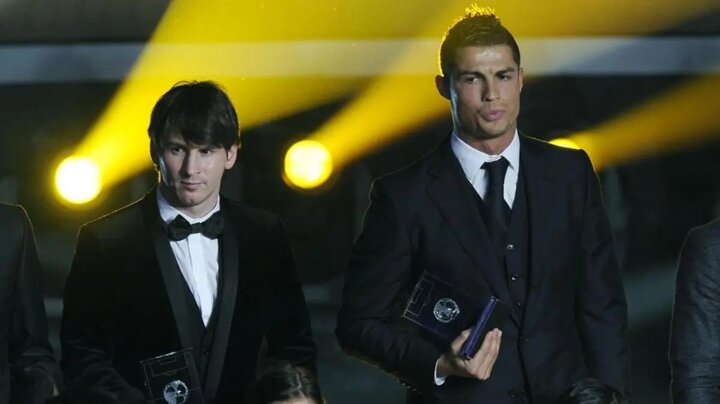
When Lionel Messi takes the field in an Argentina shirt for the last time, the atmosphere will resemble a solemn collective tribute. It will be not only a farewell to Argentina's and the world's greatest footballing genius, but also recognition of a player who long carried the weight of national expectation—constantly compared to Diego Maradona. Cristiano Ronaldo, by contrast, may never receive such an honor.
The Weight of Legacy
For some Argentines, Messi was never quite enough. Despite countless trophies won at Barcelona, despite constantly breaking records, despite an unprecedented career, something was always missing: the World Cup. Only by winning this trophy could he truly transform from a generational talent into a national legend. For Messi, Argentina was never simply a national team; it was also a wound, a burden, a mission. The World Cup in Qatar was not merely a sporting achievement, but a moment when he finally escaped comparison to the nation's most beloved player. He no longer needed to prove himself worthy of Maradona, because he had written his own chapter in history.
His relationship with the light-blue shirt endured every possible emotion: love, criticism, disappointment, and even his announced retirement after Argentina's loss in the 2016 Copa América final, only to return. Messi never stopped striving to connect with his homeland until he won everything that once seemed impossible. Now his farewell belongs to a champion who has finally found peace. After years of the people's plea for "just a little more," they now only wish to thank him.
On the other hand, there is Cristiano Ronaldo, one of the most iconic figures in modern football. His relationship with the Portuguese national team is equally unique: no player has scored as many goals for Portugal as he has, and no one has represented the national team for as long. Having served as captain for 18 years, he won the European Championship and the Nations League in the red shirt, breaking every conceivable record. However, the conclusion of his story may be difficult to explain.
In recent years, the Portuguese team seems to have become for Cristiano Ronaldo less a place to serve his country and more a platform to defend his status, his central role, and his position as the absolute leader. The desire to win, his ambitions, and his reluctance to accept that his career was nearing its end—the very mindset that elevated him to the pinnacle of football—also made generational change difficult. Even the greatest must eventually accept that life continues without them. When a champion builds his entire career on the belief "I am the best," accepting departure from the stage can become the hardest task of all.
In recent years, the Portuguese national team has produced an exceptionally talented generation ready to shape the future. But Cristiano Ronaldo's overwhelming presence often raises the most sensitive questions: when the future knocks at the door, how much space should a legend still occupy? Yesterday, Cristiano Ronaldo shut that door on his teammates, his coach, and the federation. Regardless of who is right or wrong, this does no credit to either his legacy or to this still-outstanding 41-year-old athlete. By this point, his farewell is unlikely to be marked with the same grandeur as his greatest rival's.
Two legends, two irreplaceable careers, two completely different endings. Time judges not only how great you once were, but how you leave the stage.
Переведено ИИ.
Сайт AF теперь доступен! Читайте полные новости, комментарии, детали матчей и статистику на компьютере. Посетите: www.allfootballapp.com
 Argentina
 Portogallo
 Al Nassr
 Lionel Messi
 Cristiano Ronaldo
 Inter Miami
Tutti i commenti