
On 8 October, according to Beijing time (CET), investigations by British media tracked two factories in Cambodia and found that they were producing authentic fan versions of football shirts under "appalling" conditions, with workers paid less than £1 per hour.
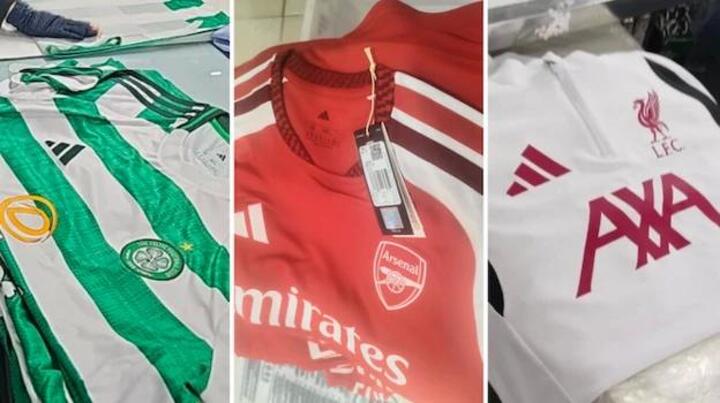
Photos from inside Bowker Garment Factory and Trax Apparel show that both factories produce shirts for clubs including Arsenal, Celtic, Liverpool and Real Madrid.
Employees at both factories told us they struggle to make ends meet, handling up to 700 items per day as part of the production line. The employees provided documentation to support their claims and spoke anonymously in the report. They also described factory temperatures exceeding 35 degrees Celsius, verbal abuse for failing to meet production targets, and concerns about electrical equipment safety.
A study published last year showed that of a shirt with a typical price of £85, £8.50 goes to fabric, sewing and shipping; £37.45 to the retailer; £16.25 to the manufacturer; £9.50 to marketing; and £13.60 is value added tax.
Shirt prices have increased significantly over the past decade. However, industry experts believe that technological advances and expensive kit sponsorship deals with major clubs also contribute to the price increases.
Adidas does not own these two factories, but both are major suppliers and must comply with Adidas labour standards.
Adidas stated: "For over 25 years, we have taken various measures to ensure fair and safe working conditions for workers in our supply chain. We conduct approximately 1,200 factory audits annually to verify and assess supplier behaviour, work with them to address issues, and drive improvements where necessary."
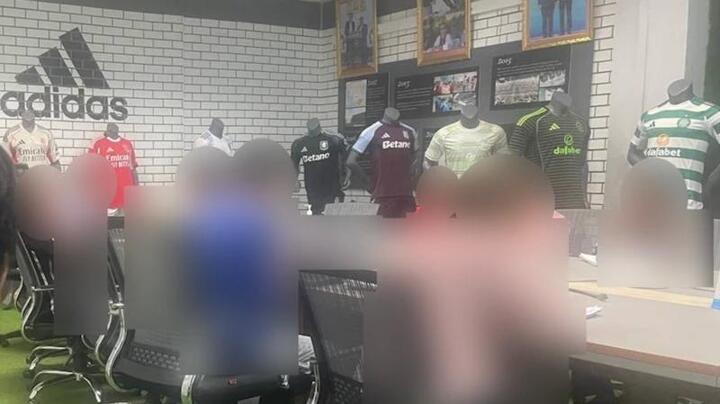
Approximately 6,000 miles from the club shops where these shirts will be sold, a meeting was taking place inside Bowker Garment Factory. This factory on the outskirts of Phnom Penh employs around 3,400 people, mostly women. Trax Apparel, located 10 miles to the east, employs another 3,200 people.
Fabrics are imported from Thailand and Vietnam, then specialist tailors create samples for other employees to use as reference during production. Most of the shirt production process, including sewing, pressing and packaging, is completed at these two factories.
Employees typically work six days a week, eight hours per day. Five pay slips show that their basic monthly salaries range from $210 to $220 (£158 to £166). These salaries comply with local minimum wage regulations. Three other pay slips show that with overtime and allowances, total monthly income is approximately $300 (£226), but this requires a substantial amount of additional hours.
"It's difficult to live on this money," said an employee of Bowker Garment Factory. She said that after paying rent, food and utilities, little remains. "I hope international consumers know that the money they spend on one shirt is more than two weeks' wages for a factory worker," said an employee of Trax Apparel.
Adidas stated that a sample of its Cambodian suppliers showed that the average net wage of employees was 34% higher than the Anker Research Institute's living wage benchmark. The company also claimed that employees "typically receive wages significantly higher than the local minimum wage".
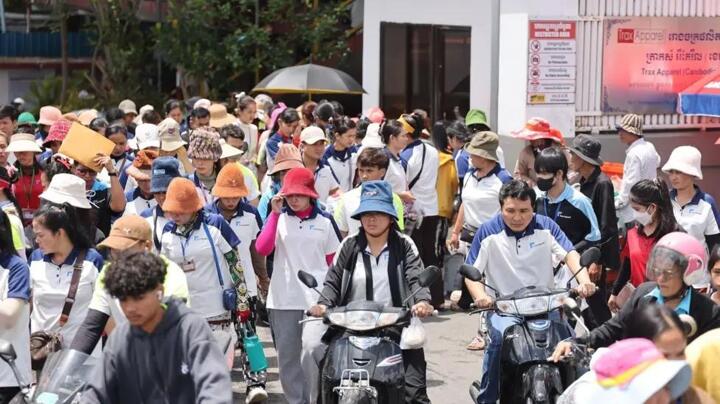
In another photo taken at Bowker Garment Factory, a thermometer showed a temperature of 35.2 degrees Celsius and relative humidity of 57.6%. An employee on the pressing line said: "Heat stress is really damaging our health." Employees at both factories said they are under pressure to meet collective production targets, producing between 300 and 700 items per day.
They also said: "Think about it — a shirt sells for $120 in the shop, how much money can they make from 600 pieces? They're making a fortune, but they give us almost nothing."
Some employees also reported verbal abuse when production targets were not met. Another Bowker Garment Factory employee said: "If we don't meet our targets, we get scolded, shouted at and told to leave." This employee also said she had received two electric shocks from exposed wires: "I tried to report it many times, but they only took action after the second shock."
Adidas told us that both factories have implemented "heat management measures" and that its standards "do not permit harassment of any kind", while Bowker Garment Factory records "found no incidents related to electricity". Trax acknowledged "periods of high temperatures" but stated that the factory had installed cooling systems and insisted that its management approach "was not based on coercive production targets".
Such problems are common in Cambodia's textile industry. A 2024 report by the International Labour Organization found that 69% of factories had heat-related issues and 84% had worker protection problems.
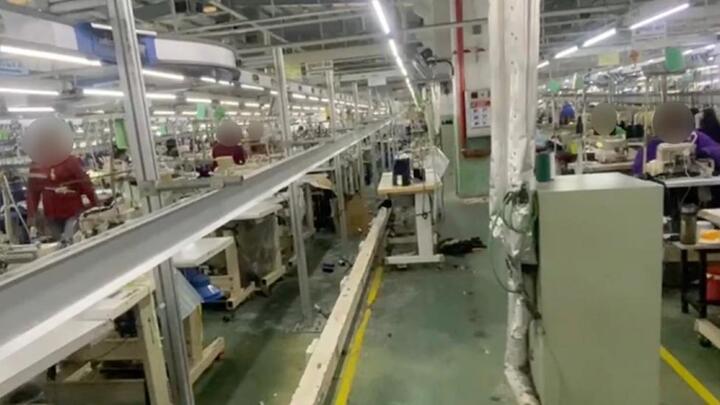
At Villa Park, for the second round Premier League match between Aston Villa and Arsenal, tens of thousands of spectators gathered, many wearing shirts made in Cambodia. Arsenal's latest home kit was launched in May, but photos we received show it was already present at Trax Apparel factory months earlier.
Fans of both teams told us that official shirts are ridiculously expensive. An Aston Villa fan who had just spent £95 on a shirt with a Champions League badge on the sleeve said: "You buy a season ticket, then you buy three shirts, and you're spending another £300. It's outrageous."
An Arsenal fan said that the cost of buying shirts for his whole family was a significant burden. He said: "Now I have young children and I've started buying them shirts too, so the costs keep going up. Buying official shirts isn't cheap."
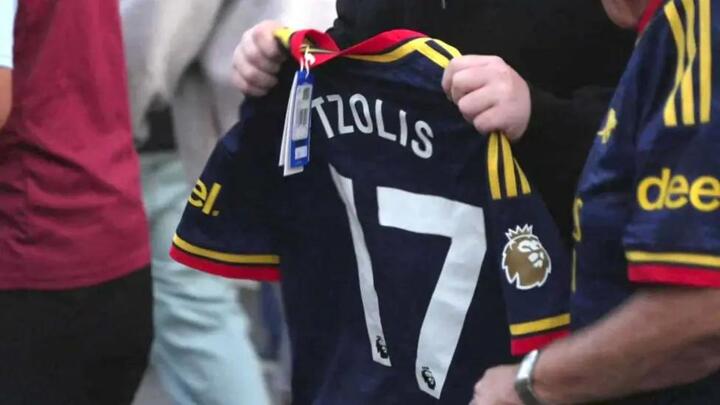
Multiple studies estimate that the global market for official football team kit is worth billions of pounds. "The profit margin on football shirts... it's hard to imagine another branded market that is so profitable."
However, Rob Warner, former kit designer for Puma and Umbro, argued last year that the economics behind shirt pricing is more complex. He said: "Much of the profit goes to the retailer because their business depends heavily on team performance... which is a risk in itself. Then there's also the growing cost of kit sponsorship deals and the fact that brands have to try to recoup some of the money they pay to top-level clubs."
Over the past decade, the average price of an adult Premier League fan shirt has increased by 50.7%, which has also driven demand for counterfeit versions. These counterfeit shirts sell for as little as £12. Police warn fans not to buy counterfeits, stating that these products may be "produced without regard for safety standards and workers' rights"; the Office of Standards Trading warns that "counterfeiters have no ethics or standards whatsoever".
The Premier League requires clubs to conduct due diligence on kit manufacturers and their supply chains.
Traducido por IA.
¡El sitio web de AF ya está disponible! Consulta noticias, comentarios, detalles de partidos y estadísticas en tu ordenador. Visita: www.allfootballapp.com
 Arsenal
 Liverpool
 Aston Villa
 Celtic
 Real Madrid
Tutti i commenti