According to Bild, several Bundesliga and Second Bundesliga clubs in Germany are currently advancing major infrastructure projects, including stadium expansions, training ground modernizations, and new stadium construction. Among them, Eintracht Frankfurt, Cologne, Hamburg, Union Berlin, and Schalke 04 are exploring or implementing expansion plans. However, despite extremely high demand for home matches, Bayern Munich is currently unable to further increase the capacity of the Allianz Arena.
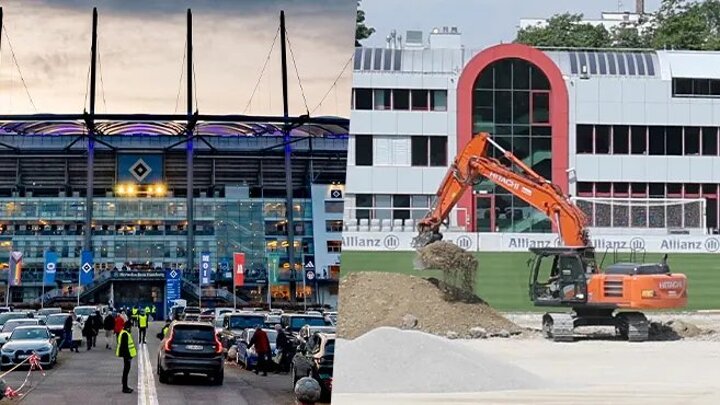
Bayern Munich's Allianz Arena currently holds 75,000 spectators, but demand for the club's tickets significantly exceeds the existing capacity. Before the start of the new season, all of Bayern's home matches were sold out, and the Der Klassiker against Borussia Dortmund received nearly 350,000 ticket requests. However, since Munich's government has currently approved a maximum capacity of 75,000, Bayern is temporarily unable to expand the Allianz Arena.
Meanwhile, Bayern is still conducting a major overhaul of its training ground on Säbener Straße. The expansion project for the massive training center, initially estimated at approximately 150 million euros, was temporarily postponed until 2025. However, since May of this year, construction has continued in the professional team area, including expansion of changing rooms, showers, fitness and physiotherapy zones, and modernization of sports performance testing equipment. The club is also building new training pitches, warm-up zones, and specialized goalkeeper training fields, with the first team currently training amid the ongoing construction site.
Eintracht Frankfurt is exploring the next phase of its home stadium expansion plan. The club is evaluating the possibility of adding a third tier or constructing an entirely new stadium that could potentially accommodate up to 80,000 spectators. A feasibility study has already begun with the goal of building a modern, large stadium within the next 10-12 years.
Bayer Leverkusen faces a more pressing challenge. Due to the planned expansion of the A1 motorway beginning in 2031, the club's current training ground adjacent to the stadium will be seized. Therefore, construction of Bayer's new training center must begin no later than 2028. The project is expected to cost 120 million euros, though the final construction site has not yet been determined.
Bayer Leverkusen previously spent around 10 years searching for a location and once considered nearby Monheim as an ideal site, but local authorities voted against the project. However, this location has not been completely ruled out, and it remains possible in the future that the training ground could ultimately be built on Bayer's own land following a citizens' initiative. Meanwhile, the club has begun searching for other alternative sites.
Cologne plans to build a new two-story youth academy center next to the club's training ground, beginning in spring 2027, with an area of approximately 4,500 square meters and estimated investment of 50 to 60 million euros. As compensation for the occupied training ground, the club will also be responsible for renovating three municipal sports facilities.
At the same time, Cologne is also exploring the possibility of expanding the RheinEnergieStadion from its current capacity of around 50,000 to 75,000 seats. The club's internal committee will evaluate this project by 2027, with estimated investment of around 250 million euros. The main reason for pursuing the expansion is enormous ticket demand; Cologne's home matches are nearly always sold out, and approximately 45,000 members are waiting to obtain season tickets.
Hamburg has officially received permission to expand the Volksparkstadion to more than 60,000 seats. Construction is set to begin in October of this year and will take place during the season in intervals between home matches of the men's and women's teams.
Union Berlin is driving one of the largest infrastructure projects in the Bundesliga. The club plans to invest approximately 190 million euros in a comprehensive reconstruction and expansion of An der Alten Försterei stadium, increasing its capacity from the current 22,012 to 34,500, and then to 40,500.
During construction, Union Berlin will temporarily relocate to the Olympiastadion in Berlin and plans to return to An der Alten Försterei for the 2029/30 season. The new plan includes construction of new upper stands, increased seating, and modern VIP areas. It also includes building an underground passage connecting the boxes, training center, and main building.
Schalke 04 is also exploring a major expansion of Veltins-Arena. An innovative plan involves removing the existing roof and adding a third tier, thereby significantly increasing stadium capacity. However, the club is currently still evaluating the technical and economic feasibility of the project and has not yet announced specific capacity and investment figures.
In contrast, another Schalke project is already more concrete. The club is building "Schalke Terrasse" between the stadium and training ground as a new fan engagement zone, equipped with beer taps and a large beer garden.
Hertha is advancing plans to construct a new purpose-built football stadium. After years of discussion, Berlin's government has in principle approved a site near Jesse Owens Allee in the Olympic Park as suitable for a new stadium. Thus, Hertha can proceed to the next planning stage and submit initial building applications, marking a significant development for the club's long-standing goal of building its own professional football stadium.
Hannover 96 plans to invest approximately 2.2 million euros in modernizing Heinz von Heiden Arena for the 2029 UEFA Women's Championship. The stadium's lighting system has already been upgraded, and in the future solar panels will be installed on the roof, while the media zone, VIP areas, sound system, large video screens, and undersoil heating system will be renovated, though capacity will remain at 49,000.
Nuremberg plans to complete a comprehensive reconstruction of Max-Morlock-Stadion by 2031. The stadium's iconic octagonal structure and 50,000-seat capacity will be preserved, but the existing running track will be removed. The entire project is estimated at 260-280 million euros, with construction potentially beginning as early as 2028. It has not yet been determined whether Nuremberg will continue playing at the original stadium during construction or temporarily relocate to another venue.
Переведено ИИ.
Сайт AF теперь доступен! Читайте полные новости, комментарии, детали матчей и статистику на компьютере. Посетите: www.allfootballapp.com
 バイエルン・ミュンヘン
 レヴァークーゼン
 シャルケ
シャルケ
 ハンブルガーSV
 ハノーファー
 ヘルタ・ベルリン
 ニュルンベルク
 フランクフルト
 ケルン
ケルン
 ウニオン・ベルリン
すべてのコメント