
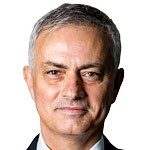
José Mourinho, Real Madrid manager, spoke with Evgeny Krasnov, presenter of the Bet It Drives show in Madrid, discussing why he returned to Real Madrid, how he works with top players, and his understanding of trust, discipline, and tactical instinct in competition. This is the third part of the exclusive interview.

Other Parts of the Interview
José, the next question is fairly straightforward: Do you control your press conferences?
I think I do. I can't control what journalists ask me. The questions are open-ended, not pre-selected, and I don't know what I'll be asked beforehand. But I can control my emotions, what I want to say, and what I don't want to say. I've managed around 1,300 matches. If there's a press conference before and after each match, that's at least 2,600 times.
If you ask me whether I control myself every single time, the answer is no. But losing control happens very rarely. The moments when I do lose it usually become viral clips online: when I say something I shouldn't or respond in a way I shouldn't. But out of 2,600 press conferences, even if 20 of them go viral, I still consider that very good control.
And what about your weekly schedule? Do you control that?
Yes. I consider what's best for the players and schedule training accordingly for both the players and the team. One principle I've held since I started coaching and will never change is that our work schedule doesn't change based on results. Whether we win or lose, the schedule remains the same.
I spend a lot of time deciding what's best for the players. I communicate with all staff, the medical team, and sports science personnel, and we hold meetings to finalize the schedule. We can't change our plan just because one ball hits the post and another goes in, resulting in a win or a draw. This principle is very important to me.
Work is very important, of course. Family is more important than work—no question about that. But my family understands that my work carries significant responsibility. Sometimes I wish I could spend more time with them, but I miss birthdays and other important family moments. Sometimes I really want to be with them, but I can't because of work responsibilities.
I don't have any hobbies. That might sound boring, but I don't think, "I really want to play golf" or "I really want to play padel with friends." I have no hobbies.
That means you have almost no time for anything else.
Yes, but I'm not frustrated about it.
Right.
Because I don't regret anything. I'm not frustrated that I don't play golf or ride a bike.
Final question in this game: Can you control whether you drink or don't drink, or how much of the wine called "The Special One" you drink?
My answer might sound bad from a business perspective, but I can assure you that I've never tasted it. So if you ask me whether the wine is excellent, good, or bad, I can't answer.
Of course, I could say it's fantastic and go buy it immediately, but I can't say that honestly. I've never tasted it and never drunk it, so I don't know.
José, it's been a great honor to talk with you. However, viewers might want to hear you speak about other things, especially young people looking for inspiration from you. Is there something they should remember throughout their lives?
Love what you do. Sometimes people ask me: How do you handle so much pressure? Or what do you do when there are three important matches in one week? If you don't love this job, you'll have problems.
Many of my former players later became coaches. When they start coaching for the first time, I always ask them one question: Do you love this job? Coaching is much harder than playing. Do you love it? If the answer is yes, I love it, then commit to it fully.
But if someone tells me, "Coach, how do you do this for twenty years? I'm only in my second year and I already don't know what to do"—
Then I tell them, "My friend, stop. If you're exhausted in your second year, quit."
I think it's very important that you don't feel old or tired, but you still love what you do.
I'm talking about football, but I think it's the same for any profession. To reach the top and especially to maintain that position, you must love what you do. When you love it, the feeling of pressure changes: you feel much less pressure, or almost none, and you enjoy it. You wake up happy that a new day is beginning and happy to go to work. If you don't genuinely enjoy it, everything becomes much harder.
Thank you for such detailed answers. I think everyone will be really impressed. One more question I'd like to ask you: When did you realize that football is your greatest passion and that you needed to dedicate all your time to it? And when did you discover that you had become a famous person? How did this transformation happen?
It happened gradually. I can't pinpoint an exact moment. But the word 'famous' has certainly changed my life. Walking down the street, everyone knows you, knows who you are. If I could, I would remove that part from my life. It's part of the job that comes with it, but it's a part I don't like. In a restaurant, I have to shake hands; walking down the street, I might have to stop ten times, sign autographs a hundred times, or take photos a hundred times.
Still, as I say this, I must respect these people. I'm not perfect, and I'm not saying I always stop for photos or am always kind to people who approach me with cameras. I'm not always like that, but most of the time, I try to understand them.
As for things outside football, like our partnerships and collaborations with sports brands—these things that run parallel to football—I really enjoy them. They might even become a hobby I never had before. If I weren't talking with you in this car for an hour right now, I'd probably still be in my office watching players, watching matches, or reviewing this morning's training session again. So getting out and talking is a good thing.
José, my team and I are very grateful for this interview. You have many challenges ahead, and I know you love challenges. You love football, you love the team you manage, and you have the ability to take your team to very high levels. Today we wanted everyone to get to know you better, including some aspects of your personal life. I know you don't like many people entering your private life, so thank you very much.
These questions didn't cross any lines at all.
Nothing was out of line. We've had a really enjoyable conversation. Maybe we can meet again at the end of September. Perhaps we'll meet by chance.
That sounds great.
Perhaps in Lisbon, perhaps at a conference. I'd be happy to meet you again.
Then let's talk again soon. Thank you very much.
แปลโดย AI
เว็บไซต์ AF เปิดตัวแล้ว! ดูข่าว ความคิดเห็น รายละเอียดแมตช์ และสถิติครบถ้วนบนคอมพิวเตอร์ของคุณ เยี่ยมชม: www.allfootballapp.com
 レアル・マドリー
 モウリーニョ
すべてのコメント