
Recently, Manchester City has been accused of more than 100 charges, and news of the club's crisis has become a hot topic in world football. On the morning of September 29, 2024, British media outlet The Daily Telegraph published a column asserting that suspicion of Manchester City by Liverpool and other clubs has a long history.
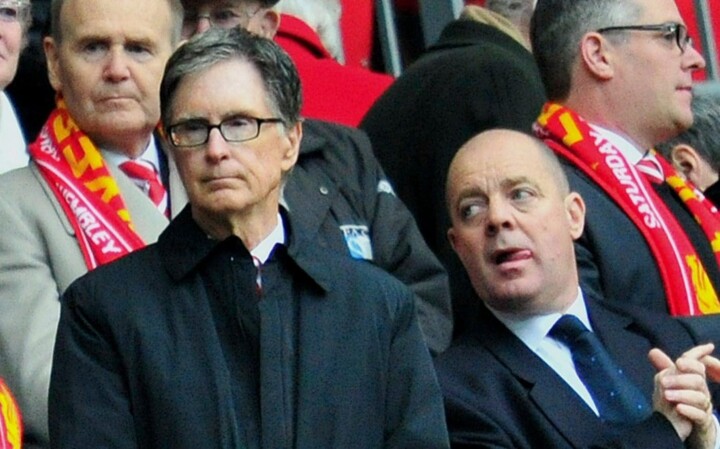
Today, John W. Henry no longer speaks publicly, but there was a time when the Liverpool owner's comments caused considerable controversy.
July 13, 2011 was one such occasion. That day, Henry posted on social media: "The best player at a club should be worth at least 10% of the stadium naming rights value, and Mr Wenger boldly stated what we were all thinking."
Fifteen years later, this statement carries different weight and greater significance. Initially, people thought it was simply a wealthy man complaining about not getting his way, and Manchester City was reportedly angered by his involvement. But was "what we were all thinking" confirmed last Friday?
Henry's post at the time included a link to a newspaper article. The day before, Wenger, speaking with journalists in Kuala Lumpur, expressed his astonishment at an extraordinary moment in Premier League history as we knew it.
On July 8 that year, Manchester City announced a stadium naming rights agreement for what was then called "Eastlands": a 10-year, £400 million partnership with Etihad Airways that, to anyone on any board anywhere in the sports world, simply did not add up.
It is true that this figure may not seem enormous now. After all, Liverpool recently signed a deal with Turkish Airlines, which will become their shirt sponsor from 2027 onwards. The Anfield club will receive £300 million for this, setting a record for that type of partnership.
However, in the summer of 2011, the £400 million fee for naming rights was met with incredulity by Manchester City's rivals. Wenger said it raised "serious questions about the credibility of Financial Fair Play (FFP)" and called it the "ultimate test" for then-UEFA president Michel Platini.
"Normally, for Financial Fair Play to have any chance of success, sponsorship fees must be at market rate," Wenger said. "You cannot triple or quadruple the price, because that means it is better not to do this and let everyone act freely. That approach also makes sense, but given that the rules have been introduced, they must be followed."
For context, the largest stadium naming rights deals in 2011 were in the United States, led by the New York Mets' Citi Field (£400 million over 20 years) and the Houston Texans' Reliant Stadium (£300 million over 30 years). The Manchester City-Etihad agreement dwarfed both sponsorships.
Henry, a firm advocate of Financial Fair Play, observed events with incredulity, as did everyone else at Anfield. Two days after Wenger and Arsenal departed for China, Liverpool arrived in Malaysia to a warm reception.
The club's then-chief executive Ian Ayre had worked in Kuala Lumpur early in his career, but when everyone gathered at a hotel in the city, this was no time for nostalgia. There was only one topic to discuss, and reviewing his words 15 years later, one finds they have stood the test of time and are truly remarkable.
"The figures surprised me for several reasons," Ayre said: "First, I do not believe it is logical. In Europe, for a football club to rename an existing stadium and derive real value from it, certainly had never happened before."
"For the last nine years it was called Manchester City Stadium or 'the Eastlands', but now it is changing its name, and someone has assigned it enormous value. It seems a bit strange to me, because no one has done it before."
"In Europe, and certainly in football, there is no precedent suggesting you can rename a stadium and create that much value. Someone tried. Mike Ashley tried at Newcastle, but nobody calls it that (Sports Direct Arena), and it certainly does not have that kind of value. I found it very surprising."
"Second, when I spoke at SoccerEx earlier this year, I participated in a panel discussion on Financial Fair Play. The UEFA officials in charge of the process said they believed there would be an appropriate and rigorous process for related-party transactions."
"Are Etihad, Manchester City, and Sheikh Mansour related parties? If so, then it falls to UEFA to rule on this. But this has nothing to do with us. We have our specific brand here, and we have to be responsible for it. If this deal is sound, then it is good for Manchester City. Good for them. But I believe these questions must be answered by UEFA."
He added: "The way we develop revenue at Liverpool is slightly different from other clubs. We only select partners when choosing sponsors. We strive to work with people we believe have aligned values and who will treat the Liverpool brand and name in a certain way."
Henry, the driving force behind Fenway Sports Group's acquisition of Liverpool in 2010, had envisioned Liverpool progressing "in a certain way" under his team's leadership: using data, making shrewd signings, and investing funds at the right moment.
Had he known then that a situation would emerge in which Financial Fair Play could allegedly be circumvented, and teams could strengthen themselves by acquiring players that other clubs would have to spend record transfer fees on, would he still have bought Liverpool? It is not unreasonable to ask this question.
A year later, in a private box at Fenway Park in Boston, Henry was asked why Liverpool could not buy three players at £25 million each in one summer.
"Is UEFA really committed to enforcing Financial Fair Play?" Henry responded: "We do not know. The spending trend does not seem to be slowing anywhere, and perhaps it would be best if all leagues took a look."
He added: "What I would say is that from our perspective, it is very important that UEFA successfully implements Financial Fair Play. It is a critical factor. Approximately 50% of clubs in Europe are losing money, and I am talking about top-tier clubs."
"Twenty percent of them are in real financial trouble. I believe it is necessary for the leagues, as well as FIFA and UEFA, to consider and implement appropriate measures. The fact that UEFA has its own rules does not mean the Premier League and other leagues cannot adopt similar principles."
"I know the English Football League is implementing rules for itself. This is actually a very important part. Not just for Liverpool, but for football as a whole."
Manchester City continues to trust it will clear its name and has not commented since last Friday, nor have the Premier League or Henry. Roberto Mancini, who was Manchester City's manager at the time and now manages the Italian national team, even claimed the matter "has nothing to do with him."
But the events of July 2011 appeared to concern many in football. Henry has not posted on his social media accounts since June 11, 2021. Given recent events, it will be interesting to see if he decides to break his silence, and what he might say if he does.
Traducido por IA.
¡El sitio web de AF ya está disponible! Consulta noticias, comentarios, detalles de partidos y estadísticas en tu ordenador. Visita: www.allfootballapp.com
 リヴァプール
 マンチェスター・シティ
 アーセン・ヴェンゲル
すべてのコメント