
According to an opinion article published by Portuguese newspaper A Bola, the recent controversy surrounding Ronaldo and Portugal's national team coach Jesus has sparked widespread debate in local public opinion. The article suggests that while Ronaldo is undoubtedly one of the greatest players in Portuguese football history, with age the national team must gradually manage his playing time and plan for the team's future.
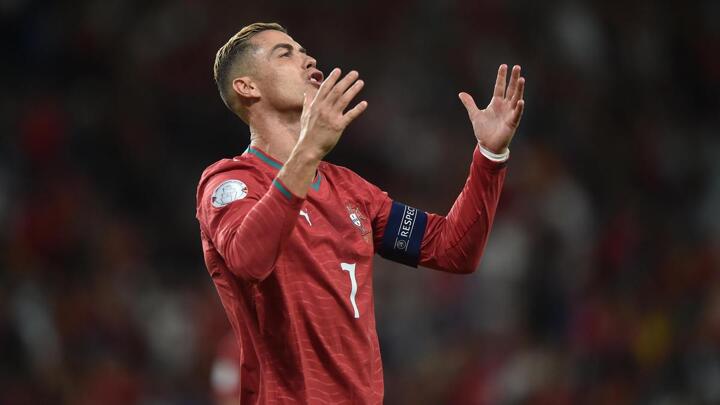
First, let me say this: thank you, Cristiano! Thank you for everything.
Ronaldo is the greatest player in Portuguese football history, one of the greatest players of all time in world football, and one of the greatest athletes in sports history. He is incredibly competitive and represents one of the greatest personal comeback stories in Portugal's history.
And we were fortunate to witness all of it.
We saw that skinny, stubborn boy from Madeira grow up. We saw the Sporting Lisbon player become a star. We saw Manchester, Madrid, and Juventus. We saw the Ballon d'Ors, the goals, the championships, the tears, the defeats, the comebacks, the records, and his almost absurd ability to turn the impossible into reality, again and again.
We saw Ronaldo become Ronaldo. We also saw a Portuguese stand at the top of the world, in a country where mediocrity is often proclaimed as destiny.
Nothing that happens now can erase these things.
But one word has become particularly important in recent days: once. Ronaldo was the best once. He is no longer. This is not his fault, but the iron law of time. This is not criticism. It is life. It is football.
The problem is that some want the past to continue dominating the present. Because the past matters. It is memory, identity, history. But it does not play on the field.
If Ronaldo were Norwegian, would anyone want to bench Haaland just because Ronaldo was once the best in the world? If he were French, should Mbappé leave the starting eleven because Cristiano was once at the top? If he were English, would Kane lose his place as a starter for the same reason? Of course not.
If that is the case, why should it be different because he is Portuguese?
The Portuguese national team is not a museum or a monument to Ronaldo. It is a football team. And in a football team, the coach decides who plays on the field. Jesus reminded everyone of this, including Ronaldo.
This is precisely why we must now recognize the coach's courage.
It is not that every decision Jesus makes is inherently correct — only the pitch can prove that — but because his stance has one key point: always prioritize the team's interests over individual status.
Jesus himself explained that he had kept Ronaldo warming up longer than he should have, which angered the player. For those who know this coach, this appears to be unusual and unexpected restraint, an attempt to resolve the matter with respect for the player.
Later in Copenhagen, the statement that ignited "Cristianismo" came: "I am in charge of the team." And another equally direct statement: "The rules apply to everyone."
That is correct. Finally. A team where the coach is in charge. What a revolutionary concept.
Jesus did not end Ronaldo; he ended the idea that "one player is above the team." He ended the idea that "the past automatically guarantees the future." He ended the idea that "a legend's greatness determines the size of the starting eleven."
It is not like that, and it should not be.
Ronaldo is too great to need all of this. And that is precisely what troubles me most about this situation. Everything we have seen in recent days does not befit a legend like Ronaldo, nor his career, nor his status as captain of the national team. More importantly, it is unfair to him. Because Ronaldo's career was built precisely on rejecting privilege. His greatness came from hard work, discipline, an obsession with pushing himself, a desire to be better, and a refusal to accept limits. As a child, he wanted to earn his place, not have it given to him.
This may be the cruelest irony. The man who transformed childhood humility into work ethic, resilience, and character seems to have lost them along the way, crushed by the gigantic size of the CR7 machine. The brand, the empire, the contracts, the millions, the constant exposure, that role.
Perhaps all of this makes it harder for him to accept the truth that every great athlete eventually faces: time always wins. No money can buy it, no status can suspend it, no Ballon d'Or can slow it down.
Ronaldo cannot buy the elixir of youth. And that is fine. It is why sport seems human, and why he has become a role model.
Ronaldo was the best of all time once. He is no longer. Saying that does not diminish Ronaldo's value. What truly diminishes it is trying to deny this obvious fact.
So what troubles me most is not the bench, the substitutions, or the debate about who should play. It is seeing a legend turn what should be the final chapter of an extraordinary career into a dispute over authority, status, and power.
Ronaldo deserves a dignified farewell. He still deserves one. But a dignified farewell does not mean leaving exactly as we wish.
Sometimes, dignity is knowing when to stop. That too is greatness.
Pelé was still Pelé after retirement. Maradona was still Maradona after retirement. Eusébio was still Eusébio after retirement. Federer was still Federer after retirement. Carlos Lopes and Rosa Mota did not lose who they were after retirement either.
Time did not take away their greatness; it only took away their present. Ronaldo deserves that same distinction.
So now is the time to thank him. An immense thank you, greater than a jersey, a statue, or a ceremony can contain. Thank you for his goals. Thank you for his championships. Thank you for his tears. Thank you for those incredible nights. Thank you for taking Portugal to the top of the world. Thank you for showing countless children that talent alone is not enough without hard work. Thank you for proving that a boy from Madeira could reach places almost no one could have imagined. Thank you for everything.
For now, it is time to support Jesus, the team, and the federation's technical staff. Not against Ronaldo, but with the Portuguese national team. Because the national team must be able to exist beyond any single player, and Jesus must be able to coach.
Those who speak of "betrayal" seem to forget who Jesus is. The coach tried to explain what happened in Oslo, admitting he had kept Ronaldo warming up longer than he should have. This was not a declaration of war, but an attempt to resolve a problem. Later in Copenhagen, he clarified: the coach is in charge of the team, and the rules apply to everyone. This is how a team should function.
Whoever does not accept this, regardless of their status, does not understand hierarchy, let alone what it means to be captain of the national team.
From a competitive standpoint, Portugal already proved against Norway that it could win without Ronaldo as a starter.
But make no mistake. Going forward, results will matter more than ever.
Every victory will be used to prove Jesus right. Every defeat will bring Ronaldo back to the center of the debate. Every goal by an attacker will be compared to CR7's goals. Every poorly played match will raise the inevitable question: "What if Cristiano were on the field?"
It is a trap, just as it is unfair to blame Ronaldo for Portugal never winning a World Cup during his tenure. Therefore, the team must perform well, and Ronaldo must calmly decide how he wants to write the final chapter of his story.
Because he still has the choice. He can leave as a legend. Or he can let his final important legacy become another lesson: even the greatest must accept that time passes.
Ronaldo was the best of all time, and no one can take that from him.
It was a privilege to see him rise, grow, and conquer the world. As a Portuguese person, it was an even greater privilege to see him wear the national team jersey. It was also a privilege to witness a career like his, which we will probably never see again.
Thank you, Cristiano, but now, please, let the national team play. Let Jesus coach. Let the other players grow. And let your life become what it should be: an extraordinary story, not a battle to continue doing everything you did before.
Because football is not a tribute ceremony; it is a game. And the next match is never played yesterday.
Perhaps it was the day Jesus realized this that "Cristianismo" finally ended.
Traduit par IA.
Le site web d'AF est désormais en ligne ! Actualités complètes, commentaires, détails des matchs et statistiques sur votre ordinateur. Visitez : www.allfootballapp.com
 ポルトガル
ポルトガル
 アル・ナスル
 クリスティアーノ ロナウド
すべてのコメント