
On September 18, according to South Korean media SPOTV NEWS, three Japanese female football players were nominated for the Ballon d'Or this year. However, while celebrating this historic moment, Japan expressed significant dissatisfaction with the abbreviation used by the award organizer France Football for Japanese nationality.
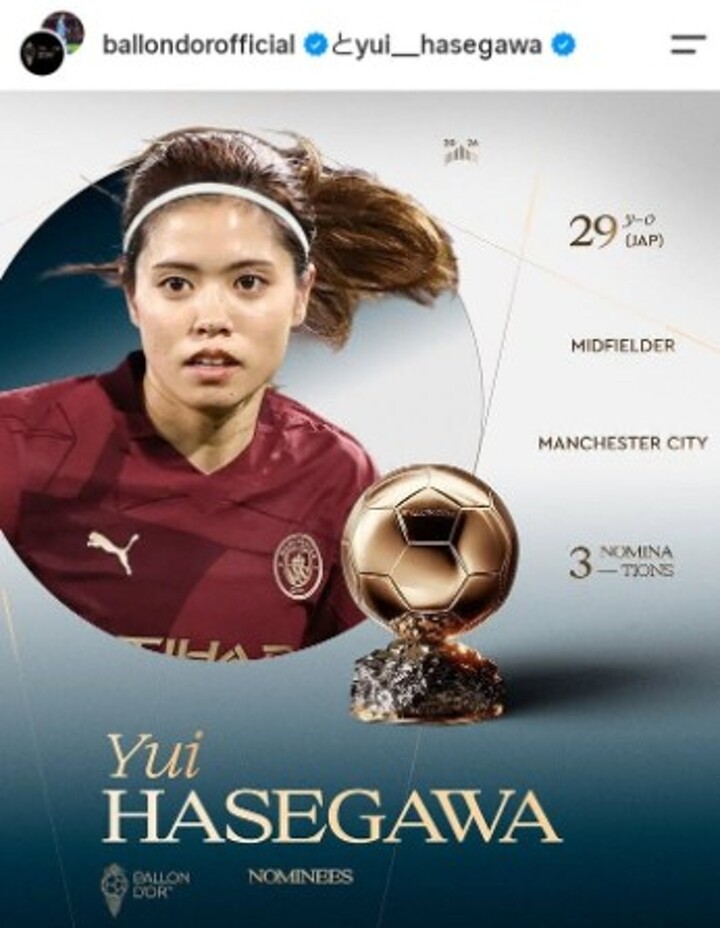
The Ballon d'Or, organized by the French professional football magazine France Football, recently announced its 30-person shortlists for both men's and women's football. The men's nominees include world-class stars such as Harry Kane (Bayern Munich), Lamine Yamal (Barcelona), and Mbappé (Real Madrid).
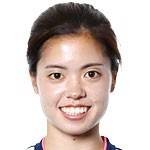
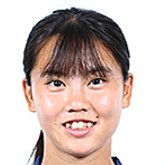
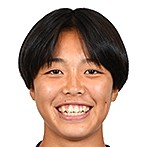
The women's shortlist features three Japanese players: Yui Hasegawa (Manchester City), Honoka Hayashi (Chelsea), and Momoko Tanikawa (Bayern Munich). The simultaneous nomination of three Japanese players marks a record for Japanese women's football on the Ballon d'Or shortlist.
Japan has not yet produced a Ballon d'Or winner selected by France Football. In 2011, Homare Sawa was named the world's best player, but at that time, the Ballon d'Or was organized by FIFA. Therefore, Japan is hopeful that its first France Football Ballon d'Or winner will emerge from this nomination cycle.
However, just as this moment was being celebrated, an unexpected controversy arose.
When France Football introduced the Ballon d'Or nominees through official channels, the nationality abbreviation used for Japanese players sparked significant backlash from Japanese fans. Japan is questioning the use of "JAP."
The internationally recognized country code for Japan is "JPN," prompting many Japanese fans to question why France Football used "JAP."
The controversy quickly spread among Japanese fans. Many left comments demanding that the abbreviation be changed to "JPN," questioning "why use JAP," and some deemed the practice "very impolite," calling for immediate correction.
The strong reaction from some Japanese fans stems from the fact that the term "JAP" has historically been used as a derogatory reference to Japanese people and Japan. Therefore, in the eyes of these fans, this abbreviation is difficult to view as merely a standard notation issue.
According to Japanese media Chunichi Sports, some fans believe that as a representative award in world football, the Ballon d'Or's official channels should conduct basic checks when using country or region identifiers to introduce nominees.
However, France Football has not publicly disclosed its specific intention in using this abbreviation, nor is it clear at what stage of the production process it appeared.
In addition to the nationality abbreviation, some fans also expressed dissatisfaction with the introductory images of the nominated players.
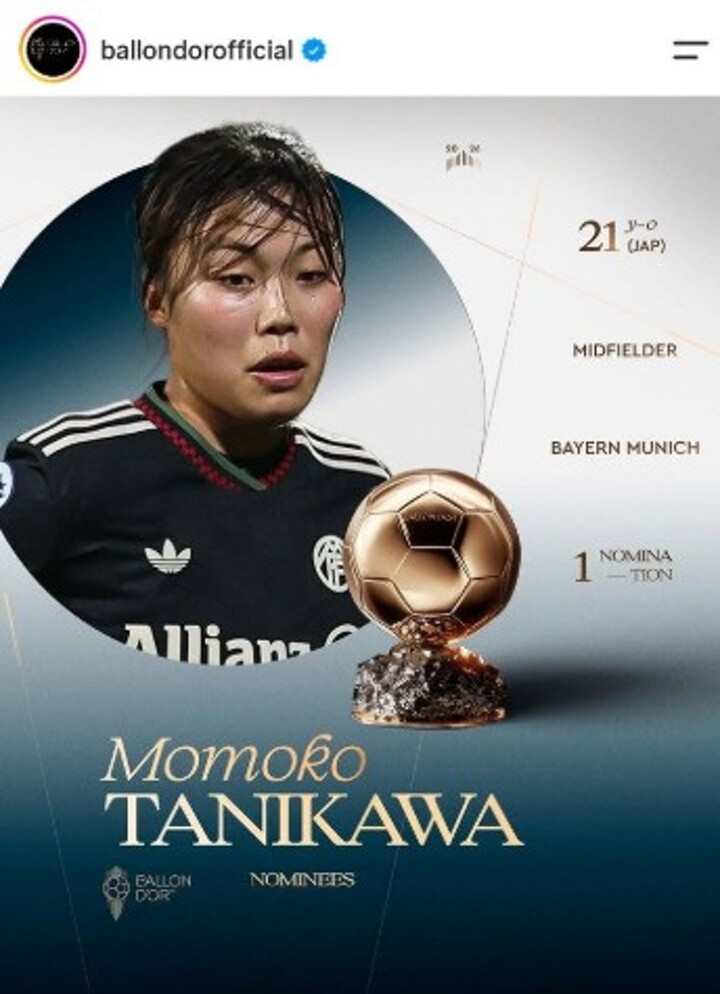
The introductory images for Honoka Hayashi and Momoko Tanikawa both used in-game action shots. Some Japanese fans believe that better photo options were available for these two players, and they expressed disappointment with the choices.
From Japan's perspective, the influence of the Japanese women's national team on the international stage has been continuously growing, and three simultaneous Ballon d'Or nominations should have been a moment worth celebrating. However, the nationality abbreviation issue in related social media posts garnered more attention than the achievement itself, tempering the joy in Japan.
The Ballon d'Or awards ceremony will be held in London on October 29. It remains to be seen whether the Japanese women's national team can make further history with these three nominees and produce Japan's first Ballon d'Or winner selected by France Football. Meanwhile, whether France Football will revise the nationality abbreviation used for Japanese players has also become a key point of interest for Japanese media.
AF's PC site is now live! Browse full news, comments, match details and stats on your computer. Visit: www.allfootballapp.com
 바이에른
바이에른
 맨시티 위민
 첼시 위민
첼시 위민
 일본
일본
 Homare Sawa
 Y. Hasegawa
 Manaka Matsukubo
 Momoko Tanikawa
모든 댓글