
According to The Athletic, Man United have won only one of their first five league games this season, leaving fans despondent and revealing deeper club issues beyond mere fluctuations in form.
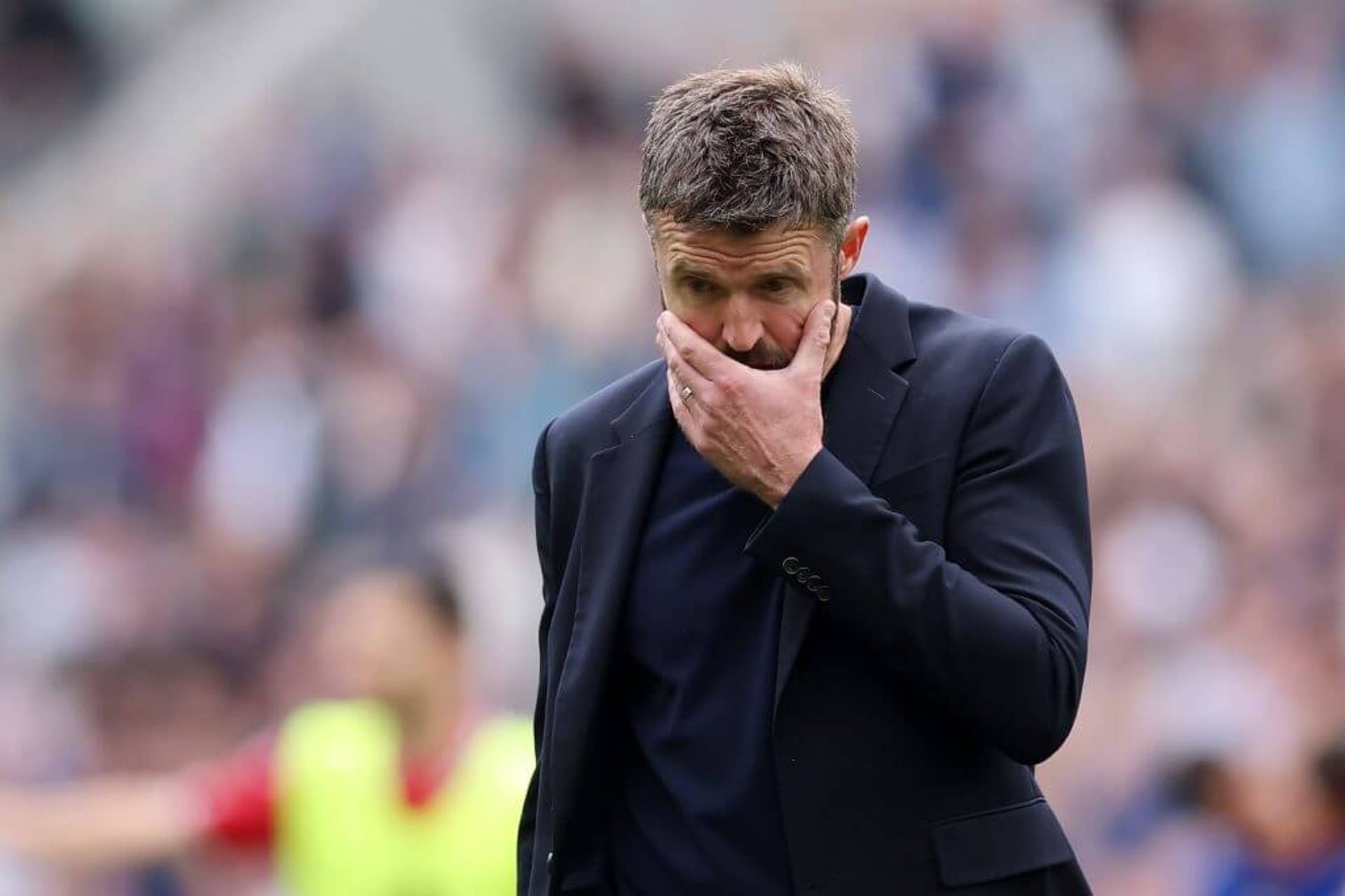
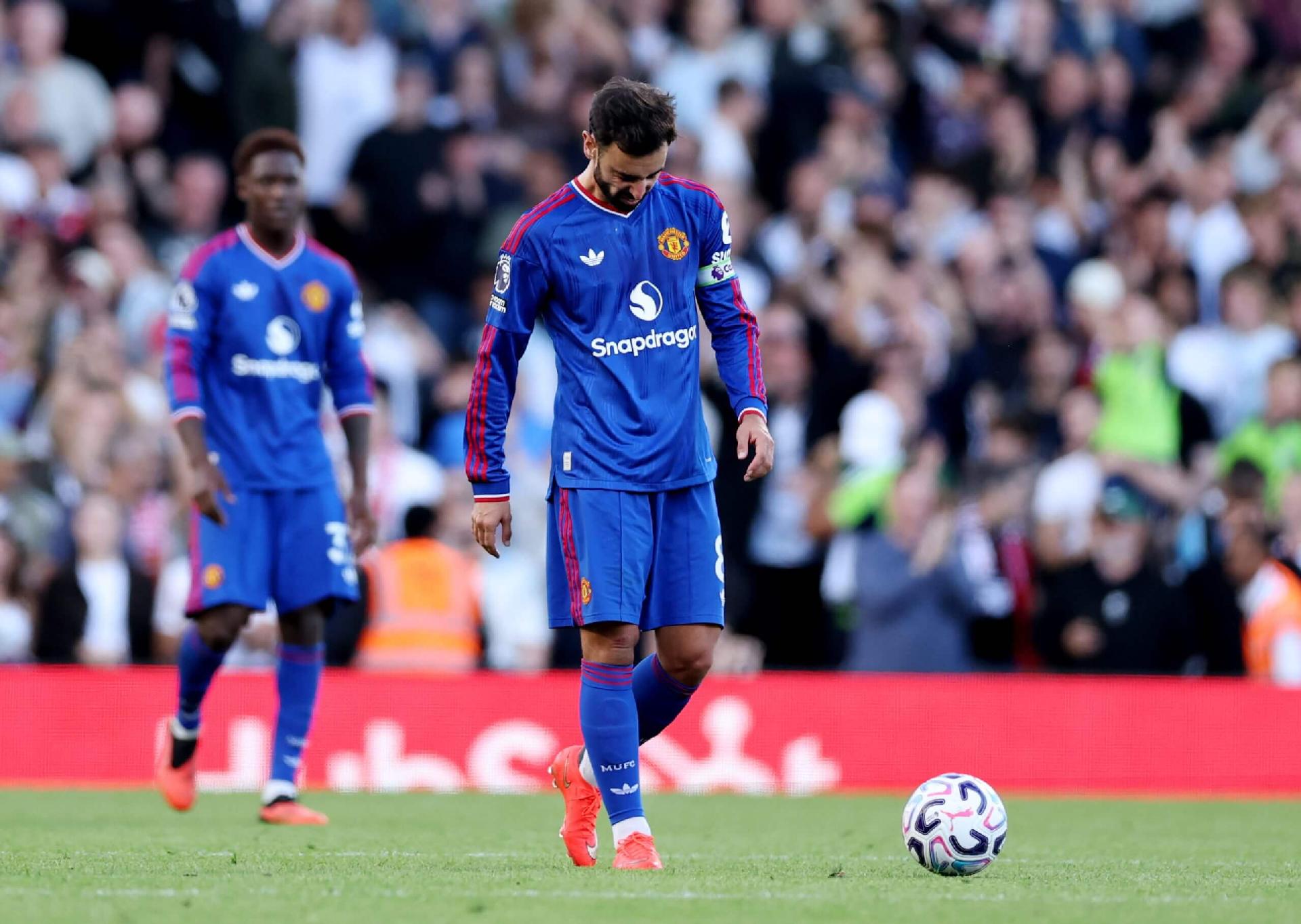
Fans leaving Fulham's Craven Cottage on Sunday witnessed a magnificent sunset over the River Thames, as the blue sky gradually darkened into reds and oranges. Yet amidst the beauty, both sets of fans showed discontent, as both teams, after disappointing starts to the season, desperately needed a win. It was not to be. From Man United's perspective, the draw did little to dispel the gloom hanging over the club.
Having won only one of their opening five league matches, no one pretends it's good enough. Michael Carrick's team was likely to endure at least one dip in form, but it stings that the slump has come at the very beginning of the season, shattering pre-season optimism, extinguishing hopes of a more sustained recovery, and leaving a bitter taste during the three weeks with no matches.
Man United is averaging just one point per game—relegation form—compared to 2.2 points per game under Carrick last season. Matheus Cunha salvaged a point at Craven Cottage, but it brought only a sense of relief—like arriving at the airport thinking you've left your passport and phone at home, only to find it's just the passport missing.
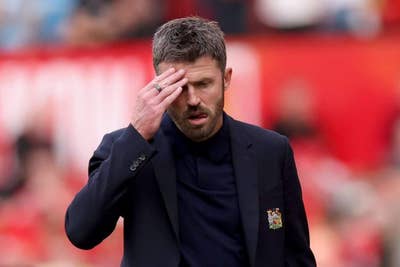
Carrick remains calm and composed, unwavering amidst the surging tide of emotions surrounding Man United. He is confident this is just a temporary setback, and fans hope he is right, but the mood among supporters is low, flat, and disappointing. Belief has been shaken, the magic has gone, and there are deeper reasons behind it.
The day before, across the river, after the intense London derby between Millwall and West Ham, a friendly man waved to me. I recognized him, greeted him, and shook his hand. I had met him at a Man United match; he was a friendly face in football circles. There are hundreds of such people, known as "good brothers."
I was surprised. Hadn't I not seen this person for almost 20 years? He owned the largest Man United flag, which had waved in the Stretford End, celebrating one glory after another.
The Glazers. These two words have cast a shadow over Man United since 2004. They were neither wanted nor welcome, but they legally proceeded to take control of what was then the world's most profitable football club.
When they first expressed interest in Man United, I interviewed then-CEO David Gill during a pre-season tour in Chicago. Amidst growing fan protests, he assured me they were good people investing in sports. Few Man United fans believed this. A year later, in Shanghai, after the highly leveraged takeover was complete, I asked Gill about the lack of communication with fans.
"The proof of the pudding is in the eating," he said. "It's difficult to say, 'Will the fans be happy?' Some will be, some won't. Fans want to see if the team is invested in, if the team is attractive, are we competing for honors, and if we're not competing for honors, are they still investing? That's where we are at the moment."
That was 21 years ago, and the core points of Gill's remarks – investment, an attractive team, and competing for honors – still hold true for most fans. At the time, Man United was one of the top clubs, buying the best players, delivering mostly attractive football in a continuously updated, modern stadium. More success followed, but after Sir Alex Ferguson, who had endorsed the Glazers in 2013, departed, it gradually faded.
We have witnessed the journey since. Rivals backed by state funds, oligarchs, and smarter owners have risen. Yet, the expectations of Man United fans have barely diminished.
Man United, once by far the biggest club in the country by any metric, has seen its advantage shrink. In 2006, the continuously expanding Old Trafford could hold 76,500 people—at least 24,000 more seats than any other Premier League ground. Today, five other clubs have home capacities exceeding 60,000.
Old Trafford remains the largest, and demand for tickets is still incredibly high. Last Wednesday, 73,670 people attended the Carabao Cup third-round match against Brighton. The following evening on the other side of the city, 32,451 watched Man City play Norwich in the same stage.
But attendance brings support, not success, and Man United has fallen behind more smartly run clubs. The Glazers did approve huge spending in an attempt to get Man United back to the top. But it hasn't worked; it hasn't been smart enough. There were Alexis, Ángel Di María, Bastian Schweinsteiger, Radamel Falcao, and more. Big names, great players, but not a fit for Man United. Was it the players' fault or the club's—the chicken or the egg?
Man United struggled against Fulham but ultimately salvaged a draw.
And then there's the noise, so much emotional noise surrounding Man United. This doesn't help when things are bad. I interviewed Peter Kenyon, Gill's predecessor, many times. He asserted that Man United, Real Madrid, and then-Barcelona were the biggest clubs in the world. However, while the Iberian teams felt threatened by the strength of the Premier League, they also had clearer ways of solving problems: picking the best players from the Spanish football factory.
A former Man United executive once told me about a conversation he had three years ago with a Barcelona colleague.
"How do you get all these amazing young players who are not from your region, like Gavi, Pedri, and Fermín López?" he asked.
"We just sign them; it's not hard," the other replied.
It's much harder in England, where competition is fiercer, rivals are wealthier, and Brexit adds restrictions. The overall level of the Premier League is also much higher. In last season's Opta strength rankings, current Bundesliga leaders Dortmund ranked 15th, below teams like Brighton and Brentford. Only one Serie A team, Inter, ranked above the Premier League median. They were joined by Barcelona, Real Madrid, and PSG. Atlético Madrid, Como, and Roma—Man United's next European opponents—all ranked below the median.
The Premier League's standard has soared: Bournemouth, Brighton, and Brentford are all among the stronger teams in Europe. These clubs had average attendances of less than 5,000 when Man United won the treble in 1999. Today, no one would be surprised if any of these teams beat any "much larger" club in the league.
This is precisely why the Premier League is so captivating and unpredictable, compared to PSG or Bayern lifting domestic titles year after year. But Man United are expected to beat "smaller" teams like Bournemouth, Brentford, or Brighton, even though these teams are far stronger than average clubs in La Liga, Serie A, or the Bundesliga.
"Smaller" clubs are also taking more points from top teams. Arsenal won the league last season with 85 points, a declining trend. The same applies to second and third place: Man City finished second last season with 78 points, while Liverpool finished second with 92 points five seasons ago. Man United finished third last year with 71 points. Two years ago, Liverpool finished third with 82 points.
Forget the "emotions" or the noise, Man United must adapt to this changed environment. Ownership, recruitment, and culture must be top-tier, even as the club's immense starlight dims. INEOS, as primary decision-makers in 2024, promised this.
Those involved maintain this commitment, saying it will take time. There have been missteps and outright mistakes—every club has them constantly—but fans who didn't want Qatari ownership (and no proof of funds was provided) gave INEOS a fair chance. This in itself is unusual, as fans' historical default position has always been critical of any decision-maker at Man United, but any honeymoon period has now ended.
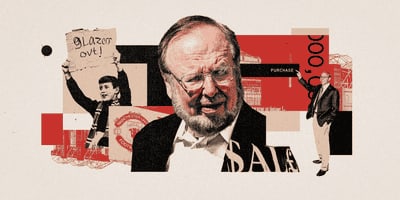
And the Glazers—the elephant in the room that saddled the club with debt—are still there. The American family shows no signs of leaving, to the continuing frustration of fans.
It was Man United's strengths—the ability to get credit and weak governance—that initially attracted them. The club's global recognition and massive fan base led to the highest attendances and TV ratings. This brought commercial appeal—and additional revenue.
Man United needs the TV revenue from regular Champions League football, and if well-run, should be near the top, but this is also complicated by the massive debt the Glazers have inflicted on the club.
In the short term, Carrick has a squad that, despite losing the departed Casemiro, was good enough to finish third last season. From Carrick to Cunha, they all insist things will get better soon, they just need to click back into place. Every Man United fan hopes so, because the club needs to compete at the highest level in Europe to be in a position to sign the best players.
Man United has also invested heavily in its training ground, restructured its academy system, and been aggressive in recruitment. These are also likely to bear fruit, but amidst the aftermath of the latest poor results, this is not a quick fix. And it is results that shape 70% of the emotion. Wins will lift the mood from the bottom, confidence will grow, and anger will subside. Big players must step up and prove their worth, and the manager must win back the faith of skeptical fans.
Man United has always been a stumbling giant, but the club has experienced worse situations in its history and has always risen again. Although it sometimes took decades, usually because a manager who later proved to be a genius was appointed.
But expectations have changed again. Under severely extenuating circumstances, Sir Matt Busby—who ranks alongside Ferguson as the club's greatest figure—spent a third of his 24-year tenure with the team outside the top six. Ferguson, whom most fans wanted sacked in 1990, also proved himself in the end. Neither of them had to contend with the noise their modern successors face.
Man United is currently in a complex situation, with no obvious answers to some of the club's deepest problems, but only five league games have been played this season. There is still time to turn things around, but one can't help feeling that Man United's world is cycling like Groundhog Day.
AF's PC site is now live! Browse full news, comments, match details and stats on your computer. Visit: www.allfootballapp.com
 맨체스터 유나이티드
 마이클 캐릭
모든 댓글 (1)