
After signing with sports brand On, Thierry Henry gave an interview to AS. Toward the end of the conversation, he reflected on the summer World Cup, discussing his views on the national teams of Spain, Argentina, and France, as well as the evolution of modern football.
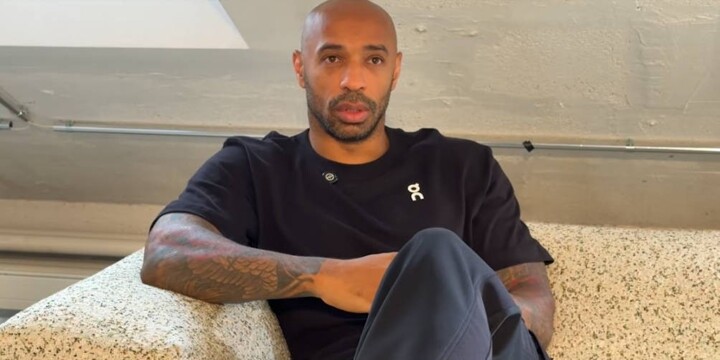
A few questions about the World Cup. Did you enjoy the tournament?
Yes, I enjoyed it very much.
What do you think of the Spanish national team? Are they the strongest?
I said it at the time—the core of this team is teamwork itself. The team is the star player. In all the major tournaments I've faced them, I've lost to Spain. I won't name the entire team, but everyone can see it.
I've always emphasized that their training methods, team identity, football philosophy, and the value of prioritizing the collective over individuals ultimately led them to win the championship. The strongest team undoubtedly wins the World Cup. This is elite-level football learning.
Many have praised their strong defense in this tournament. How do you analyze it?
People often focus on minor details, like conceding only one goal. But I'm quite confident Spain conceded only 10 goals throughout the entire tournament, achieved through effective high pressing that kept opponents away from goal.
People often debate how to contain this Spanish team. Is it as straightforward as everyone says?
When it comes to Spain, there's one thing I always think about: people say you must do this or that against them. But when you don't have possession, you must learn to play without the ball.
What should you do against a team like this?
There are many highlights in this World Cup. Spain dominated matches both with and without the ball. It's a pleasure watching them play. Honestly, they're the team I least wanted to face. They're very difficult to handle, and we've always struggled against them in the past.
There were also important individual saves during the tournament, such as Pau Cubarsí's defensive plays...
That's right. I remember Pau Cubarsí's clearance. Without that defensive action, we would have conceded. This reminds me of what I saw at the Olympics. I specifically went to watch the coach—their work is impressive. This wasn't accidental, and it happened again at the World Cup.
Compared to Spain's golden era with Xavi, Iniesta, and Busquets, do you think this current team receives more overall recognition?
In the past, people would say, "It's natural that a team with Xavi, Iniesta, Busquets, Puyol, and Sergio Ramos would win the championship." People didn't realize that team also relied on collective play. Now people better understand the value of the collective, because the current players don't have the same fame as those legendary players, yet the core remains unchanged.
So the profile of players has changed?
I'm talking about the system, not individual players. I've always admired their football philosophy. They work as a team. The coaching staff has known these young players since the academy and understands them thoroughly, which ensures tactical continuity.
Besides Spain, what other highlights from this World Cup caught your attention?
I witnessed Argentina's comebacks multiple times. In every match, everyone thought they would be eliminated, but they always managed to turn things around. And the impressive performances of the French national team—everyone was shocked, saying "God help us, who can stop them?"
Speaking of France, how do you assess the new era under Zinedine Zidane?
That's not something for me to comment on. I wish him luck.
Speaking of physicality, modern football demands increasingly higher physical performance. Spain plays beautifully and possesses tremendous physical intensity. Do you agree?
It depends on what you mean by "physical"—physical contact or match intensity? In my era, physical contact was more intense. Today, many actions can result in a yellow or even a red card. That style of play is no longer possible.
If we're talking about match intensity, it has genuinely changed. Many teams sit deep and rely on quick transitions. Of course, some teams prefer possession and high pressing. When transitioning quickly, players must repeatedly sprint back to defend, which demands considerable endurance.
Where do you think football is heading?
Football has clearly evolved. There's more tactical structure, and the frequency of high-speed sprints has increased—this is normal. But one thing about Spain that never changes is the consistency of their play. Players run, the ball moves, and ultimately, the essence of football remains the same: putting the ball in the net.
Try to predict—in the first month of the season, which team do you think is currently the strongest in the world? Do I have to answer now?
The strongest team at any given moment can change constantly, which is why I'm hesitant to answer this question, since it's merely the current situation. Consider Paris Saint-Germain last season—nobody predicted they would win the Champions League at the start of the season, but they did. Things are unpredictable. That said, I must admit Barcelona is currently very strong and formidable.
แปลโดย AI
เว็บไซต์ AF เปิดตัวแล้ว! ดูข่าว ความคิดเห็น รายละเอียดแมตช์ และสถิติครบถ้วนบนคอมพิวเตอร์ของคุณ เยี่ยมชม: www.allfootballapp.com
 아르헨티나
아르헨티나
 파리 생제르맹 FC
 프랑스
프랑스
 스페인
스페인
 Carles Puyol
 Sergio Ramos
 Andrés Iniesta
 Xavi
Xavi
 Zinédine Zidane
 Thierry Henry
 Sergio Busquets
 파우 쿠바르시
모든 댓글