
The England national team will face Spain at Wembley to kick off the new UEFA Nations League campaign. Ahead of the match, captain Harry Kane discussed the Ballon d'Or, contract negotiations with FC Bayern Munich, England's disappointment in the World Cup final, and questions about England's playing style. This is the first part of the press conference.

Before we talk about this important match, I'd like to ask about the Ballon d'Or. I apologize for asking you directly about this, as it's the focal point of our conversation. Over the years, statistics, records, and goal tallies have driven you forward, and you've measured yourself by these metrics with a commitment to continuous improvement. It seems this is your best opportunity to win the Ballon d'Or and perhaps the closest you've ever come to it. Do you see it that way?
Right now, it's the best opportunity I've had, and whether there will be similar opportunities in the future, we'll have to see. But at this moment, it's undoubtedly the best chance of my career. Last season, I was quite direct about this: from a personal perspective, it's been my best year without question; from a team perspective, whether it's the trophies we've won or the team's performances, it's been the best year as well.
Winning the Ballon d'Or would be incredible. I know there's been a lot of discussion about it, and it will continue for another month until the announcement. That's part of it. I'd be very proud to win it. I've had many achievements in the past year that I'm proud of, but as I've said throughout, ultimately it comes down to the decision of others—how they view players and how they assess performances from last season. So we'll have to wait and see what happens. I know this won't be the last time I discuss the Ballon d'Or, as there's still about a month before the announcement. For now, I'm focused on helping England get a victory tomorrow night.
This might be a difficult question to answer, Harry. Do you think you deserve to win the Ballon d'Or?
Well, I... I try to avoid... (laughs)
That's a good answer, mate. We're seeing you for the first time since the World Cup, and you've had time to reflect on that tournament. England had many positives in that competition, but the loss in the final was clearly disappointing. Anthony Gordon said something interesting yesterday: he agreed with Thomas Tuchel that England should play to our strengths. Perhaps we can't dominate possession the way Spain does, and perhaps we should play more directly, better utilizing our physical advantages and pace. As you'd expect, this has sparked considerable debate among pundits and fans, as your players often play that possession-based style at club level. What do you think about this?
I fully understand what he means. Spain's style of play has become part of their football culture. They play that specific style and approach from around five or six years old through to becoming professional footballers. The situation in England is entirely different.
That doesn't mean we can't possess the ball or handle it under pressure. We still have highly technical players who can do these things. But we also have many advantages they don't have, such as athleticism, pace, and physicality. Before the World Cup, many people discussed the physical challenge that would be difficult for England, but I said at the time that I believed it was one of our greatest strengths. Our pressing style, our ability to maintain intensity, and our ability to win duels are all characteristic of Premier League football to some extent.
So I think you'll see the England team showcase these qualities tomorrow night. When we perform at our best, we can combine both aspects. We won't become a team that plays like Spain—they do their style very well—but we have many strengths we can demonstrate tomorrow night, such as playing more direct, making penetrating runs, and set pieces, which are equally important in the modern game, along with many other elements.
I think it's important to have your own style and not simply try to copy other teams. Of course, you can absorb things from different teams' approaches, and you might do that when playing at club level, but ultimately, we need to play like England, showcase our own qualities, especially in important competitions.
Harry, I'd like to ask about your future and your contract. Your contract with FC Bayern Munich expires this year, and I know you're in negotiations for a new deal. Can you give us an update on progress? Also, at the start of this new season, you're in the best form of your career, but you're also facing uncertainty about your future. How are you managing these things?
The negotiations are going well, and I've always been straightforward about this. We're still in communication, and I think things are moving in the right direction. Both sides are relaxed about it because I think everyone can see I'm happy there. My performances on the pitch and what I've said off it confirm this. I've been open about it all along, so I hope both parties can reach an agreement.
As for the psychological impact, I think I'm just going about my business as usual. I prefer to look at it season by season. According to my contract, I still have nine months left, so from that perspective, not much has changed. However, during this training camp, I'd like to focus more on being here with England. Contract negotiations can take a back seat temporarily, and my team can handle the communications and management. I expect a decision to be made within a month or so, and I'm confident it will be a positive outcome.
I'd also like to ask specifically: you've always prioritized recovery after matches throughout your career. You're now in your thirties, and some might say players at this age are approaching retirement, though you're clearly in excellent form right now. Do you feel that your commitment to post-match recovery over the years is starting to pay dividends now?
One hundred percent. Recovery is crucial in our sport, especially with the current fixture schedule. Season after season, there's barely any break. You get three weeks off and then it all starts again, so recovery has become one of the most critical components.
I've built these foundations since I was young, thanks to having good people around me and a strong support system that helped me learn early on about nutrition, recovery, gym work, and everything that helps maintain good condition from an early age. I believe these things have brought me to where I am today and why I feel so good right now.
Over the past decade, football and sport in general have evolved. There's been much more discussion about athletic performance and greater understanding of recovery's role in this. I wouldn't be surprised if many more players are able to maintain high levels for longer in the future. Ronaldo, Modrić, Messi, and Lewandowski are examples—they're still performing at the highest level in their thirties and even approaching forty. That's my goal as well.
Sometimes when players reach this age, it's easy to start thinking about when their careers will end, but why not push forward until your body or mind tells you that you truly can't continue? Tom Brady is one of my idols. He played at the highest level until he was 44. This shows it's possible to do that in sport. Of course, it requires tremendous dedication, and at a certain age, it might require even more, but I enjoy this aspect of the work. I believe these efforts have put me in an excellent position right now.
แปลโดย AI
เว็บไซต์ AF เปิดตัวแล้ว! ดูข่าว ความคิดเห็น รายละเอียดแมตช์ และสถิติครบถ้วนบนคอมพิวเตอร์ของคุณ เยี่ยมชม: www.allfootballapp.com
 영국
영국
 바이에른 뮌헨
 스페인
스페인
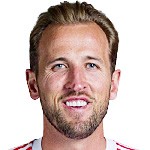 해리 케인
해리 케인
모든 댓글