
On October 6,, ahead of Messi's final national team match, the Argentine Football Association (AFA) published an article on its official website paying tribute to Messi.
Original text:
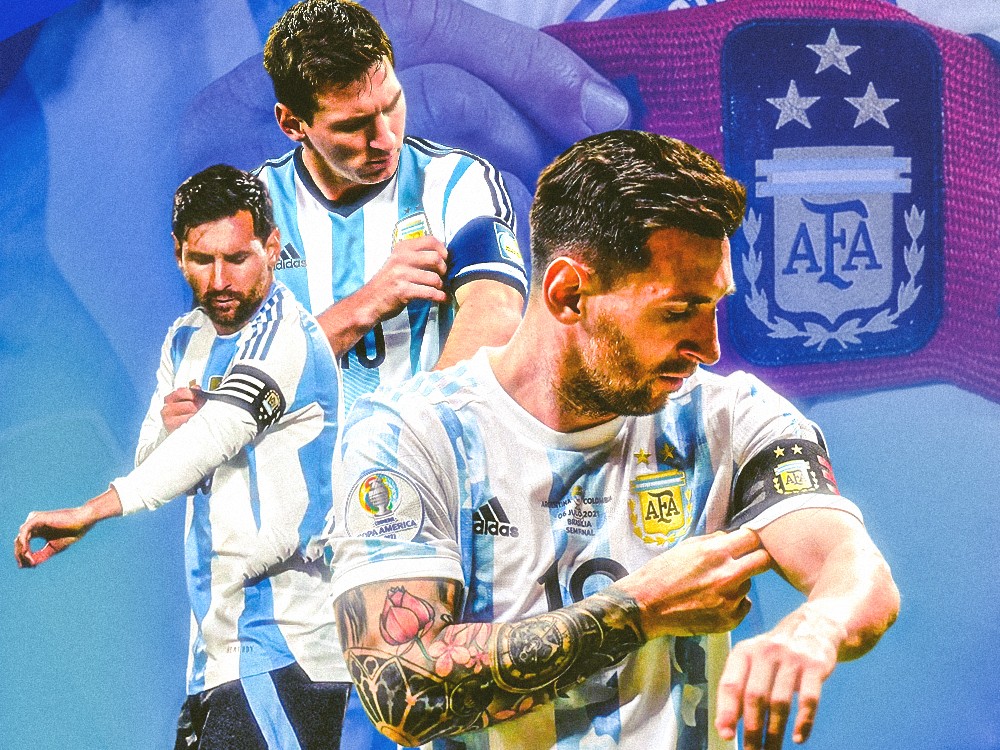
Messi's 15 years as captain of the Argentine national team forged a unique legend. The captain's armband on his left arm was initially a temporary responsibility. From 2011 onwards, it became his permanent identity, spanning four World Cups and witnessing multiple developmental stages of the Argentine national team, with Messi as the central figure. His leadership style did not follow a traditional template: for a long time, he was reserved, taciturn, and low-key, with his leadership primarily demonstrated through his performances on the field.
This story began even before he wore the captain's armband. Starting from his youth national team career, Messi showed a strong commitment to wearing the Argentine jersey. When he was developing in Barcelona's youth academy, he rejected an invitation to play for the Spanish national team. This early commitment to Argentina permeated his entire international career, from his debut to his final match, and it became one of the defining characteristics of his bond with the Argentine national team.
In his early years with the senior national team, Messi was inevitably compared with Maradona. The outside world constantly compared their abilities and focused on their vastly different leadership styles. It was Maradona, then coaching the Argentine team, who first gave Messi the captain's armband at the World Cup.
On June 22, 2010, the then 23-year-old Rosario native captained the team in the final group stage match against Greece at the World Cup in South Africa. That squad included veteran stalwarts such as Mascherano, Zanetti, and Verón.
After the 2011 Copa América, Sabella took over as coach and made a decision that would reshape Messi's national team journey: appointing him as permanent captain. Sabella believed this responsibility would deepen Messi's connection with the team and give his leadership a new dimension. The coach even traveled to Europe specifically to inform Messi of this decision in person. From then on, Messi consistently carried out his captain's duties, and this role eventually became an inseparable part of his national team legacy.
In the initial years of his captaincy, his leadership style faced considerable external scrutiny. However, over time, the captain's voice gradually gained influence. The semi-final match against the host nation in the 2019 Copa América in Brazil was a highly symbolic turning point. After the match, Messi publicly spoke out, expressing dissatisfaction with the referee's decisions and CONMEBOL's operational mechanisms. From that moment on, beyond the image of the silent and reserved captain, a new persona emerged—one of firm conviction and willingness to speak out publicly.
His leadership fully matured during Scaloni's tenure as coach. With a new generation of players looking up to him as a role model, Messi developed his own approach to captaincy: balancing experience and authority while maintaining closeness with his teammates. Symbolized by the captain's armband, he led the Argentine team into one of the most glorious periods in its modern history, winning the 2021 Copa América, the 2022 CONMEBOL–UEFA Cup of Champions, the 2022 FIFA World Cup in Qatar, and the 2024 Copa América.
His final match wearing the captain's armband was the 2026 World Cup final. More than a decade after his first appearance as captain, Messi brought to a close a leadership story that spanned an entire era of the Argentine national team.
AF's PC site is now live! Browse full news, comments, match details and stats on your computer. Visit: www.allfootballapp.com
 아르헨티나
아르헨티나
 리오넬 메시
모든 댓글 (8)