
Jochen Sauer, head of Bayern Munich's youth academy, discussed the development of young German players in an interview with Goal, stating that German clubs need to provide more playing opportunities for young talent.
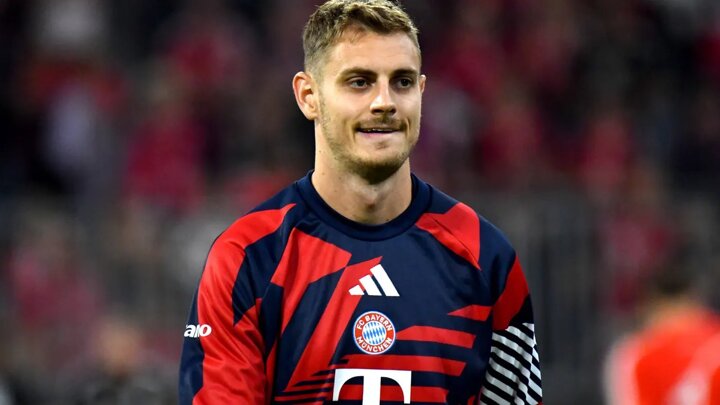
Q: You are involved in developing the "Bundesliga Talent Series." Young teams from participating clubs will play between three and six matches in the autumn and spring phases, with Bayern scheduled to join in early 2027. How satisfied are you with the results?
Sauer: Based on our experience, the expert group initially doubted whether it would be possible to launch a competition within 10 months that would provide more playing time for young players while completing the related discussions, decisions, preparations, and implementation. Recent years have shown that many initiatives have been discussed for a long time but without concrete results or resolution. Regional league reform is one example. We are very satisfied with this competition's implementation. I support the basic concept, and now we need to see whether it can withstand the test.
Q: Where did the idea for this competition come from?
Sauer: One starting point in our discussions was the belief that there is room for improvement in the transition between youth teams and professional teams. For me, this is one of the most critical and difficult aspects of overall youth player development, and where Germany has the greatest potential for improvement. In youth development before U-15 and U-16, we are not worse than other strong football nations, but we gradually fall behind afterward. We believe the problem lies in the transition from youth to professional teams. In U-17, U-19, and U-23 squads, some players get too little playing time and lack high-level match experience. We believe playing time is a key factor in player development, which is why we proposed adding this competition. The Talent Series is not limited by age group; players aged 16 to 21 can participate.
Q: Klopp initially advocated for establishing an independent U-21 league, similar to England's.
Sauer: When he coached at Liverpool, he had good experience with such competitions in England's youth system. As a former Red Bull executive, he may have also considered how to find solutions suitable for clubs without U-23 teams or whose U-23 teams play in leagues below the regional level. However, the expert group tried to view this problem from all angles. There are 58 youth academies, each with different circumstances. Practices from other major leagues were very helpful to us.
Q: What is your view on working with Klopp?
Sauer: The collaboration is excellent, as it is with the entire expert group. As a coach, Klopp has experience coaching in England; Khedira came from Stuttgart's academy and later played for several top clubs, is familiar with UEFA, and brings a European perspective. Bundesliga board member Marc Lenz and DFB general manager Andreas Rettig, as well as Markus Krösche and Andreas Bornemann, all have extensive Bundesliga experience. Joti Chatzialexiou previously oversaw DFB youth player development and is now Nuremberg's general manager. I hope the expert group can continue to provide valuable guidance for developing German youth football and the youth academy system in the future.
Q: What other topics deserve attention?
Sauer: There are many other topics worth continuing to discuss. Many German-born players cannot be called up by Klopp to the German national team. In Bavaria alone, there is Kenan Yildiz and Uzun, who chose Turkey; Josip Stanišić chose Croatia; Paul Wanner chose Austria; and Malik Tillman chose the United States. There are other players throughout Germany. Now there is competition between national teams, and we must address this quickly. We have seen directly that different national teams send many invitations to some players. Erblin Osmani, born in Munich, currently plays for Kosovo's senior national team.
Q: What needs to change in Germany?
Sauer: The transition phase I just mentioned presents many challenges. It is difficult for clubs and associations to continuously monitor every talented player and the situation across all 58 youth academies and accurately identify talent. However, there is also considerable room for improvement here.
Q: What else does German football need in the long term?
Sauer: In my view, the infrastructure and fundamental work of German youth academies are very good, at least no worse than many other football nations. But we must also give domestically developed players the opportunity to enter senior football. At both the regional and Bundesliga level, clubs need to be braver in fielding young players. Only then can they develop and have a chance to become options for the national team. We also need to think about the league system. The Talent Series is only a small part, but it can help. Discussions around the regional leagues and 3. Liga show current dissatisfaction and room for improvement. In my view, our current competition pyramid is not ideal.
Q: Bayern Munich II has competed in the Bavarian Regional League since 2021. How do you position this team?
Sauer: Its role is crucial, allowing talented players to have their first contact with senior football. Currently, young players must gain this type of experience as early as possible. Therefore, we have virtually transformed our U-23 team into a U-19 team. For Philipp Pavić, Cassianick Chiara, and Bastian Asamoah, this is the right stage for development.
Q: What is your assessment of new head coach Dante's start? The new season has not begun ideally.
Sauer: Dante is a top player with a strong presence who knows what players need to compete in the Champions League one day. Of course, as an ambitious former professional, he will be disappointed when results are not ideal, just as Martin Demichelis was. But players must first adapt to senior football, which is a normal development process. Recent matches show that we are on the right track.
Q: What is your view on the youth academy's role in coach development?
Sauer: A coach who understands Bayern and takes his first coaching steps at the club will naturally have a sense of ownership. I am pleased to see the professional development of Sebastian Hoeneß, Miroslav Klose, and Martin Demichelis. I believe coaches can develop very well in the youth department. There is not the same pressure as in professional football, and coaches can make mistakes and continue to improve in a calmer environment. Perhaps one day one of them will return to Bayern. Additionally, we view Red&Gold and our international partner network as opportunities to develop talent and help coaches grow.
Q: In recent weeks, there have been rumors that Bayern Munich is interested in recruiting 16-year-old talent JJ Gabriel, who reportedly wants to leave Manchester United. What is your view on such transfers?
Sauer: When a very talented young player wants to change clubs and all top international clubs are competing, the competition becomes very intense and economic factors come into play. Therefore, this falls under the scope of the professional team, not the youth academy.
Diterjemahkan oleh AI.
Situs web AF kini hadir! Lihat berita lengkap, komentar, detail pertandingan, dan statistik di komputer Anda. Kunjungi: www.allfootballapp.com
 맨체스터 유나이티드
 바이에른 뮌헨
 독일
독일
 Jürgen Klopp
 JJ Gabriel
모든 댓글