
On October 8, according to The Times, Chelsea's shortlist of director candidates has been reduced from five to three, with Laurence Stewart's departure.
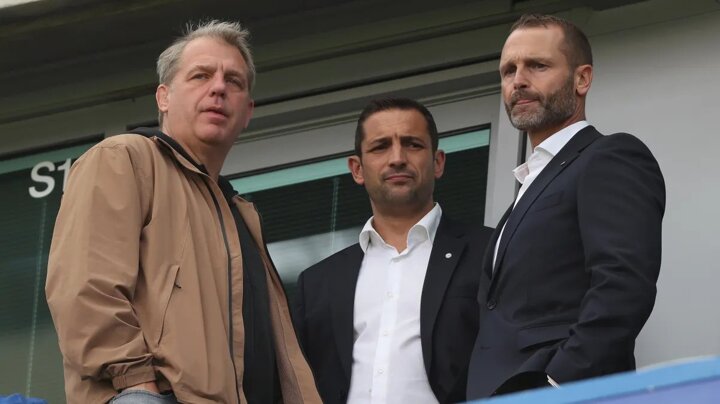
Over the past four years, Chelsea's men's team rebuild has been defined by Paul Winstanley and Laurence Stewart. These two sporting directors, often working behind the scenes on BlueCo's football operations, have led the team-building effort and overseen more than £1.5 billion in transfer spending for the first team. All players signed were under 25, yet the club secured Champions League qualification only once.
They rarely appeared in public, their names only occasionally surfacing in press releases announcing managerial appointments, but they were hardly unknown. Last November, Dave Fallows, a former Liverpool figure, joined Chelsea, expanding the club's sporting management team. However, external voices consistently emphasized that Winstanley and Stewart were the core decision-makers, with their influence evident in fan criticism. The two met 20 years ago as young analysts at Hull City and Wigan Athletic. In their early days working together at Chelsea, they were described as highly in sync, a fact underscored by their shared office at the Cobham training ground in Surrey.
Breaking this partnership is therefore symbolic, even if it does not represent a complete departure from the past. Stewart has agreed to leave Chelsea. The club chose not to find a successor, instead opting to establish a leaner football management structure, with Sam Jewel and Shields promoted to positions equivalent to Winstanley's.
This is another significant change at Stamford Bridge in recent weeks. Meanwhile, sources indicate the club is "recalibrating" its operating model, shifting to a different development path—a direction Behdad Eghbali first proposed at a business conference in Los Angeles in April. Xavi Alonso's role has been defined as "manager" rather than "head coach," and the club's transfer strategy has also been adjusted, now bringing in players over 25. Subsequently, there was a change in club ownership: Chairman Todd Boehly and longtime partner Mark Walter sold their stakes to Eghbali's Clearlake Capital.
Stewart's departure is unrelated to board-level personnel changes and was anticipated internally—though his contract, like those of four other sporting directors set to depart, still has five years remaining after he re-signed last year following Chelsea's Club World Cup victory.
The 40-year-old's responsibilities—overseeing data usage, coordinating budget planning, and liaising with the medical team—are gradually being assumed by others. Chelsea has increased investment in data operations, continuously integrating analytics into player recruitment and scouting, with Shields and Jewel now assuming greater responsibilities in these two areas.
Shields, previously responsible for the academy and player development pathways, has gradually expanded into a technical director-like remit. Jewel, whose initial position was "Global Director of Recruitment," has worked closely with Strasbourg within BlueCo's multi-club structure. The two now jointly lead talent identification, player recruitment, and squad building while maintaining close collaboration with Alonso, Eghbali, and Winstanley. The responsibilities of the latter three include transfer negotiations, player contracts, and overall management of medical, sports performance, player relations, and operational support teams.
Streamlining the sporting director team from five to three, with elevated positions for Shields and Jewel, reflects Chelsea's operating approach since the summer and even earlier. Chief Scout Dave Fallows, a former Liverpool, Manchester City, and Newcastle United figure, will continue to support the leadership team, but his role will shift to a more flexible advisory capacity, while the other three will handle day-to-day operations, manage specific areas, and coordinate with the manager and club ownership.
Chelsea's football management structure has been streamlined, and Boehly's departure further simplifies matters—he remains a Clearlake partner, and it also ends external uncertainty about the BlueCo group's future. This series of changes adds another chapter to the broader transformation following last season's failures. Chelsea finished tenth last season, and while Enzo Maresca's resignation surprised them, the club still faced intense scrutiny over Liam Rosenior's appointment and the subsequent failure of his tenure after just 104 days.
Following Rosenior's departure, the club announced it would enter a phase of "self-reflection." While this personnel change was not a direct result of that review—sources indicated Stewart's exit was amicable, and he is well-regarded at the training ground—the core reason for his ultimate departure lies in adjustments to his own job responsibilities. He initially took the position of "Technical Director focused on global football operations," and in February 2023, he became Co-Director of Sport alongside Winstanley. At that time, Technical Director Christopher Vivell departed after just seven months, and the club is now moving in a new direction.
Chelsea sources describe these changes as "refinements" rather than a complete reset, but regardless of terminology, supporters may still view this as a positive sign.
Website AF đã ra mắt! Xem tin tức đầy đủ, bình luận, chi tiết trận đấu và thống kê trên máy tính. Truy cập: www.allfootballapp.com
 첼시
첼시
 로런스 스튜어트
 폴 윈스탠리
모든 댓글