
Former Barcelona player Villa told Sport that at 22, he did not yet have the ability to play for Barcelona, and he also said that he really liked welding and had enrolled in a refrigeration and HVAC specialization during his student days.
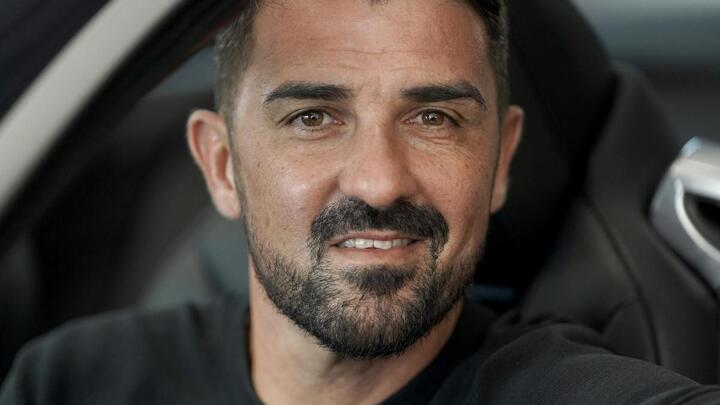
Tell me about your childhood in Tuilla.
I lived there until I was 21, and my character is rooted in Tuilla. It was a wonderful childhood, spent playing in the streets all day. I often reflect that my children are fortunate to live in big cities like New York, Madrid, Barcelona, and Valencia, but they will always miss the freedom I experienced in a small village: being able to roam around outside all day, without a care, never getting into trouble, and without needing their parents to accompany them.
You are the second of three children born to a miner father and a homemaker mother. As children, we often don't realize the sacrifices our parents make for us. Were you aware of it at the time?
I would say I was aware. From a very young age, I saw their dedication: taking me to training, then picking me up to go home and rest. I have two sisters, and all the time my father spent on me was taken from them. I have always felt a great sense of responsibility for this. I didn't know what the future would hold, whether I could become a professional player, but I always worked very hard. I always gave my all on the training ground because my family made huge sacrifices to support my football, and I couldn't let them down.
What could a child who fractured his femur at four years old be afraid of?
Looking back at my career now, I think one of my biggest advantages was having a strong, positive mindset, never being discouraged, always believing things would get better, and overcoming inner fears. My parents taught me all this. Of course, they didn't specifically tell me "be strong" at breakfast; their own example was enough to shape my character. Yes, I broke my femur at four, but my father was a miner who experienced multiple accidents in the mine. My mother waited for him at home, knowing he could get hurt, which happened many times, sometimes even life-threatening. The way they overcame fear shaped me. I only understood this later; it wasn't so clear when I was a child: if my family's example could overcome such immense fear, why would I be afraid of missing a penalty kick?
When did you realize that football was a serious path?
From a very young age, I discovered I had a special talent, especially in the last few meters in front of the goal, where I always scored many goals. But my physical development was late, and my abilities in other aspects of the game were still lacking. At that time, I wasn't at Sporting Gijón or Oviedo; I played for Langreo, and that was a great experience. But I could feel that I hadn't played with the best players yet, nor had I been called up to the national team. In the youth team phase, my physical development caught up with other kids, and that's when Sporting Gijón signed me. At that moment, I realized I could reach the top, that I could become a professional player.
At that time, you were studying a vocational technical course.
This is nothing to be proud of, but the truth is I wasn't a good student. I had a premonition that high school and university courses would be too difficult for me, so I enrolled in a specialization called "Refrigeration and HVAC," I don't know if this major still exists. I did reasonably well in the first year, but in the second year, I had to do an internship at a company, and I was already training with Sporting Gijón B every morning. So I told my mother I planned to drop out and fully pursue professional football. My mother was the hardest to convince in the family. We made an agreement: if I didn't make it in professional football within two or three years, I would go back and finish the specialization to get my certificate.
Twenty-five years have passed, I suppose you can't install air conditioners anymore...
Indeed, I cannot. But I found what I learned back then quite interesting; I learned a lot of things: air conditioning, electrical systems, welding... I especially loved welding, but now I probably couldn't even light a welding torch. It was a very good experience.
At 21, you had your first major life turning point: you transferred to Zaragoza, leaving Tuilla.
I met my current wife, the mother of my children, in secondary school. I had bought an apartment in Gijón as an investment, and we would occasionally go there on weekends, but I always lived with my parents. Many people asked me why I didn't move to Gijón, where it would be more convenient for training. It was because I was comfortable at my parents' house, maintaining my usual routine. I think this also helped me stay away from the noise and attention after being promoted to the first team and becoming known to the public. Of course, the transfer to Zaragoza was a huge change. Living with Patricia, it was difficult at first. Two young people, often alone in the city in the afternoons. We supported each other, which made us mature earlier than our peers.
Sporting Gijón, Zaragoza, Valencia, and then joining Barcelona. It's rare now to see a career like yours, where a young player climbs step by step to ultimately reach a top club.
People often tell me, "How great it would have been if you had joined Barcelona at 22..." But perhaps at 22, I didn't have the ability to play for Barcelona, and even if I had gone, I might not have played. I am proud of the path I have taken step by step, and I have deep affection for every club I played for. Without these experiences, my career might not have been so complete. I made my first-team debut at my beloved Sporting Gijón during a very difficult period for the club; I spent two years at Zaragoza, where the club treated me extremely well; Valencia was where I stayed the longest. Then I went to Barcelona, and later to Atlético Madrid, where I had a wonderful year, which also allows me to work for this club now.
And of course, the national team. You won the 2008 European Championship and the 2010 World Cup, but you also went through the difficult years from 2006 to 2008.
That was the most challenging period of my career. Since childhood, I dreamed of being selected for the national team and playing for my country. But during that time, playing for the country seemed to become a risky endeavor. I remember a game in Murcia where the fans booed, which was understandable because we had just lost in Northern Ireland. Those days were very tough. But for all of us who were fortunate enough to remain in the national team, this experience strengthened us and was a valuable lesson. However, I wouldn't wish it upon anyone. The national team career I imagined as a child was completely different from the reality at the time. Of course, everything worked out later.
After Raúl's story, did you fully understand the weight of wearing the number 7 jersey?
I didn't realize it at the time. I really liked the number 7; I wore it at Valencia, and my eldest daughter Zaida was also born on the 7th. Interestingly, I hated this number as a child. When I was young, jersey numbers were assigned by position, and getting the number 7 meant you were a right winger, but I wanted to be a striker. In fact, at Valencia, I chose 7 simply because it was the only number left. The situation was similar with the national team: Raúl was no longer called up, so someone had to take number 7. I said, I'll take it, I like this number. If I had known at the time that this would cause such a big reaction, I might have passed this hot potato to someone else and chosen a different number.
Did moving abroad to play in Australia, the US, and Japan help you regain some of the anonymity you had lost in Spain due to your immense achievements, no longer being constantly in the spotlight?
I've always lived a quiet life and never felt overwhelmed about going out with my family. I became a father early, and while playing for Valencia and Barcelona, I would take my daughters to Disney shows, to Disneyland Paris, and I was always at ease throughout. Firstly, I'm not Messi or Cristiano Ronaldo; secondly, I enjoy people coming over for a friendly chat, expressing support, and I'm happy to reciprocate that kindness, even if I'm with my family. However, when I first arrived in New York, it was a bit of a shock. My eldest daughter told me, "Dad, the kids at school don't know you." She was already used to being the daughter of a football star, being asked for photos, jerseys... It was certainly calmer there, but I was never bothered by it.
What did living in New York and Kobe bring to your family?
I wanted to spend the last few years of my career soaking up different cultures in other countries, seeing football from another dimension, and broadening my and my family's horizons. For the children, it's a very valuable life experience. Looking at them now, I think they are better prepared than children who haven't had such experiences. It's easy for people to think that life in their own country is the only way the world works, but when you go out, you discover there are other ways of doing things in life. Choosing to go to Japan was a bigger risk for the family. At 36, I was already thinking about returning home to retire. But then I thought about the mental change that New York brought us, and I wondered: what would it be like to experience a culture completely different from the world we know? This thought motivated me to move, for myself, for my wife, for my children, and also for my parents, who would come to visit us. Just think, my father never imagined he would see Japan with his own eyes...
When did you start thinking about life after retirement?
About three years before retirement, I was already in the United States. I signed a three-year contract with New York City, and then renewed it, thinking that was the end. I slowly started planning for the future. I like to stay in football, and youth football academies appeal to me; I hope to help children achieve the dreams I once had. That's when we started the DV7 Soccer Academy that exists today. I began to arrange my daily time commitment. I've always been a player who was fully dedicated to football, 24 hours a day, non-stop.
What were the last few years of your career like?
The last two years were psychologically very tough, with constant injuries. A string of minor injuries, one after another. I realized I didn't want to endure that pain anymore, and my body was telling me it was time to go home. The transition wasn't perfect, but after talking to teammates who had difficult retirement processes, I feel mine was quite smooth. We were abroad for five and a half years, and that journey of exploring life in other countries was fulfilling. I didn't struggle much; I chose to retire proactively, rather than having a painful farewell on the pitch.
Many people who leave a nearly twenty-year playing career suddenly fall into a huge sense of emptiness. Did you experience that?
No. We returned to Madrid, and I immediately started exercising to fill my mornings. As a player, your morning schedule is dictated by football; you don't need to plan it yourself. I play almost every sport: padel, running, swimming... The only things I avoid are football and cycling. I fell off a bike once, broke my collarbone, and it left a psychological scar.
What about football?
Playing too much leads to injuries. I occasionally participate in friendly matches for legendary players, but that's it. I play a few games to satisfy the craving, but every time I play, my muscles ache for three or four days. I love sports, but I don't want to get injured, which is also why I chose to retire.
Do you miss being a player?
Occasionally. When I go to watch a match live, I think about how much I'd love to be on the field running. But then I remember the pain of the last two years, and the thought fades. Or when I participate in legend matches. If I could do it again, I would still choose to be a football player. But overall, I don't constantly miss it.
AF's PC site is now live! Browse full news, comments, match details and stats on your computer. Visit: www.allfootballapp.com
 ဗလင်စီယာ
 ဘာစီလိုနာ
 ရီးယဲလ် ဇာရာဂိုဇာ
 စပေါ်တင် ဂျီဟွန်
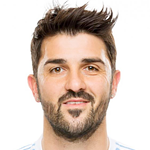 David Villa
မှတ်ချက် အားလုံး