
Liverpool's official website published Ian Rush's autobiography, in which Rush recalled joining Liverpool and the moment he nearly ended up on the transfer list.
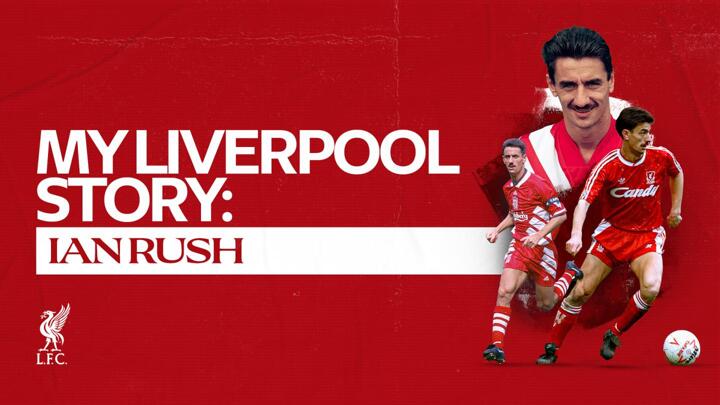
Official Website Content
My Liverpool career is well documented, and fans will already know the journey of a young boy from Chester becoming Liverpool's all-time leading goalscorer with 346 goals. I feel enormous pride and gratitude for having walked this path.
So this time, I want to step slightly outside my usual column and share some stories you may have heard and others you may not have.
The reason I signed with Liverpool was because of Alan Oaks, the manager at Chester. He understood how I played. When Liverpool showed interest, I believe they offered £300,000. Manchester City was also interested, and they actually offered £500,000.
You might think that because Alan had previously played for Manchester City, he would have wanted to send me there, but he believed it was better for my long-term development to go to Liverpool, so he told me to go to Liverpool. Given the financial figures involved in the transfer at the time, it must have been a difficult decision for him.
But while many players at Manchester City could be thrown straight into the first team, at Liverpool I was given time to adapt, adjust, and learn. Thanks to that advice, I was able to truly develop my skills as a striker and goalscorer, which had a massive impact on shaping my later career, so I'm incredibly grateful to him.
When I joined Liverpool, I was only 18 years old, and the club basically told me as a young player I had two years to break into the first team. I could make mistakes in the reserves, fix them, and learn to play the Liverpool way.
I made my debut shortly after signing, and within just five or six months, I was included in the squad by the end of the season. I played in the League Cup final replay and participated in the European Cup semi-final against Bayern Munich.
By then, I was expecting to play in the first team the following season, so I went to Bob Paisley and demanded a pay rise. I felt I was already a first-team player. But he refused, and we ended up having a row, and I angrily demanded to be put on the transfer list! He said that was fine and immediately saw through my bluff.
He asked me how many games I'd played, and at the time it was about seven, and he pointed out that I hadn't scored a single goal. But I felt that was what mattered—we'd won the games I played in and I'd played quite well. He said he'd put me on the transfer list, and that was that.
After that, I started playing with a strong desire to leave Liverpool. First, I scored two goals in the reserves, and then I got an opportunity in a European Cup match against the Finnish team Oulu Palloseura. We were already leading 4-0, Bob brought me on, and I scored a tap-in in front of the Kop. That was my first goal for Liverpool!
After that, he sent me to play in two matches against Exeter, and I scored in both of those matches. And then I scored two more against Leeds United, so I'd scored seven goals in about three matches. After that, Bob called me and said he'd give me the pay rise I wanted. So I asked him if that meant I was coming off the transfer list. He told me I'd never been on the transfer list in the first place! That was a really genius way to light a fire under me.
When I first came to Liverpool, I was actually quite shy. I was only 18, and I remember getting changed alongside players like Ray Clemence and Alan Hansen, whom I'd only ever seen on TV.
I was so nervous back then, but as I gradually adapted, I realized I could play as well as they could. Bob Paisley would often call me up to first-team training on a Thursday and send me back to the reserves on Saturday. I think he quickly realized that by training alongside stronger players, my level would rise to match theirs.
When the Kop first called my name, I was so nervous I could barely bring myself to wave. Sammy Lee told me to give a salute! After the match started, I mainly focused on everything happening on the pitch, which was natural. But as confidence grew, as you start scoring goals, and as the fans sing your name, you gradually get drawn into that feeling.
I always thought on the day I signed, if I could just stand in front of the Kop and have them call my name once, I'd have done well. Becoming the club's all-time leading goalscorer was something I never dreamed of. If I'd known what was going to happen back then, I'm not sure I'd have believed it.
I always thought that scoring goals was my job. After scoring one, I wanted to score a second, a third, and so on. Every time I saw the Kop fans smile after I scored, I kept craving that feeling. That's the key. It doesn't matter how you score, what matters is that you score.
In retirement, looking back at my entire career more comprehensively, the most important goal I ever scored for Liverpool was probably my first one. I don't have a particular favorite, but that goal gave me the confidence to keep doing it thereafter.
Of course, I've scored more beautiful goals and played in more exciting matches. But without that first goal, none of what came after would have happened. That's football. The difference is often very small, and the key is seizing the opportunity when it comes.
The greatest trophy I won at Liverpool was the 1986 FA Cup. Nothing else comes close. As a kid, I dreamed of scoring the winning goal in an FA Cup final. Television coverage usually ran from 9 a.m. to 5 p.m. Every year after watching the final, I'd rush straight into the backyard and pretend I was the one who'd scored the winning goal that day.
Looking back at the other things I won before that—league titles, the League Cup, two European Cups—I'd won almost everything. But I never thought I'd get my hands on the FA Cup!
But my dream really did come true. We beat Everton, and I scored two goals at Wembley. That's something I'll never forget. Now I always tell my kids to always dream and believe. Whether it's football or something else, you have to work hard, but dreams really can come true. My dream came true, so yours can too.
Everyone knows about my time at Juventus. But in fact, I almost signed with another Italian club, Napoli. They'd just signed Diego Maradona, and Maradona actually requested that the club sign me. I found out about all of this later when I talked to him after he became a coach, and not long after that he passed away.
The summer after the season I scored 47 goals, Napoli offered me £4.5 million with a £1 million signing bonus! But Liverpool simply refused.
Honestly, that offer shook me. Purely because at that time I had the opportunity to provide for my family financially. I had a big row with chairman John Smith. He wasn't even willing to discuss it with me. And we probably didn't speak to each other for about a year. Mainly because we were both stubborn! But he truly wanted what was best for me, and I knew that. Napoli eventually won the league that season.
Later, I went to Italy and joined Juventus, and I was happy. But I quickly realized that the world outside isn't necessarily better. At the time, I never thought I'd have the chance to return to Liverpool.
When it became clear that I was leaving Juventus, many clubs showed interest in me. Alex Ferguson from Manchester United called me, Everton was interested, Rangers manager Graeme Souness contacted me, and Bayern Munich called.
But looking back at this experience now, what's interesting is that when Kenny Dalglish called me, he simply said he'd booked the first flight the next morning. I didn't discuss wages or anything else with him. I just wanted to wear that shirt again.
Getting the chance to return meant a lot to me. From the outside looking in, you realize that playing for Liverpool can ruin you. In a way, when I went to Juventus I was a boy, and when I returned to Anfield I was a man. And the rest, as they say, is history.
AI 번역.
AF PC사이트가 오픈했습니다! 컴퓨터에서 전체 뉴스, 댓글, 경기 상세 정보와 데이터를 확인하세요. 방문하기: www.allfootballapp.com
 လီဗာပူး
 မန်စီးတီး
 Ian Rush
မှတ်ချက် အားလုံး