
Liverpool FC's official website has published a biography of Ian Rush, in which Rush recalls his experience joining Liverpool FC and nearly being put on the transfer list.
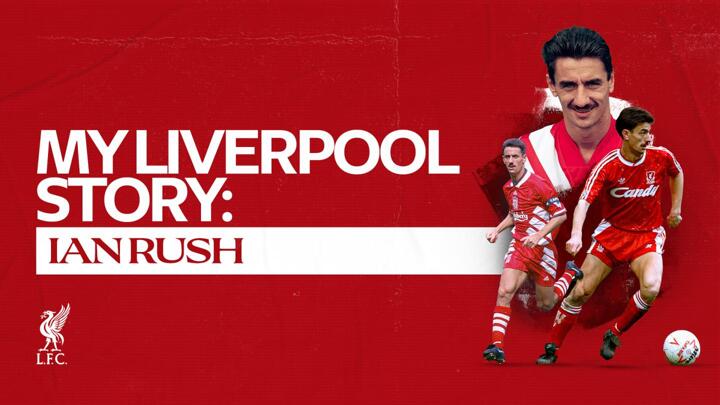
Content from the Official Website
My career at Liverpool FC is well known, and fans probably know the story of how I signed for the club as a young player from Chester and went on to become the club's all-time top goalscorer with 346 goals. This is a path I'm incredibly proud of and grateful for.
So this time I wanted to deviate slightly from previous columns and share some stories you may have heard, and some you may not have.
The reason I signed for Liverpool FC was Alan Oakes, my manager at Chester. He understood my playing style. When Liverpool FC made an offer, they put forward £300,000 for me. Manchester City FC were also interested and offered £500,000.
Alan had played for Manchester City FC before, so you might think he would have pushed me to go there instead. But he sent me to Liverpool FC because he felt it was better for my long-term development. Given the money involved in that transfer, it must have been a difficult decision for him to make at the time.
But at Manchester City, many players were pushed into the first team immediately, whereas at Liverpool FC you're given time to adapt, learn, and improve. I'm incredibly grateful to him for that advice, because it allowed me to truly develop my skills as a striker and goalscorer, and it shaped the rest of my career.
I was only 18 when I joined Liverpool FC, and the club told me that as a young player, I had two years to break into the first team. You can make mistakes in the reserves, then learn to correct them and learn to play the Liverpool FC way.
I made my debut not long after signing, and soon found myself in the first team towards the end of the season—just five or six months after I arrived. I played in the League Cup final replay and also featured in the European Cup semi-final against Bayern Munich.
By then I was already expecting to be a regular in the next season. So I went to Bob Paisley and asked for a pay rise because I felt I was a first-team player now. But he refused, and we had a row. In my anger, I demanded to be put on the transfer list! He said that was fine and immediately granted my request.
He asked how many games I'd played in, which was about seven at that point, and pointed out that I hadn't scored yet. But because we won the games I played in and I performed reasonably well, I felt it had some impact. He said he would put my name on the transfer list, and that was that.
In response, I started playing with fierce determination, wanting to leave Liverpool FC. I scored my first two goals in the reserves, then got a chance in a European Cup game against Oulu Palloseura, a team from Finland. We were already leading 4-0 when Bob brought me on, and I scored an easy goal in front of the Kop. That was my first goal for Liverpool FC!
He then gave me two games with Exeter, where I scored in both; then I scored two more goals in a game against Leeds United. That meant I'd scored seven goals in about three games. After that, Bob called me in for a chat and said he would give me the pay rise I'd asked for. So I asked him if that meant he was taking my name off the transfer list. He told me I was never on it in the first place! It was genius—it sparked something in me.
To be honest, I was very shy when I first arrived at Liverpool FC. I was only 18 and remember getting changed next to Ray Clemence, Alan Hansen, and other players I'd only ever seen on television.
I was nervous then, but as I gradually adapted, I realized I was just as good as them. Bob Paisley would often call me to train with the first team on Thursday, then I'd go back to the reserves on Saturday. I think he quickly realized that being around stronger players helped me raise my game to their level.
I remember the first time the Kop sang my name—I was too nervous to wave back. Sammy Lee told me to acknowledge them! When a game starts, you're mostly focused on everything on the pitch, and rightly so. But when you become more confident, start scoring, and the fans sing your name, you gradually fall in love with that feeling.
I always remember the day I signed, standing in front of the Kop and thinking that if they sang my name just once, I'd have done well. Becoming the club's all-time top goalscorer was something I never dreamed of. If I'd known then what would happen, I'm not sure I would have believed it.
I always thought scoring goals was my job. If I scored one, I wanted to score a second, a third, and so on. Every time you see the fans in the Kop smile after you've scored, you want to feel that again and again. That's the key. It was never about how you scored, but that you scored.
Now that I'm retired, I can look back on my career more comprehensively. I would say the most important goal I scored for Liverpool FC was my first one. I don't have a particular favorite goal, but that one gave me the confidence to repeat it again and again afterwards.
Of course, I scored more beautiful goals and played in more exciting games, but if that goal had never happened, nothing else would have followed. That's football for you. The margins are often very small, and the key is seizing the opportunity when it comes.
The best trophy I won at Liverpool FC—and no other trophy compares—is the FA Cup in 1986. As a child, I dreamed of scoring the winning goal in an FA Cup final. The live broadcast on television usually ran from 9 a.m. to 5 p.m. Every year I would watch the final, then rush to the backyard and pretend I was the one who'd scored the winning goal that day.
Looking back at what I'd already won—the league title, the League Cup, two European Cups—I'd won almost everything. But the FA Cup, I never thought I'd actually get my hands on it!
But my dream came true: we beat Everton, and I scored two goals at Wembley. That's something I'll never forget. Now when I talk to kids, I often tell them to have dreams and believe in them. You have to work hard for them, whether it's football or something else, but dreams really can come true. My dream came true, so why can't yours?
Everyone knows the story of my time at Juventus, but actually I almost signed for another Italian club—Napoli. They had just signed Diego Maradona, and Maradona himself asked the club to sign me. I only found out about all this later when I spoke with him after he'd become a coach, and he passed away not long after.
In the summer after the season I scored 47 goals, Napoli offered £4.5 million for me and also gave a £1 million signing bonus! But Liverpool FC simply refused.
To be honest, it shook me. It was only because I had the opportunity to provide for my family financially at that time. I had a serious row with club chairman John Smith because he wouldn't even discuss it with me, and we probably didn't speak for about a year after that. Mostly because we're both stubborn! But he really did have my best interests at heart, and I knew that. Napoli eventually won the league title that season.
Later I went to Italy, joined Juventus, and I was happy. But it didn't take long before I realized the outside world isn't always better. At that point, I didn't even know I'd have the chance to return to Liverpool FC.
When I decided to leave again, many clubs were interested. Sir Alex Ferguson, the manager of Manchester United, called me. Everton were also interested. Graeme Souness, the manager of Rangers, contacted me. And Bayern Munich called too.
But reflecting on this experience now is interesting, because when Kenny Dalglish called me, he simply told me he'd booked me a plane ticket for the next morning, and that was it. I didn't discuss wages or anything like that with him. I just wanted to wear that shirt again.
Getting the chance to return meant a lot to me. When you're on the outside looking in, you realize that playing for Liverpool FC truly touches your heart. In one sense, I went to Juventus as a boy and came back to Anfield as a man. And the rest, as they say, is history.
แปลโดย AI
เว็บไซต์ AF เปิดตัวแล้ว! ดูข่าว ความคิดเห็น รายละเอียดแมตช์ และสถิติครบถ้วนบนคอมพิวเตอร์ของคุณ เยี่ยมชม: www.allfootballapp.com
 လီဗာပူး
 မန်စီးတီး
 Ian Rush
မှတ်ချက် အားလုံး