
Philipp Lahm discussed issues arising from the development of professional football in his column for The Athletic. He stated that football, fundamentally, belongs to the people and the public should have a say. However, the relationship between clubs and fans is increasingly being overlooked in today's football world. Lahm believes Germany's 50+1 rule is now more valuable than ever. He also noted that the Bundesliga itself is highly competitive, ranked as the world's second-richest league after the Premier League. Over the past two decades, Bayern Munich has consistently ranked among the top ten clubs globally in revenue, frequently securing a position in the top five.
Lahm's Full Column:
Football provides entertainment, a sense of community, and opportunities for participation. In Germany, football originates from sports clubs, where millions of volunteers dedicate their time. This is the core of German football, the reason people are passionate about the sport, and the foundation for its thriving development as a national pastime.
But we must never forget that football's infrastructure was built by society as a whole. If you fly over Germany, you will find two things in almost every village: a church and a sports facility. All current and future professional footballers have emerged from this social foundation. They know this very well.
This connection raises a question: who does football really belong to? There is only one answer: the people. The public should have a say. The desire to have influence is a human instinct. Although football has evolved into a massive industry, this right cannot be easily taken away.
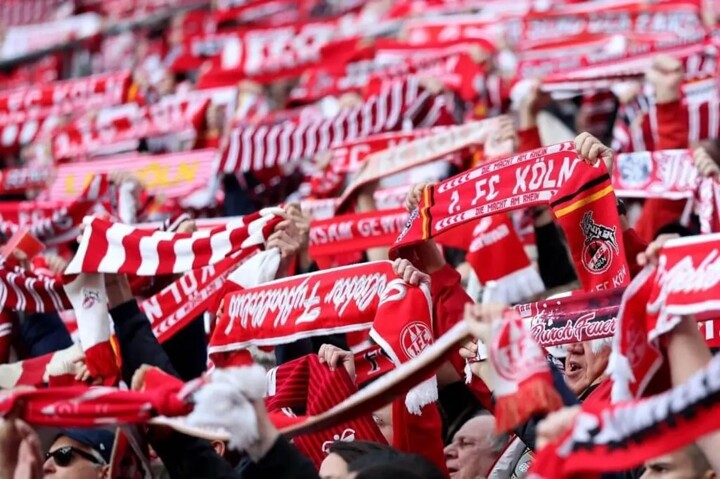
A unique German rule was established based on this very principle: the 50+1 rule. This rule ensures that club "members" (essentially fans) hold the majority of voting rights—at least 50% plus one share—preventing external investors from gaining control of the club.
This rule has long been a subject of legal and political debate. Recently, Germany's Federal Cartel Office, an independent regulatory agency, confirmed that the 50+1 rule is legal. Under this rule, the majority of voting rights must remain with club members and fans, and this is non-negotiable.
As the football economy expanded, volunteers could no longer handle the day-to-day operations of clubs. Many clubs separated their professional divisions into independent entities. Consequently, in 1998, the German Football Association (DFB) introduced the 50+1 rule, stipulating that the majority of voting rights in each Bundesliga team must belong to the "parent club," the non-profit portion of the club.
Since then, the 50+1 rule has become a cornerstone of German football culture. It achieves a balance: allowing external capital investment while protecting public participation rights.
Perhaps thanks to the 50+1 rule, the Bundesliga boasts the highest average attendance in the world. Even 2. Bundesliga, the second tier, competes with top leagues like Ligue 1 and Serie A in average attendance; in some seasons, such as 2024–25, 2. Bundesliga attendance even surpassed LaLiga.
In modern society, stadiums have become one of the few places where people can gather and discuss social issues. This makes football extremely attractive to commercial partners. Increasingly, businesses recognize that football is an excellent medium to reach the public. Companies also see football as perfectly suited for corporate social responsibility projects, building connections with civil society; in this era of political instability, this is exactly what businesses need.
In this context, it is crucial that football is governed by the German Football Association (DFB) and at the European level by UEFA. These two bodies are not private entities but non-profit associations responsible for organizing competitions and enforcing industry regulations. This ensures public participation in the governance process, thereby strengthening the enforcement of competitive rules.
Recent World Cup controversies have confirmed this. First, Infantino intervened on behalf of his friend Trump to lift a ban on Balogun. Then he attempted to privatize the World Cup and its revenues, continuing to separate football from its social origins. This misguided plan was rejected, causing outrage in the global football community. The FIFA president is likely to be ousted over this.
Top professional football must maintain connections with grassroots football; this has always been my understanding of the sport. During my playing career, I was acutely aware of my privileged position and developed a desire to give back to society. For years, I consistently participated in the club's charitable work through my personal foundation.
And as tournament director for UEFA Euro 2024 in Germany, the complex political dynamics behind football have become increasingly clear to me.
Clubs are the smallest units of democratic practice. Here, people recognize their own value and ability to create change. This is a fundamental human need. I strongly support the 50+1 rule.
The relevant authorities also ruled that the permanent exemptions granted to Bayer Leverkusen and Wolfsburg are unlawful. Bayer Leverkusen is entirely owned by pharmaceutical company Bayer; Wolfsburg is owned by the Volkswagen Group.
The regulatory authorities have required both clubs to remedy their situation. If Bayer Leverkusen insists on invoking the grandfather clause for an exemption, I can understand that. Historical factors should be considered. Bayer has a 120-year corporate sports tradition from which the "Leverkusen" team was born; the team was promoted to the Bundesliga before the 50+1 rule was introduced and won the UEFA Cup, the predecessor to the Europa League, in 1988. Moreover, there is no evidence that Bayer has made enormous profits through its football business operations. As lawyers often say: no rule exists without exceptions.
The situation with Wolfsburg is different. The German Football League (DFL), which governs the Bundesliga and 2. Bundesliga, will need to determine how it will assess Wolfsburg under the principle of equal treatment, and whether the club needs to restructure to comply with the 50+1 rule. This requires continued attention.
Many argue that 50+1 weakens the Bundesliga's competitiveness in European competitions, but I disagree. The Bundesliga itself is highly competitive, ranked as the world's second-richest league after the Premier League. Over the past two decades, Bayern Munich has consistently ranked among the top ten clubs globally in revenue, frequently securing a position in the top five. The Bundesliga's poor performance in European competitions stems from other factors, not the 50+1 rule.
I was a member of the Bayern Munich team that won the treble in 2013, when the 50+1 rule was already in effect; Bayern achieved the treble again in 2020.
Germany is not short of money; we are a stable country with a strong rule of law, and the Bundesliga is ready for the future. Investment interest in football continues to grow. In both business and politics, I see a shift in thinking: financial support for non-profit organizations has now become a firm consensus.
In this age of divided society, the credibility of political parties, churches, and the media continues to weaken. However, sport can still unite people and foster a sense of community. This is why the 50+1 rule is more valuable than ever.
Website AF đã ra mắt! Xem tin tức đầy đủ, bình luận, chi tiết trận đấu và thống kê trên máy tính. Truy cập: www.allfootballapp.com
 မိုနာကို
 ဘိုင်ယန် မြူးနစ်
 လေဗာကူဆင်
 ဝော်ဖ်စဘတ်
 Philipp Lahm
 ဖိုလာရင် ဘာလိုဂန်
 Gianni Infantino
မှတ်ချက် အားလုံး