
The likes of Tamil Nadu, Odisha, Jammu and Kashmir and Jharkhand are putting themselves on the football map of India...
For long, Indian football has flourished in select pockets rather than being a pan-nation sport. Since the introduction of the sport in the nation, Kolkata has remained the hub of Indian football. Colonial residues meant that both Kolkata and Goa had been the dominant pockets for ages, along with Kerala and North-East region.
In the past few weeks, the likes of Maharashtra have also started making some headway in that direction.
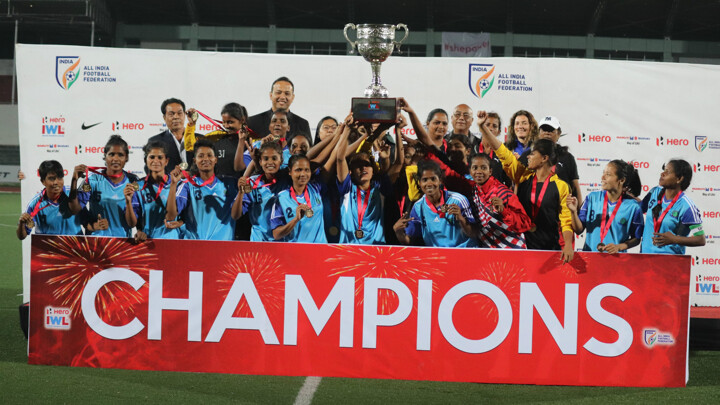
Slowly, new players are starting to emerge in the traditional setting of Indian football. Last month, Rising Students Club lifted the Indian Women’s League (IWL) title at the Jawaharlal Nehru stadium in Shillong. The Cuttack-based club’s heroics are the latest in a string of events which are putting Odisha on the football map of India.
This year, the inaugural Super Cup was held at the Kalinga stadium in Bhubaneswar while Cuttack’s Barabati stadium had played host to the Federation Cup finals last year. Since 2010, the Odisha First Division League is being organized by the state football federation on an annual basis.
The state has barely featured in Indian football talks previously but is slowly making its presence known. It is not the only one to do so with the likes of Jammu and Kashmir, Tamil Nadu and Jharkhand all making significant progress in recent times.
In the I-League 2nd Division, there are two clubs from J&K – Real Kashmir and Lonestar Kashmir. Though the two clubs are enjoying contrasting fortunes in the second division of Indian football, their recent emergence is a highly encouraging sign when it comes to football in the Valley.
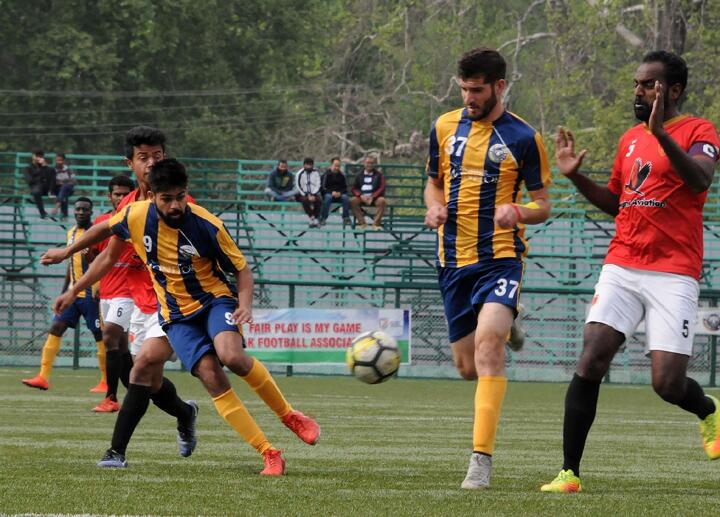
The game actually flourished in the state in early years before coming to a standstill as militancy and separatist movements cropped up in the early 1990s. There was a time in the 1980s when India were led by Abdul Majeed Kakroo.
Kakroo remains the biggest export to Indian football from J&K. The passion for the game had been rekindled towards the end of the 1990s as some normalcy started to return to the state. Over the last decade, the likes of Mehrajuddin Wadoo and Ishfaq Ahmed have found success in Indian top flight football. Even then, professional football remained in a distant dream in the state. Now, along with the introduction of Real Kashmir and Lonestar in the I-League, the J&K State Sports Council women’s team participated in the recently concluded IWL.
It is safe to say that efforts to bring in a professional structure in the state are very much on the front-foot currently.
In the south, Tamil Nadu is also carving its own identity in the national football space. After the arrival of the now two-time Indian Super League (ISL) champions Chennaiyin FC, the city of Chennai has another club in the top-flight of Indian football.
Chennai City FC became one of the latest entrants in the I-League’s top division last year with local boy Michael Soosairaj grabbing eyeballs with his performances

While no state-league exists in Tamil Nadu, having two top-flight clubs in Chennai along with its thriving district league means that football is on the upswing.
Elsewhere, in Jharkhand, Jamshedpur FC setting up base in the capital has brought back the city into the spotlight in Indian football. While the renowned Tata Football Academy has been functioning in the city since 1987, the arrival of a full-fledged top-flight club in Jamshedpur has been highly welcome.
The club saw an average attendance of over 21,000 at the JRD Tata Sports Complex during its maiden campaign in the ISL which is no small feat.
The Jharkhand Football Association has also stepped up work to introduce the All India Football Federation's (AIFF) maiden Baby League (for age groups 6 to 12) in the cities of Ranchi, Dhanbad and Bokaro along with Jamshedpur by the month of July.
With all these recent developments, football in India is permeating to non-traditional centres with every passing year which can only bode well for the future of the sport in the country.
 Chennai City
 ဂျမ်ရှက်ပူ
မှတ်ချက် အားလုံး