
FIFA President Gianni Infantino held a press conference in Mexico City on Wednesday, discussing visa issues, Iran's participation in the FIFA World Cup, and the entry denial of a Somali referee into the United States. He stated that FIFA is working to resolve these issues but cannot control government decisions or law enforcement actions.

Omar Abdulkadir Artan from Somalia was originally scheduled to referee FIFA World Cup matches in the United States, but his entry was denied. Immigration officials blocked him upon arrival, and he was forced to return to Turkey, where his flight originated.
Infantino said: "What happened to Omar is truly regrettable; he is a referee from Somalia. Many things are beyond our control, but we always communicate proactively. Sometimes people need to remain calm beforehand. We are addressing these issues and working hard to find solutions. Believe it or not, I can say we are genuinely working diligently. However, we are not the world's ruler—we cannot control governments or law enforcement agencies. We are a sports organization and can only do our best within our capabilities. We hope to unite the world. You can criticize me if you wish, but I also hope everyone works together to make the world more united."
On Iran
Infantino stated he has always believed Iran can participate in the FIFA World Cup and referenced his earlier commitment.
Infantino said: "I was delighted to personally visit Turkey and Italy to meet with the Iran team. At that time, some people said Iran could not participate in the FIFA World Cup. I responded and made a commitment: Iran will definitely be there."
Since February, Iran has been in a state of conflict with the United States and Israel. In recent months, there have been boycott threats, visa issues, and even a shooter being removed from the squad. Although player visas were approved, Iran's embassy in Turkey accused the United States of discriminatory treatment, claiming some technical staff members were denied entry. Due to visa delays, Iranian players' visas were not approved until Friday of the previous week, forcing the team to change training locations. According to FIFA's original arrangement, Iran was to be based at a training center in Tucson, Arizona. However, due to administrative issues, the team was relocated to Tijuana, Mexico, arriving the following Sunday.
Infantino said: "I believe, and hope, that the 2035 FIFA Women's World Cup can be held in the United Kingdom. Do you think this is reasonable? Should FIFA order the British government who can and cannot enter the UK? I don't know; perhaps some would think this normal, but I prefer to face reality. Each country has its own government, and people in many countries hope to enter without visa requirements. The current global situation is very tense, and security is paramount—something we must respect.
I hope everyone trusts us. We have pushed these matters behind the scenes. Some situations are within our control, and some are genuinely beyond our capabilities. Sometimes we can resolve them, and sometimes we cannot. At least so far, we have successfully brought Iran to the FIFA World Cup, which is an achievement in itself. We must face reality and do our best to handle things properly."
On His Relationship With Trump
Infantino said: "I have a good relationship with President Trump. I had the opportunity to meet him during his first term, and since then, we have continued to cooperate during his second term. Without the president's involvement and support, I think it would be nearly impossible to host the FIFA World Cup in the United States. He quickly understood the impact the FIFA World Cup would bring and asked his team to help. Of course, some issues need to be addressed, and we discussed these from the beginning. Being able to resolve these issues with him and his team has been key to ensuring smooth cooperation—that is my view."
On Ticket Prices
Infantino said: "Regarding ticket prices and whether stadiums will be full, so far we have sold over 6 million tickets. Demand is enormous, unprecedented not just in proportion but in absolute numbers. The feedback we've received is very positive, and I want to thank the fans. This is a unique experience. When you come to this region of the world, you must face the local market environment. I also want to say our lowest ticket price is $60, which is among the lowest for sporting events in the same tier in the United States. Even compared to other sports, this price remains at the lower end.
Once tickets are sold, they enter the secondary market, and here, the secondary market is legal, which significantly raises prices. This issue requires further study. I can say we are confident about this and willing to accept scrutiny. Most importantly, every dollar in revenue we generate ultimately goes back to developing football. We must invest money in countries where no one else is willing to invest.
We have invested and continue to invest, and these investments come from the revenue we generate. FIFA World Cup ticket revenue also relates to activities organized before and during the halftime break. I want to thank everyone who made these things happen.
I also want to mention something—I want to congratulate the Mayor of New York City. A few months ago, he issued 1,000 tickets at $50, which is commendable. Regarding the $60 ticket price and the market environment here, if we set tickets lower, they could ultimately be resold at higher prices. So we chose to invest this revenue portion into football development. This also allows us to maintain free television broadcasts. We could have broadcast only on paid platforms, but then millions of fans worldwide would be unable to watch the matches.
This is why the current pricing mechanism exists. It also suggests that perhaps our pricing is reasonable, because this revenue allows FIFA to continue investing in those countries. Otherwise, no one would invest in them. In a sense, we must consider those people, and that is exactly what we are doing. I hear some say this money goes to various football confederations to consolidate power. But what is the reality? We are building youth academies worldwide. We must also accept that democracy is not empty talk, and situations differ everywhere. This is what makes FIFA different from other organizations."
On Making This Better Than Qatar's World Cup
Infantino said: "Our mission is to make this event successful. I believe people should be happy. If people can, during some matches, even for just a few moments, temporarily forget their daily troubles; if during these 39 days they can set aside their problems and be a little happier, then this FIFA World Cup will be successful. Of course, we also hope to see wonderful matches, and we hope stadium safety is ensured with no incidents inside or outside venues. This event is massive, involving many countries, with 300,000 licensed staff, plus governments, militaries, and everyone responsible for ensuring the FIFA World Cup is organized safely. If we can also reduce some controversy, that would be even better."
 Argélia
 Argentina
 Austrália
 Áustria
 Bélgica
 Bósnia-Herzegovina
 Brasil
 Canadá
 Cape Verde Islands
 Colômbia
 Congo DR
 Croácia
 República Checa
 Costa do Marfim
 Equador
 Egito
Egito
 Inglaterra
 França
 Alemanha
 Gana
Gana
 Haiti
Haiti
 Irão
Irão
 Iraq
Iraq
 Japão
Japão
 Jordan
 Coreia do Sul
 México
 Marrocos
 Holanda
 Curaçao
 New Zealand
 Noruega
 Panamá
 Paraguay
 Portugal
 Qatar
Qatar
 Arábia Saudita
 Escócia
 Senegal
 Somalia
 África do Sul
 Espanha
 Suécia
 Suíça
Suíça
 Tunísia
 Turquia
 Estados Unidos
 Uruguai
 Uzbekistan
 Gianni Infantino
 FIFA World Cup
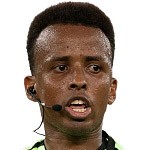 Abdulkadir Artan
Todos os comentários (245)
6-11 20:10
6-11 19:32
6-11 20:03
6-11 19:32
6-11 14:28