
According to AS, at the closing session of the World Football Summit, Atlético Madrid CEO Miguel Ángel Gil Marín proposed limiting the number of matches players can compete in during a single season—whether for their club or national team—to protect their wellbeing.

At the closing panel of the 10th World Football Summit on the main stage, three key figures in the football industry gathered: Javier Gómez, CEO of La Liga and architect of its economic control system; Miguel Ángel Gil Marín, CEO of Atlético Madrid; and Maheta Molango, chairman of the Professional Footballers' Association. They analyzed industry changes and proposed topics for the future. Gil Marín also presented a proposal addressing the serious issue of fixture congestion.
In his opening remarks, Gómez said: "Over the past decade, both La Liga and La Liga 2 have demonstrated revenue growth. Television rights revenue increased by 70%, while commercial revenue, stadium attendance, and social media followers continue to grow... We've witnessed explosive growth in public interest, which has allowed us to strengthen our position as a global brand. Today, domestic and foreign owners are evenly distributed. In the past, we were an ambitious domestic competition seeking to expand internationally; now we are a global organization."
Molango added his perspective on the past decade, jokingly saying: "When I played for Mallorca, I frequently complained to Javier Gómez about my troubles, but now I'm on the other side. I've learned about the management side of player issues. I've experienced many challenges myself, but I also understand the club level. The Premier League's success stems from its excellent management; it has something La Liga lacks. Language advantages, natural access to former colonial markets, and fan mentality in the stadium. In Spain, after 60 minutes, people think it's time to control the pace of play, whereas in the Premier League there's high intensity throughout the match, which fans really enjoy."
He continued: "Most Premier League owners are investment funds and Americans. I've noticed a significant shift: people are starting to follow players more than clubs. That special connection we once had with clubs, like a religion, is fading. I don't think that's good for the football industry."
Gil Marín praised Atlético Madrid's tremendous development over the past decade: "It's important to understand where we came from. We should be proud of this growth. Without the industry's overall development and the regulations introduced by Tebas and Gómez, it would be unthinkable that we are where we are today. We've moved from an era when football management was amateurish, and now massive changes have occurred. The industry has professionalized, leading to explosive growth. Ten years ago we were still at Vicente Calderón; now we've moved to Civitas Metropolitano, which is a huge difference, allowing us to offer unprecedented services and experiences. Today, our revenue, excluding player sales, exceeds 500 million euros. We've consistently ranked in the top ten in UEFA's coefficient rankings for ten consecutive years, and being one of six clubs that regularly reach the Champions League group stage is truly something to be proud of. We've won 10 trophies and have a deep fan base."
He added: "When I first joined the club, social media didn't exist, but now our combined social media followers exceed 100 million. We've become strong and global. We're proud of that. We'll continue looking forward to the next decade."
Regarding football's future, Gómez stated clearly: "We're moving toward polarization in resource distribution. Funds are not endless. Top clubs are receiving a larger share of money... This will be, and already is, a subject of dispute. How this issue is resolved will profoundly affect the entire industry. Previously, nobody thought banks would collapse, but they did. If resources become concentrated in a few clubs, the league will fall apart and enter a vicious cycle." He continued: "The key is finding a model that simultaneously protects football and ensures fair and balanced redistribution. It's achievable, and the consequences depend on what we do in the next decade."
Regarding new competitions, Molango added: "The two biggest problems facing football are governance and scheduling. We need to rediscover the joy that 'less is more.' We mistakenly believe that more is better. Americans don't allow event conflicts; the NBA doesn't start at the same time as the NFL." He continued: "Our system is sick; it encourages bad behavior. Those making decisions have neither played football nor been head coaches... It's like me going to Apple and discussing everything except the iPhone. I see people who shouldn't be there interfering in football policy. For football's healthy development, we must change our governance."
Finally, Gil Marín noted: "My perspective concerns not only Atlético Madrid's future but the entire football world, given that we work across various organizations. At La Liga, I agree with Tebas; he protects the essence of football and seeks balance between smaller, medium-sized clubs and big clubs. The same applies at UEFA with Čeferin. Some federations don't even have broadcasting rights or ticket revenue. Governance is fundamental." Regarding scheduling, he added: "UEFA and FIFA want more matches because more matches mean more money, and more money means more power. Balance must be found, especially for big clubs. I propose limiting the number of matches a player can compete in, including league and national team matches. For example, in a 38-match league season, a player should play a maximum of 31 matches." He also highlighted another serious concern for the future: "Multi-club ownership represents a different philosophy. They invest heavily in the Premier League but allow it to operate at a loss. Recently, I had a heated dispute with someone because they wanted to bring their philosophy here, and I made it clear it won't work. Their closed-league philosophy has no place here. Our concept of competitive entertainment is entirely different. We must stick to our values and adapt in other areas. What we're doing is improving our environment by building an entertainment destination that serves the local community."
Переведено ИИ.
Сайт AF теперь доступен! Читайте полные новости, комментарии, детали матчей и статистику на компьютере. Посетите: www.allfootballapp.com
 Atlético Madrid
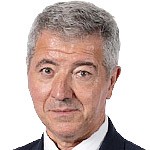 Miguel Ángel Gil
Todos os comentários