
The second matchday of the UEFA Nations League A took place early this morning, with Portugal defeating Norway 2-1. Cristiano Ronaldo's absence from the squad sparked widespread discussion. The day after the match, journalist Sasha Tavolieri published an article on Swiss Sky Sports analyzing Cristiano Ronaldo's role.
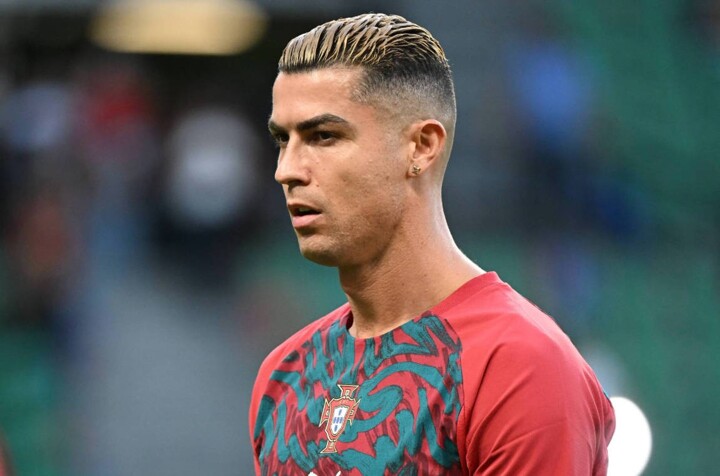
In Portugal, it is difficult to discuss any decision regarding the national team without reference to Cristiano Ronaldo. This trend has intensified since Jorge Jesus took over as coach. The relationship between Cristiano Ronaldo and the Portuguese Football Federation (FPF) is particularly fascinating.
Officially, Pedro Proença is the FPF president, Jorge Jesus is the head coach, and Cristiano Ronaldo is the captain and star player. However, the power dynamics surrounding the Portuguese national team are far more complex than that. Cristiano Ronaldo has long transcended his role as a national team player and has become one of Portugal's core brand assets. The data from the last World Cup is particularly striking.
According to joint research by NOSSA Sports and the Felton platform, Cristiano Ronaldo's social media posts generated an estimated €85.2 million in audience value. In comparison, all posts from the Brazilian national team during the same period totaled €68.1 million. Reportedly, a single Cristiano Ronaldo post generated greater value than hundreds of posts published by Brazil combined.
In other words, when he takes the pitch, Cristiano Ronaldo represents far more than just one of eleven players on the field—he represents a global audience, international exposure, and the immense commercial influence that comes with it.
The FPF Maximizing the Cristiano Ronaldo Brand
The Portuguese Football Federation makes no secret of this. In February last year, they signed a partnership agreement with AVA CR7, a recovery and athletic performance company built around the Cristiano Ronaldo brand. Under this contract, AVA CR7 became the official recovery partner of the Portuguese national team through the end of 2026—no small matter.
For years, the FPF has worked to elevate its brand internationally. Cristiano Ronaldo's massive global fanbase has enabled the Portuguese national team to reach markets far beyond Portugal's borders.
According to the NOSSA Sports/Felton study, during the 2022 World Cup, only 14% of active Portugal national team fans were based within Portugal. This demonstrates Cristiano Ronaldo's ability to significantly raise Portugal's profile and enhance the team's capacity to attract international commercial partners.
The FPF also signed a partnership with TAP Air Portugal in 2026, making the airline the official carrier of the Portuguese national team. This agreement covers preparations for the 2026 World Cup and the 2030 World Cup, which will be held in Portugal.
And Then There's Coach Jorge Jesus…
Here is where the symbolism becomes particularly interesting. Jorge Jesus knows Cristiano Ronaldo better than any other Portuguese coach. Last season, he managed him at Al-Nassr, leading the club to a Saudi league title.
After Jorge Jesus was appointed as Portugal's head coach in July, he quickly stated that as long as Cristiano Ronaldo is fit and eligible for selection, he will rely on him. He emphasized that Cristiano Ronaldo would never be a "problem" for him or the national team. Weeks later, his statements continued to show deep respect for the captain's status.
Jorge Jesus acknowledged Cristiano Ronaldo's "special status," particularly regarding his titles and five Ballon d'Or awards. However, he also repeatedly stated that his decisions must be based on player performance. Nevertheless, an event hosted by the FPF on September 23 particularly highlighted Cristiano Ronaldo's significance.
Coinciding with a media campaign for the Jorge Jesus era, the FPF arranged the pre-match press conference as part of the Portuguese Football Summit, where Cristiano Ronaldo appeared alongside Coach Jorge Jesus before hundreds of spectators.
What was originally just a routine press conference evolved into a large-scale event centered on Jesus and Cristiano Ronaldo. Coach Jorge Jesus even told reporters that Cristiano Ronaldo is "the symbol of Portugal and the seleção."
After the 2026 World Cup, Cristiano Ronaldo confirmed it would be his last appearance for the national team, though he did not immediately rule out continuing his international career. Then in September, he ultimately decided to remain with the team.
His words particularly reflect his relationship with the team: "The Portuguese people need me, so I'm still here," adding that he would leave only when he felt he could no longer contribute sufficiently to the team.
This is the crucial point: Cristiano Ronaldo did not claim that the FPF asked him to stay. Rather, he explained that his own assessment of his value to the Portuguese team was the decisive factor. This is precisely what creates the impression of his extraordinary influence accumulated over more than two decades, rather than something granted through contracts or institutions.
The Grandeur Surrounding the Portuguese National Team Is Closely Tied to Him
One detail tells the whole story. In Jorge Jesus's debut match as Portugal coach against Wales, he started Cristiano Ronaldo. With approximately 25 minutes remaining, he eventually substituted him off. Coach Jorge Jesus explained that he brought on Gonçalo Ramos to increase the team's dynamics and pressing intensity.
However, Coach Jorge Jesus had previously stated that Cristiano Ronaldo did not have automatic starting status. Herein lies the crux of the matter. Nominally, the coach has final authority, but in Portuguese football, Cristiano Ronaldo's status means that any decision concerning him carries symbolic weight beyond that of other players—and Coach Jesus understands this well.
Indeed, during his time at Al-Nassr, Jesus frequently substituted Cristiano Ronaldo off, and it is noted that he substituted him 16 times last season alone. Therefore, this is not a relationship where the player openly directs the coach. The nuance likely lies here: Coach Jesus is acutely aware of the type of player he is managing.
The Real Challenge for the Portuguese Football Federation Comes When Cristiano Ronaldo Announces His Retirement
This is perhaps where Cristiano Ronaldo's true influence truly resides. FPF President Pedro Proença himself acknowledged in May that the 2026 World Cup might be Cristiano Ronaldo's last tournament, and stated that even after retirement, this Portuguese star would occupy a special place in the nation's football.
Therefore, the question is no longer simply whether Cristiano Ronaldo should play, but rather—given the FPF's strong brand influence, excellent squad, and glorious achievements—how Portuguese football will function without him. Yet Cristiano Ronaldo has become a global ambassador for Portuguese football, and the World Cup data clearly demonstrates the enormous disparity in media influence.
This is why Cristiano Ronaldo is considered Portuguese football's unofficial owner. Not because he holds institutional power over the FPF, but because his influence in sport, business, media, and popularity gives him an impact unmatched by any other Portuguese player today.
At 41 years old, he may not sit in the FPF president's office, but as long as he decides to keep playing, the entirety of Portuguese football will revolve around him.
AI翻訳。
AFのPCサイトが新登場!パソコンでニュース、コメント、試合詳細、詳細データをご覧いただけます。アクセス:www.allfootballapp.com
 Portugal
 Al Nassr
 Cristiano Ronaldo
 Jorge Jesus
Todos os comentários